THE ADVENTURE COLLECTIVE® · Independent discovery and booking for outdoor travel

Explore Munich’s Marienplatz and surrounding landmarks on a 2-hour guided walking tour that weaves royal scandals, student resistance, and the city’s civic rituals into a compact, easy-to-follow route.
Explore Munich’s Marienplatz and surrounding landmarks on a 2-hour guided walking tour that weaves royal scandals, student resistance, and the city’s civic rituals into a compact, easy-to-follow route.
You step into Marienplatz as the Glockenspiel begins its mechanical pageant — bells ringing, wooden figures marching — and the city exhales centuries of stories. Cobblestones underfoot lead past the onion-domed silhouette of the Frauenkirche, where a dark legend clings to a “footprint” in the nave, and through alleys that still hold the scent of roasted chestnuts and fresh pretzels.
Verified experiences and guided adventures in the surrounding area.
Operated by Global Guide Services · Munich, Bavaria
You step into Marienplatz as the Glockenspiel begins its mechanical pageant — bells ringing, wooden figures marching — and the city exhales centuries of stories. Cobblestones underfoot lead past the onion-domed silhouette of the Frauenkirche, where a dark legend clings to a “footprint” in the nave, and through alleys that still hold the scent of roasted chestnuts and fresh pretzels.
Munich’s streets map political drama and royal romance: from King Ludwig I’s scandalous affair with Lola Montez to Ludwig II’s Wagner-tinged castles and the student resistance of the White Rose. The walk traces layers of history — medieval founding, baroque court power, 19th-century neo-classical boulevards and the uneasy chapters of the 20th century, including the Beer Hall Putsch and Georg Elser’s thwarted plot.
Geology and urban form meet here: the city sits on northern Alpine foreland gravel and is threaded by the Isar River, whose current still shapes parks and promenades a short walk from the center. Local culture is tactile — markets at Viktualienmarkt, beer halls like Hofbräuhaus opening like civic living rooms, and a university presence that keeps debate lively.
Practical guidance: this is an easy, two-hour public walking tour, usually on paved surfaces with short stair sections. Wear comfortable shoes, carry a light layer for sudden weather shifts, and plan to arrive 10 minutes early for meeting points in central squares. Bring a small bottle of water and a charged phone for photos; the guide handles stories, you handle the map. This walk is best experienced early in the day to avoid crowds and to hear the Glockenspiel clearly.
easy.
2 hours.
Suitable for most fitness levels; requires walking 1–3 miles at a relaxed pace with occasional standing.
The tour lasts about two hours and covers roughly 1–2 miles on paved city streets and squares.
Yes — it’s rated easy and wheelchair accessible on mostly flat surfaces, though some historic sites may have steps.
Bookings are recommended to guarantee a spot, but some public tours allow walk-up participation subject to availability.
No — the walking tour focuses on exterior viewpoints and storytelling; any paid museum entries are extra and optional.
Munich grew from a medieval market town founded by Benedictine monks; later it became the seat of Bavarian dukes and kings whose urban projects reshaped the city in the 18th–19th centuries.
City efforts focus on sustainable transit and protecting riparian zones along the Isar; visitors are encouraged to use public transport and minimize waste.
Global Guide Services operates guided outdoor trips and adventures with an emphasis on safety, stewardship, and memorable experiences.
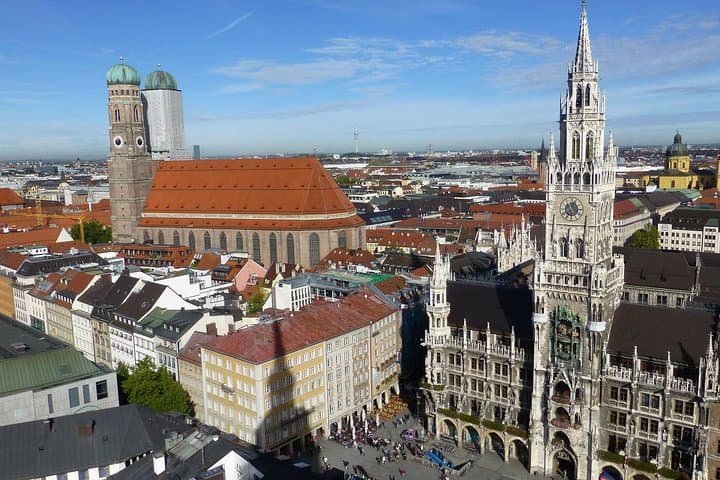
You step into Marienplatz as the Glockenspiel begins its mechanical pageant — bells ringing, wooden figures marching — and the city exhales centuries of stories. Cobblestones underfoot lead past the onion-domed silhouette of the Frauenkirche, where a dark legend clings to a “footprint” in the nave, and through alleys that still hold the scent of roasted chestnuts and fresh pretzels.
You step into Marienplatz as the Glockenspiel begins its mechanical pageant — bells ringing, wooden figures marching — and the city exhales centuries of stories. Cobblestones underfoot lead past the onion-domed silhouette of the Frauenkirche, where a dark legend clings to a “footprint” in the nave, and through alleys that still hold the scent of roasted chestnuts and fresh pretzels.
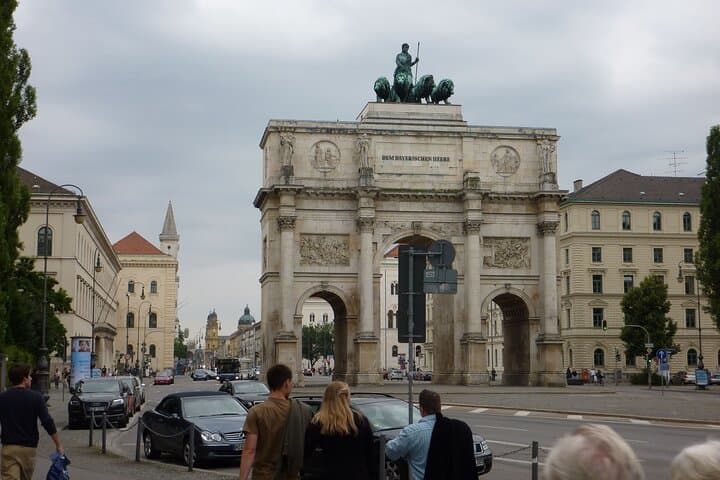
Munich’s streets map political drama and royal romance: from King Ludwig I’s scandalous affair with Lola Montez to Ludwig II’s Wagner-tinged castles and the student resistance of the White Rose. The walk traces layers of history — medieval founding, baroque court power, 19th-century neo-classical boulevards and the uneasy chapters of the 20th century, including the Beer Hall Putsch and Georg Elser’s thwarted plot.
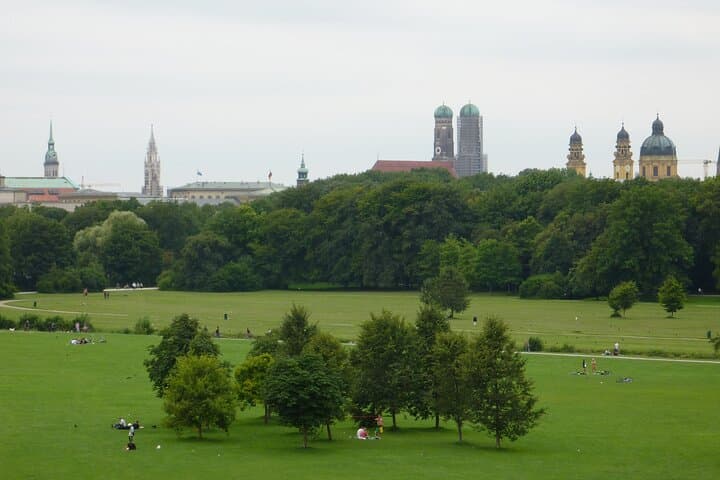
Geology and urban form meet here: the city sits on northern Alpine foreland gravel and is threaded by the Isar River, whose current still shapes parks and promenades a short walk from the center. Local culture is tactile — markets at Viktualienmarkt, beer halls like Hofbräuhaus opening like civic living rooms, and a university presence that keeps debate lively.
Practical guidance: this is an easy, two-hour public walking tour, usually on paved surfaces with short stair sections. Wear comfortable shoes, carry a light layer for sudden weather shifts, and plan to arrive 10 minutes early for meeting points in central squares. Bring a small bottle of water and a charged phone for photos; the guide handles stories, you handle the map. This walk is best experienced early in the day to avoid crowds and to hear the Glockenspiel clearly.