THE ADVENTURE COLLECTIVE® · Independent discovery and booking for outdoor travel

Explore Oktoberfest’s roots on a focused two-hour private walk: learn the 1810 royal wedding origin, stroll through the major tents, and pick up insider tips on food, rides, and timing to experience the festival like a local.
Explore Oktoberfest’s roots on a focused two-hour private walk: learn the 1810 royal wedding origin, stroll through the major tents, and pick up insider tips on food, rides, and timing to experience the festival like a local.
The festival grounds open like a city-sized theatre: tents inhale the September light, brass bands call for attention, and the Willenborg Ferris wheel keeps a slow, watchful turn above Theresienwiese. Standing at St. Paul’s church, your guide will point out where a royal wedding in 1810 set this whole thing in motion and how the ‘Meadow’ still shapes Munich’s calendar.
Verified experiences and guided adventures in the surrounding area.
Operated by Victoria – Key to Munich · Munich, Bavaria
The festival grounds open like a city-sized theatre: tents inhale the September light, brass bands call for attention, and the Willenborg Ferris wheel keeps a slow, watchful turn above Theresienwiese. Standing at St. Paul’s church, your guide will point out where a royal wedding in 1810 set this whole thing in motion and how the ‘Meadow’ still shapes Munich’s calendar.
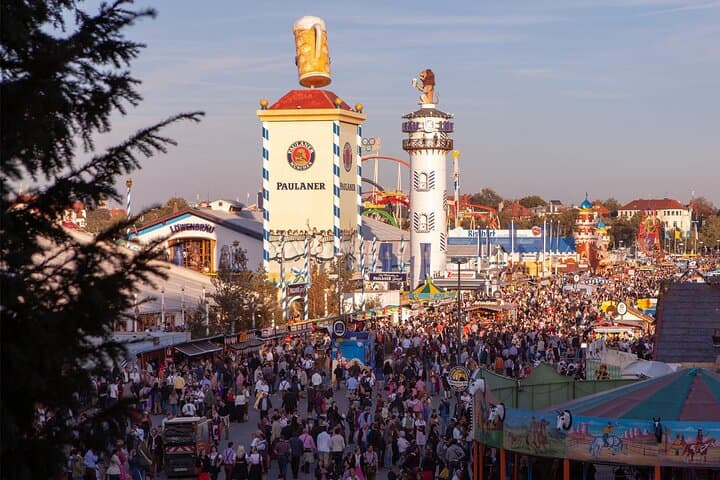
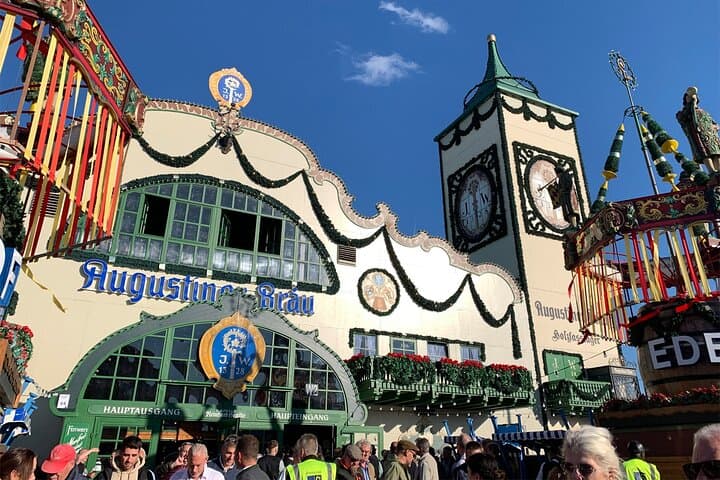
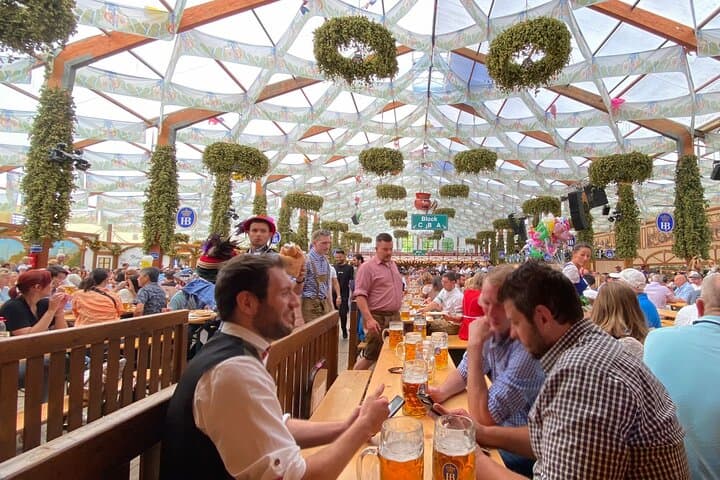
Oktoberfest is equal parts social ritual and working tradition. The festival grew from Crown Prince Ludwig’s wedding celebration and expanded as Munich’s breweries and fairground craftsmen layered their trades onto the field. The tents—only six major breweries today—are wooden, engineered stages that mix century-old recipes with loud brass music and contemporary logistics: stainless-steel kitchens, refrigerated cellars and crewed beer flows that serve thousands daily.
Culturally, expect to learn why Ein Prosit prompts a synchronized toast, where Steckerlfisch is grilled over embers, and why the Ochsenbraterei still roasts whole oxen. You’ll also walk past historic rides like the Krinoline carousel and the Schichtl theatre, relics that kept the fairground lively long before modern attractions arrived.
Practical guidance: arrive early to avoid peak crowds and take public transit—Oktoberfest sits on a large, flat meadow with limited parking. Dress in layered trachten or comfortable street clothes; benches and long tables mean a lot of sitting and communal space. Bring a small bag for essentials, carry cash for smaller stands, and be mindful of waste bins—festival cleanup is constant but stretched. Two hours with a knowledgable guide gives a focused introduction to traditions, tasty stops, and insider tips for returning on your own.
easy.
2 hours.
Suitable for most fitness levels; mostly flat walking with stops to stand and sit.
No general entry fee for the grounds; tents are open but individual tents may require reservations for large groups—your guide will show which welcome walk-ins can still find seats.
Yes—the tour is family-friendly and includes sweet-food stops like the Kaiserschmarrn tent; noisy tents may be overwhelming for very young children.
No beverages are included; the tour points out where to buy traditional foods and drinks and gives tips on ordering and tipping etiquette.
The tour proceeds in light rain; many stops are inside tents or sheltered areas. Heavy weather may affect outdoor ride access but not the core walking route.
Oktoberfest began in 1810 as the public celebration of Crown Prince Ludwig’s marriage and evolved as Munich’s breweries, fairground artisans, and civic rituals layered new traditions over two centuries.
The festival has expanded waste-sorting and reusable cup programs in recent years; visitors can help by using recycling stations, minimizing disposable packaging, and sticking to marked pathways to protect grass and soil.
Victoria – Key to Munich operates guided outdoor trips and adventures with an emphasis on safety, stewardship, and memorable experiences.
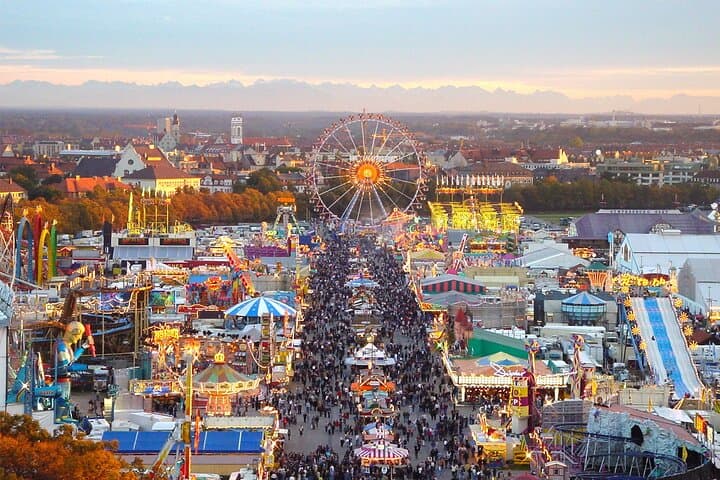
The festival grounds open like a city-sized theatre: tents inhale the September light, brass bands call for attention, and the Willenborg Ferris wheel keeps a slow, watchful turn above Theresienwiese. Standing at St. Paul’s church, your guide will point out where a royal wedding in 1810 set this whole thing in motion and how the ‘Meadow’ still shapes Munich’s calendar.
The festival grounds open like a city-sized theatre: tents inhale the September light, brass bands call for attention, and the Willenborg Ferris wheel keeps a slow, watchful turn above Theresienwiese. Standing at St. Paul’s church, your guide will point out where a royal wedding in 1810 set this whole thing in motion and how the ‘Meadow’ still shapes Munich’s calendar.
Oktoberfest is equal parts social ritual and working tradition. The festival grew from Crown Prince Ludwig’s wedding celebration and expanded as Munich’s breweries and fairground craftsmen layered their trades onto the field. The tents—only six major breweries today—are wooden, engineered stages that mix century-old recipes with loud brass music and contemporary logistics: stainless-steel kitchens, refrigerated cellars and crewed beer flows that serve thousands daily.
Culturally, expect to learn why Ein Prosit prompts a synchronized toast, where Steckerlfisch is grilled over embers, and why the Ochsenbraterei still roasts whole oxen. You’ll also walk past historic rides like the Krinoline carousel and the Schichtl theatre, relics that kept the fairground lively long before modern attractions arrived.
Practical guidance: arrive early to avoid peak crowds and take public transit—Oktoberfest sits on a large, flat meadow with limited parking. Dress in layered trachten or comfortable street clothes; benches and long tables mean a lot of sitting and communal space. Bring a small bag for essentials, carry cash for smaller stands, and be mindful of waste bins—festival cleanup is constant but stretched. Two hours with a knowledgable guide gives a focused introduction to traditions, tasty stops, and insider tips for returning on your own.