THE ADVENTURE COLLECTIVE® · Independent discovery and booking for outdoor travel

A focused two-day private tour from Munich that pairs the high-alpine history of the Eagle’s Nest with Munich’s modernist landmarks — BMW Museum and Olympic Park — plus classic city stops like Marienplatz and the Hofbräuhaus. Practical pacing and clear logistics make this a concentrated cultural and historical overview.
A focused two-day private tour from Munich that pairs the high-alpine history of the Eagle’s Nest with Munich’s modernist landmarks — BMW Museum and Olympic Park — plus classic city stops like Marienplatz and the Hofbräuhaus. Practical pacing and clear logistics make this a concentrated cultural and historical overview.
You meet in Marienplatz as the Glockenspiel winds down; cobbles still humming, the city stretches awake around the New Town Hall. By mid-morning a private vehicle threads into the foothills and the flat rhythm of the city gives way to a rising, wind-scoured horizon. The Kehlsteinhaus — Eagle’s Nest — perches above like a watchful guest, the alpine air daring you to breathe deeper.
Verified experiences and guided adventures in the surrounding area.
Operated by Global Guide Services · Munich, Bavaria
You meet in Marienplatz as the Glockenspiel winds down; cobbles still humming, the city stretches awake around the New Town Hall. By mid-morning a private vehicle threads into the foothills and the flat rhythm of the city gives way to a rising, wind-scoured horizon. The Kehlsteinhaus — Eagle’s Nest — perches above like a watchful guest, the alpine air daring you to breathe deeper.
The two-day route pairs Munich’s civic and industrial heritage with a high-alpine historical site. The Eagle’s Nest (built 1938) sits on Obersalzberg, a focal point of WWII-era power structures; expect interpretive signage and somber viewpoints rather than celebration. Back in the city, BMW’s museum traces postwar engineering and design while Olympic Park (1972) showcases lightweight tensile architecture and green spaces that still host concerts and sport. Geologically, the visit moves from Bavarian plain into limestone spurs shaped by ice-age glaciers; vistas emphasize vertical cliffs and broad river valleys.
Practical notes: the Kehlsteinhaus is at roughly 1,834 m elevation and involves short paved inclines and stair sections — comfortable walking shoes and layers are essential. The drive from Munich is roughly 1.5–2 hours one way, so plan for long days and early starts to avoid peak crowds. Carry ID and a few euros for mountain transit, market snacks, and museum tickets if not included. Spring and fall offer clearer light for photos; summer brings crowds and winter access to the Eagle’s Nest is typically restricted. Expect a mix of paved urban walking and light alpine circulation — thoughtful pacing will keep the experience rich and manageable.
moderate.
2 days (approx. 8–10 hours per day).
You should be comfortable standing and walking for several hours, able to manage short stair sections and moderate transfers.
Admission is often not included; the operator will confirm which tickets are covered — bring cash or card for on-site purchases if necessary.
Expect moderate walking: city cobbles, short stairs, and paved slopes at the Eagle’s Nest; no technical hiking required.
This private tour includes guided transport between Munich and the Obersalzberg area and city stops, but confirm pickup details with the operator.
No — access is seasonal (generally late spring through early autumn) and can close for winter; always check seasonal opening dates before booking.
The Kehlsteinhaus was completed in 1938 as a Nazi-era summit retreat on Obersalzberg; the site and surrounding bunkers reflect the area’s wartime significance.
Heavy visitation can stress alpine vegetation and historical sites — stay on trails, pack out waste, and follow local guidance to minimize impact.
Global Guide Services operates guided outdoor trips and adventures with an emphasis on safety, stewardship, and memorable experiences.
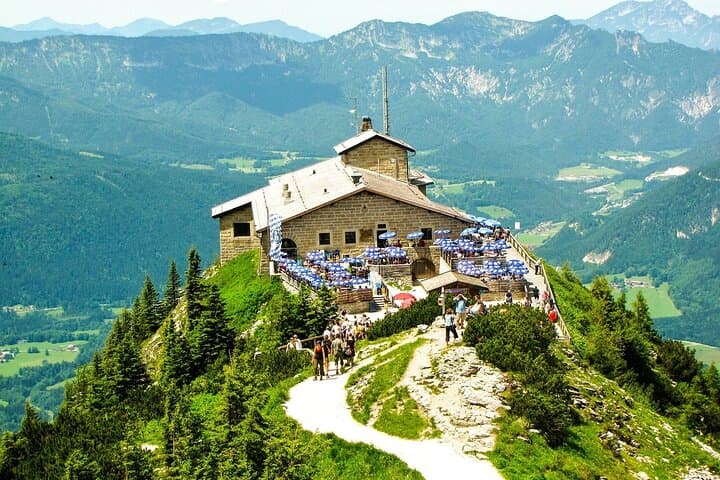


You meet in Marienplatz as the Glockenspiel winds down; cobbles still humming, the city stretches awake around the New Town Hall. By mid-morning a private vehicle threads into the foothills and the flat rhythm of the city gives way to a rising, wind-scoured horizon. The Kehlsteinhaus — Eagle’s Nest — perches above like a watchful guest, the alpine air daring you to breathe deeper.
You meet in Marienplatz as the Glockenspiel winds down; cobbles still humming, the city stretches awake around the New Town Hall. By mid-morning a private vehicle threads into the foothills and the flat rhythm of the city gives way to a rising, wind-scoured horizon. The Kehlsteinhaus — Eagle’s Nest — perches above like a watchful guest, the alpine air daring you to breathe deeper.
The two-day route pairs Munich’s civic and industrial heritage with a high-alpine historical site. The Eagle’s Nest (built 1938) sits on Obersalzberg, a focal point of WWII-era power structures; expect interpretive signage and somber viewpoints rather than celebration. Back in the city, BMW’s museum traces postwar engineering and design while Olympic Park (1972) showcases lightweight tensile architecture and green spaces that still host concerts and sport. Geologically, the visit moves from Bavarian plain into limestone spurs shaped by ice-age glaciers; vistas emphasize vertical cliffs and broad river valleys.
Practical notes: the Kehlsteinhaus is at roughly 1,834 m elevation and involves short paved inclines and stair sections — comfortable walking shoes and layers are essential. The drive from Munich is roughly 1.5–2 hours one way, so plan for long days and early starts to avoid peak crowds. Carry ID and a few euros for mountain transit, market snacks, and museum tickets if not included. Spring and fall offer clearer light for photos; summer brings crowds and winter access to the Eagle’s Nest is typically restricted. Expect a mix of paved urban walking and light alpine circulation — thoughtful pacing will keep the experience rich and manageable.