THE ADVENTURE COLLECTIVE® · Independent discovery and booking for outdoor travel

A short drive from Manuel Antonio, Mulguri Waterfalls offers waterfall pools, rainforest trails, and a home-cooked Costa Rican lunch in a quiet rural setting. This off‑the‑beaten‑path half-day trip blends easy swimming with cultural insight and a short, slippery descent.
A short drive from Manuel Antonio, Mulguri Waterfalls offers waterfall pools, rainforest trails, and a home-cooked Costa Rican lunch in a quiet rural setting. This off‑the‑beaten‑path half-day trip blends easy swimming with cultural insight and a short, slippery descent.
The first step off the van is a small shock: heat folded with the smell of wet earth, and somewhere above the canopy a waterfall begins to speak. You move through a narrow road that slips past small farms and a handful of wooden homes, the hum of Manuel Antonio fading behind you until the rainforest takes over. A short, steep stair cuts into the slope, and with each step the chatter of birds and the rush of water grows louder until you’re standing beside a series of deep natural pools—Mulguri’s waterfalls—each carved into volcanic bedrock and rimmed by green.
Verified experiences and guided adventures in the surrounding area.
Operated by Mulguri Adventure · Quepos, Puntarenas
The first step off the van is a small shock: heat folded with the smell of wet earth, and somewhere above the canopy a waterfall begins to speak. You move through a narrow road that slips past small farms and a handful of wooden homes, the hum of Manuel Antonio fading behind you until the rainforest takes over. A short, steep stair cuts into the slope, and with each step the chatter of birds and the rush of water grows louder until you’re standing beside a series of deep natural pools—Mulguri’s waterfalls—each carved into volcanic bedrock and rimmed by green.
Mulguri sits in the wet foothills just inland from Costa Rica’s central Pacific coast. Geologically, the falls are shaped by tributaries that drain the Talamanca foothills; over millennia the streams have gouged plunge pools and smoothed rock into plunge basins that now resemble natural jacuzzis. The land around Quebrada de Arroyo was long worked by small-scale farmers; today a handful of local families steward the property and host visitors, offering a traditional sodden-rice-and-beans lunch that feels like a chapter of local life served on a wooden table.
The trail to the pools is short but physical: expect a 10–20 minute descent on carved steps and muddy tracks with about 200–300 feet of elevation change. Terrain alternates loose soil, tree roots, and wet stone; currents from the falls encourage you to test the pools but also demand respect. Wildlife—toucans, agoutis, and the ever-watchful three-fingered sloth—frequently watches from the trees. Guides here combine natural history with village knowledge: they’ll point out medicinal plants, explain the route families took to market, and time your visit for quieter windows between group arrivals.
Practical edge: come prepared to get wet and to move over slick rock. Sturdy water shoes or trail shoes that drain are worth more than camera gear; pack a dry bag for your phone and an electrolyte bottle. The tour runs 5–7 hours including pickup, a scenic mountain drive, two or three swim windows and a home-cooked typical Costa Rican lunch. It’s family-friendly but not recommended for those with serious back or heart conditions—steps are uneven and there’s modest scrambling.
Timing matters—visit early in the day to avoid heavier rains and to catch the clearest water. Respect the small community running the site: tip guides, accept local food, and follow their rules about jumping and pool use. When the light is right, the water turns a green-blue you’ll want to photograph; when it’s not, the quiet and shade make it just as worth the trip.
moderate.
5–7 hours (including transport).
Moderate fitness recommended—able to manage steep steps, short scrambles, and up to 300 ft of elevation change.
The official trail to the pools is 10–20 minutes each way over steps and uneven terrain with roughly 200–300 ft of elevation change.
Yes—there are multiple natural pools of varying depth, but guides will advise which areas are safe for swimming and where to avoid jumping.
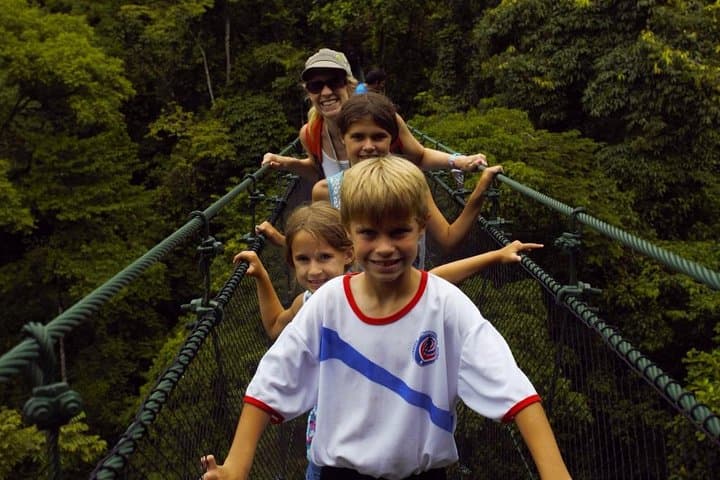
Children are welcome but must be accompanied by an adult; the operator notes this tour requires moderate physical ability and supervision near water.
Bring some cash for tips, souvenirs, or additional snacks—cards may not be accepted in local homes.
No—because of the stairs, descent, and occasional scrambling, it’s not recommended for travelers with spinal, heart, or serious mobility issues.
Yes—a typical Costa Rican lunch prepared by a local family is included, often rice, beans, plantain, salad and a protein, served in a home-style setting.
The area around Quebrada de Arroyo has long been small-scale agricultural land; families opened their private waterfall access to visitors as eco‑tourism became a sustainable income source.
Operators keep group sizes small and rely on local stewardship—stick to marked paths, avoid soap in pools, and follow guide instructions to limit erosion and protect freshwater habitats.
Mulguri Adventure operates guided outdoor trips and adventures with an emphasis on safety, stewardship, and memorable experiences.
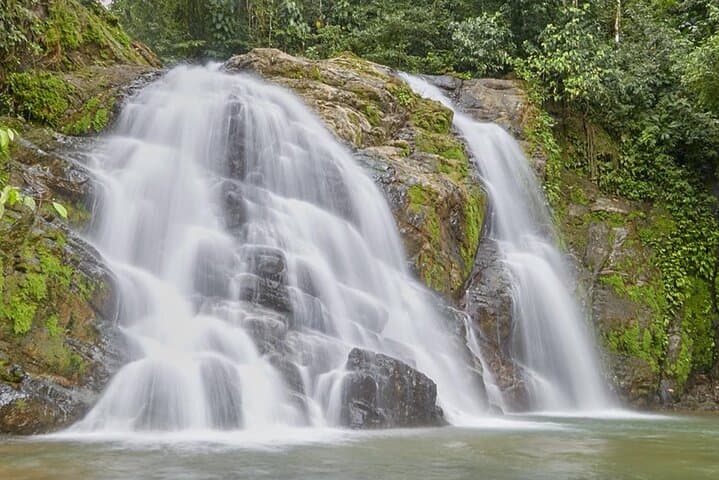
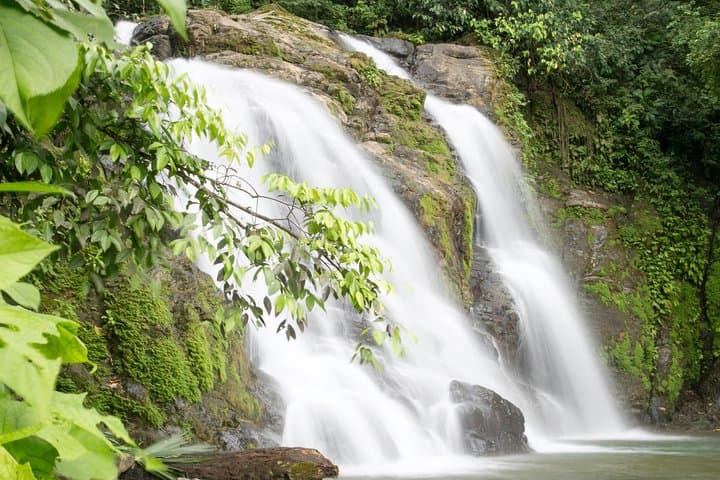
The first step off the van is a small shock: heat folded with the smell of wet earth, and somewhere above the canopy a waterfall begins to speak. You move through a narrow road that slips past small farms and a handful of wooden homes, the hum of Manuel Antonio fading behind you until the rainforest takes over. A short, steep stair cuts into the slope, and with each step the chatter of birds and the rush of water grows louder until you’re standing beside a series of deep natural pools—Mulguri’s waterfalls—each carved into volcanic bedrock and rimmed by green.
The first step off the van is a small shock: heat folded with the smell of wet earth, and somewhere above the canopy a waterfall begins to speak. You move through a narrow road that slips past small farms and a handful of wooden homes, the hum of Manuel Antonio fading behind you until the rainforest takes over. A short, steep stair cuts into the slope, and with each step the chatter of birds and the rush of water grows louder until you’re standing beside a series of deep natural pools—Mulguri’s waterfalls—each carved into volcanic bedrock and rimmed by green.
Mulguri sits in the wet foothills just inland from Costa Rica’s central Pacific coast. Geologically, the falls are shaped by tributaries that drain the Talamanca foothills; over millennia the streams have gouged plunge pools and smoothed rock into plunge basins that now resemble natural jacuzzis. The land around Quebrada de Arroyo was long worked by small-scale farmers; today a handful of local families steward the property and host visitors, offering a traditional sodden-rice-and-beans lunch that feels like a chapter of local life served on a wooden table.
The trail to the pools is short but physical: expect a 10–20 minute descent on carved steps and muddy tracks with about 200–300 feet of elevation change. Terrain alternates loose soil, tree roots, and wet stone; currents from the falls encourage you to test the pools but also demand respect. Wildlife—toucans, agoutis, and the ever-watchful three-fingered sloth—frequently watches from the trees. Guides here combine natural history with village knowledge: they’ll point out medicinal plants, explain the route families took to market, and time your visit for quieter windows between group arrivals.
Practical edge: come prepared to get wet and to move over slick rock. Sturdy water shoes or trail shoes that drain are worth more than camera gear; pack a dry bag for your phone and an electrolyte bottle. The tour runs 5–7 hours including pickup, a scenic mountain drive, two or three swim windows and a home-cooked typical Costa Rican lunch. It’s family-friendly but not recommended for those with serious back or heart conditions—steps are uneven and there’s modest scrambling.
Timing matters—visit early in the day to avoid heavier rains and to catch the clearest water. Respect the small community running the site: tip guides, accept local food, and follow their rules about jumping and pool use. When the light is right, the water turns a green-blue you’ll want to photograph; when it’s not, the quiet and shade make it just as worth the trip.