THE ADVENTURE COLLECTIVE® · Independent discovery and booking for outdoor travel

Climb roughly 500 stone steps at Mua Cave for sweeping views over rice paddies and karst peaks, then cycle quiet lanes and float through Tam Coc’s river caves by sampan. This compact day trip from Hanoi mixes light exercise with cultural visits to a local family and Hoa Lu ancient capital.
Climb roughly 500 stone steps at Mua Cave for sweeping views over rice paddies and karst peaks, then cycle quiet lanes and float through Tam Coc’s river caves by sampan. This compact day trip from Hanoi mixes light exercise with cultural visits to a local family and Hoa Lu ancient capital.
You step out of the minivan onto a narrow field road; rice paddies fan out between conical karst towers and the air smells faintly of wet earth. Ahead, a stone staircase carved into Mua Island climbs steeply to a ridge where the valley opens like a living map. The ascent is brisk—about 500 stone steps—and rewards you with a wide, stitched panorama of rivers, limestone peaks and patchwork fields.
Verified experiences and guided adventures in the surrounding area.
Operated by Local Tours Around Viet Nam · Ninh Binh, Ninh Bình
You step out of the minivan onto a narrow field road; rice paddies fan out between conical karst towers and the air smells faintly of wet earth. Ahead, a stone staircase carved into Mua Island climbs steeply to a ridge where the valley opens like a living map. The ascent is brisk—about 500 stone steps—and rewards you with a wide, stitched panorama of rivers, limestone peaks and patchwork fields.
This landscape is shaped by millennia of karst geology: soluble limestone eroded into caves, cliffs and tunnel-like passages. Nearby Hoa Lu, Vietnam’s 10th-century capital, sits tucked at the base of defensive karsts and holds shrines to the Dinh and Le dynasties. Local farmers follow VAC (garden-pond-cage) systems—an integrated model visible from the viewpoint and during visits to family homes where tea and stories are shared.
Practical guidance: expect a 2-hour drive from Hanoi each way, roughly six hours total on the trip, and a one-hour sampan ride through Tam Coc’s three caves. Wear grippy shoes for uneven steps, bring sun protection and a refillable bottle; the boat is calm but shaded, and cycling is on quiet rural lanes, typically 5–10 km of easy riding.
Crowds peak midday; mornings or late afternoons soften the light and temperature. Pack small change for local stalls, be ready to remove shoes if visiting homes or temples, and move deliberately across steep stone steps. This day trip balances modest exertion with rich cultural encounters—climbing, paddling, cycling and conversation that together reveal why Ninh Binh is often called “landscaped limestone on land.”
easy.
6 hours.
Suitable for most fitness levels; requires climbing ~500 steps and short, easy cycling distances.
Yes — pickup and drop-off in Hanoi’s Old Quarter are typically included; confirm your exact meeting location when you book.
The tour description indicates entrance fees and an authentic Vietnamese lunch are included—bring small cash for extras and souvenirs.
The tour is labeled easy and family-friendly; infants must sit on an adult’s lap for safety and seating in vehicles and boats.
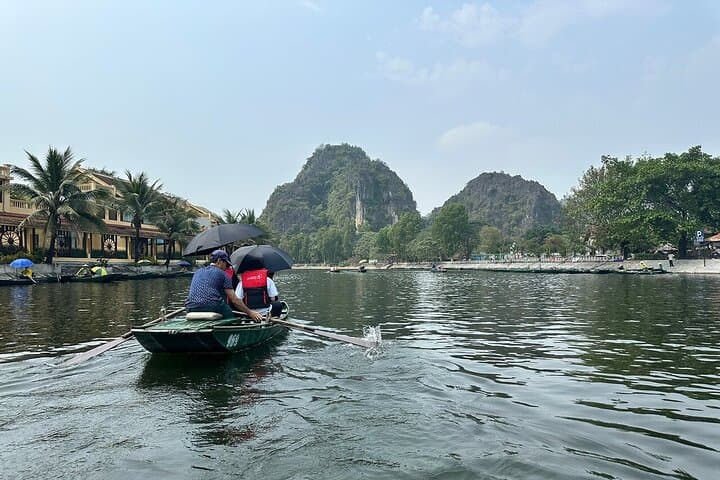
The sampan ride usually lasts about an hour and passes through three caves on calm water; boatmen row manually while you sit and photograph the cliffs and fields.
Hoa Lu was Vietnam’s capital from 968–1009 under the Dinh and early Le dynasties; its shrines and position reflect strategic use of karst defenses.
The karst fields are ecologically fragile; stick to paths, avoid littering, and support local families who manage integrated VAC farming systems.
Local Tours Around Viet Nam operates guided outdoor trips and adventures with an emphasis on safety, stewardship, and memorable experiences.



You step out of the minivan onto a narrow field road; rice paddies fan out between conical karst towers and the air smells faintly of wet earth. Ahead, a stone staircase carved into Mua Island climbs steeply to a ridge where the valley opens like a living map. The ascent is brisk—about 500 stone steps—and rewards you with a wide, stitched panorama of rivers, limestone peaks and patchwork fields.
You step out of the minivan onto a narrow field road; rice paddies fan out between conical karst towers and the air smells faintly of wet earth. Ahead, a stone staircase carved into Mua Island climbs steeply to a ridge where the valley opens like a living map. The ascent is brisk—about 500 stone steps—and rewards you with a wide, stitched panorama of rivers, limestone peaks and patchwork fields.
This landscape is shaped by millennia of karst geology: soluble limestone eroded into caves, cliffs and tunnel-like passages. Nearby Hoa Lu, Vietnam’s 10th-century capital, sits tucked at the base of defensive karsts and holds shrines to the Dinh and Le dynasties. Local farmers follow VAC (garden-pond-cage) systems—an integrated model visible from the viewpoint and during visits to family homes where tea and stories are shared.
Practical guidance: expect a 2-hour drive from Hanoi each way, roughly six hours total on the trip, and a one-hour sampan ride through Tam Coc’s three caves. Wear grippy shoes for uneven steps, bring sun protection and a refillable bottle; the boat is calm but shaded, and cycling is on quiet rural lanes, typically 5–10 km of easy riding.
Crowds peak midday; mornings or late afternoons soften the light and temperature. Pack small change for local stalls, be ready to remove shoes if visiting homes or temples, and move deliberately across steep stone steps. This day trip balances modest exertion with rich cultural encounters—climbing, paddling, cycling and conversation that together reveal why Ninh Binh is often called “landscaped limestone on land.”