THE ADVENTURE COLLECTIVE® · Independent discovery and booking for outdoor travel

A compact, vehicle-led day trip from Tbilisi that pairs panoramic hilltop views at Jvari and sacred architecture in Mtskheta with the rock-cut streets of Uplistsikhe and the complex exhibits at the Stalin Museum in Gori. Perfect for travelers who want history, geology and clear logistics in a single day.
A compact, vehicle-led day trip from Tbilisi that pairs panoramic hilltop views at Jvari and sacred architecture in Mtskheta with the rock-cut streets of Uplistsikhe and the complex exhibits at the Stalin Museum in Gori. Perfect for travelers who want history, geology and clear logistics in a single day.
You arrive at Jvari’s stone parapet with the wind pushing at your jacket and two rivers folding beneath—Aragvi and Mtkvari meeting in a braided ribbon of silver. The monastery’s compact, sixth-century silhouette sits deliberately on the ridge, framing views that explain why this stretch of eastern Georgia has been a crossroads for centuries.
Verified experiences and guided adventures in the surrounding area.
Operated by Travelers Tbilisi · Tbilisi, Tbilisi
You arrive at Jvari’s stone parapet with the wind pushing at your jacket and two rivers folding beneath—Aragvi and Mtkvari meeting in a braided ribbon of silver. The monastery’s compact, sixth-century silhouette sits deliberately on the ridge, framing views that explain why this stretch of eastern Georgia has been a crossroads for centuries.
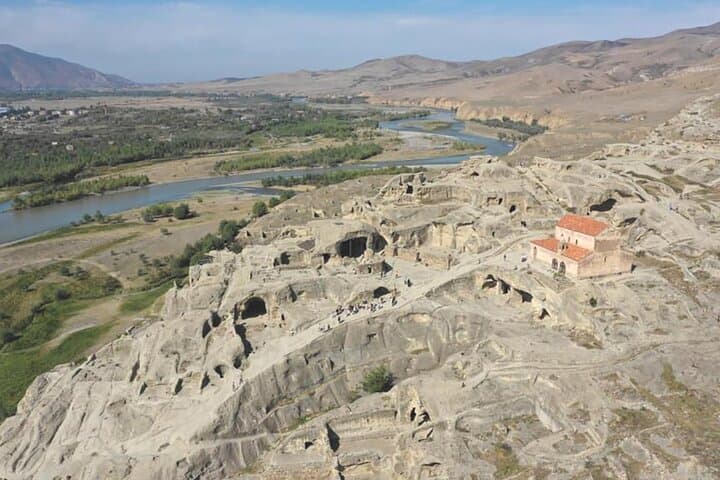
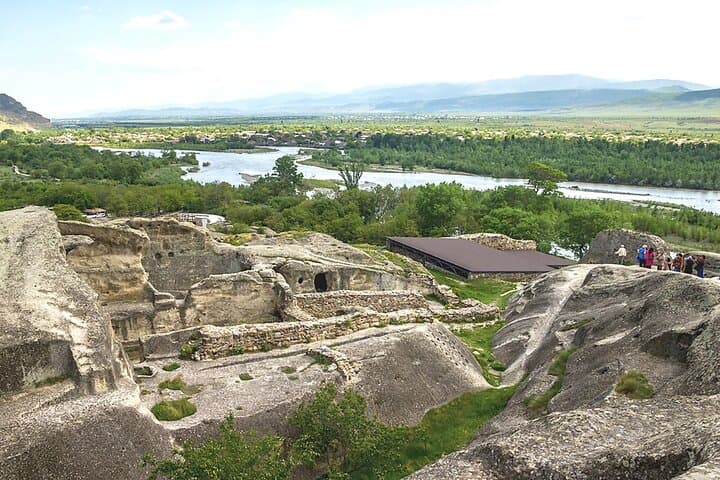
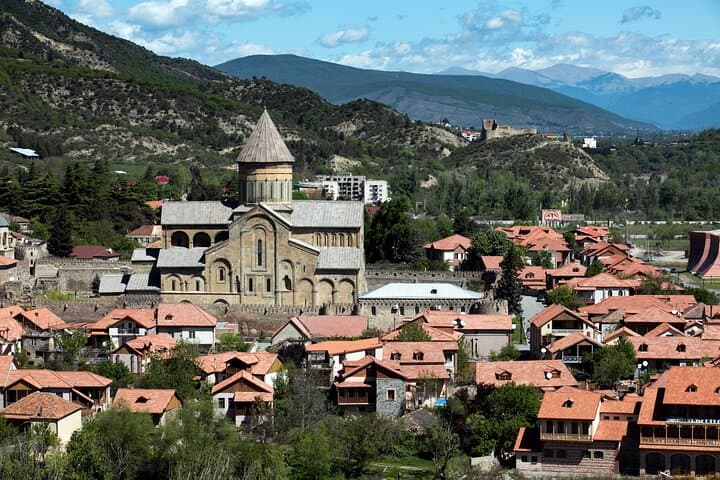
From Jvari the day swings through Mtskheta’s cathedral quarter—Svetitskhoveli’s massive buttressed nave and carved stone graves speak to Georgia’s conversion to Christianity in the fourth century—then follows country roads toward Gori and the eerie honeycomb of Uplistsikhe, a rock-cut city hewn from tuff and limestone whose rooms, temples and grain stores reveal continuous occupation from the Iron Age through medieval times.
Cultural notes thread the route: Georgian Orthodox ritual at Mtskheta, regional cuisine in a family-run lunch stop, and the complex modern history interpreted at the Stalin Museum in Gori. Geology is visible underfoot—soft volcanic tuff sculpted into caves and stepped terraces—so expect uneven stone, steep steps and exposed ledges.
Practically, this is a full, vehicle-driven day: an air-conditioned minibus moves you between sites while a guide handles tickets and context. Bring comfortable walking shoes, sun protection and a refillable bottle; Uplistsikhe and Jvari have minimal facilities. Expect roughly 8 hours on the road with 15 GEL admissions at Gori and Uplistsikhe (subject to change). Mornings deliver cooler light and quieter viewpoints; afternoons suit travelers returning to Tbilisi for dinner. Keep to marked paths, wear good traction on the carved stairs, and budget time for photography—the panoramas reward deliberate pauses.
easy.
8 hours.
Suitable for most fitness levels; includes short walks on uneven terrain and stair climbs
Most departures are from central Tbilisi; the tour returns to Tbilisi at the end of the day—confirm your exact meeting point when booking.
Admissions to the Stalin Museum and Uplistsikhe are typically paid separately (about 15 GEL each at time of listing); confirm with the operator for current fees.
Yes—routes are vehicle-led with short on-foot segments, but expect stairs and uneven surfaces that may be challenging for limited mobility.
There is a scheduled lunch stop (local restaurant near Uplistsikhe/Gori) and small markets in Mtskheta and Gori for snacks; bring cash for local vendors.
Mtskheta served as the early capital of the eastern Georgian kingdom and was central to the nation’s conversion to Christianity in the 4th century; Uplistsikhe preserves evidence of pre-Christian urban life carved into volcanic rock.
Uplistsikhe and other archaeological sites are sensitive to erosion and visitor wear—stay on marked paths, avoid climbing fragile facades and support local guides who promote site preservation.
Travelers Tbilisi operates guided outdoor trips and adventures with an emphasis on safety, stewardship, and memorable experiences.
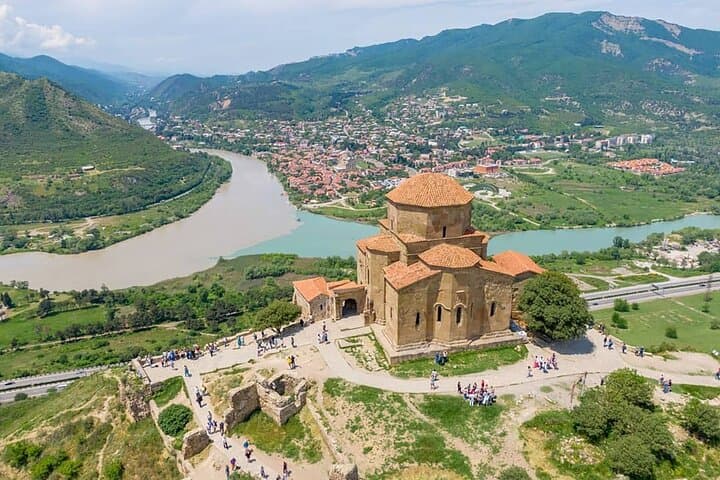
You arrive at Jvari’s stone parapet with the wind pushing at your jacket and two rivers folding beneath—Aragvi and Mtkvari meeting in a braided ribbon of silver. The monastery’s compact, sixth-century silhouette sits deliberately on the ridge, framing views that explain why this stretch of eastern Georgia has been a crossroads for centuries.
You arrive at Jvari’s stone parapet with the wind pushing at your jacket and two rivers folding beneath—Aragvi and Mtkvari meeting in a braided ribbon of silver. The monastery’s compact, sixth-century silhouette sits deliberately on the ridge, framing views that explain why this stretch of eastern Georgia has been a crossroads for centuries.
From Jvari the day swings through Mtskheta’s cathedral quarter—Svetitskhoveli’s massive buttressed nave and carved stone graves speak to Georgia’s conversion to Christianity in the fourth century—then follows country roads toward Gori and the eerie honeycomb of Uplistsikhe, a rock-cut city hewn from tuff and limestone whose rooms, temples and grain stores reveal continuous occupation from the Iron Age through medieval times.
Cultural notes thread the route: Georgian Orthodox ritual at Mtskheta, regional cuisine in a family-run lunch stop, and the complex modern history interpreted at the Stalin Museum in Gori. Geology is visible underfoot—soft volcanic tuff sculpted into caves and stepped terraces—so expect uneven stone, steep steps and exposed ledges.
Practically, this is a full, vehicle-driven day: an air-conditioned minibus moves you between sites while a guide handles tickets and context. Bring comfortable walking shoes, sun protection and a refillable bottle; Uplistsikhe and Jvari have minimal facilities. Expect roughly 8 hours on the road with 15 GEL admissions at Gori and Uplistsikhe (subject to change). Mornings deliver cooler light and quieter viewpoints; afternoons suit travelers returning to Tbilisi for dinner. Keep to marked paths, wear good traction on the carved stairs, and budget time for photography—the panoramas reward deliberate pauses.