THE ADVENTURE COLLECTIVE® · Independent discovery and booking for outdoor travel

A short, evocative day tour from Tbilisi that pairs the hilltop Jvari Monastery’s sweeping river confluence views with the historic Svetitskhoveli Cathedral in Mtskheta. Expect compact medieval churches, uneven stone paths and a gentle uphill walk to prime viewpoints.
A short, evocative day tour from Tbilisi that pairs the hilltop Jvari Monastery’s sweeping river confluence views with the historic Svetitskhoveli Cathedral in Mtskheta. Expect compact medieval churches, uneven stone paths and a gentle uphill walk to prime viewpoints.
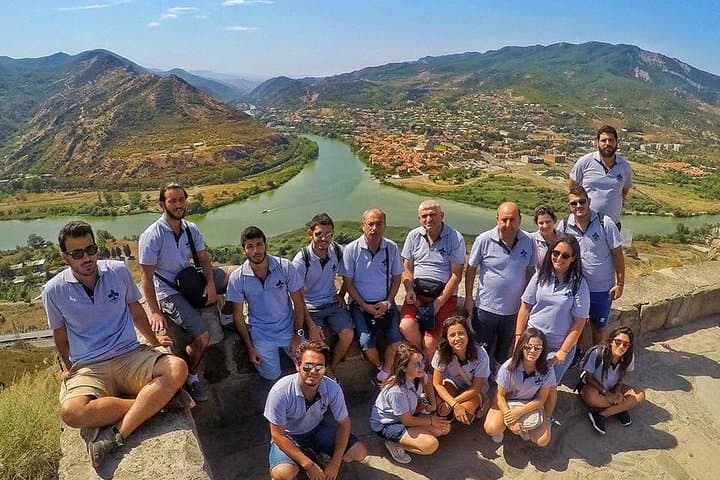
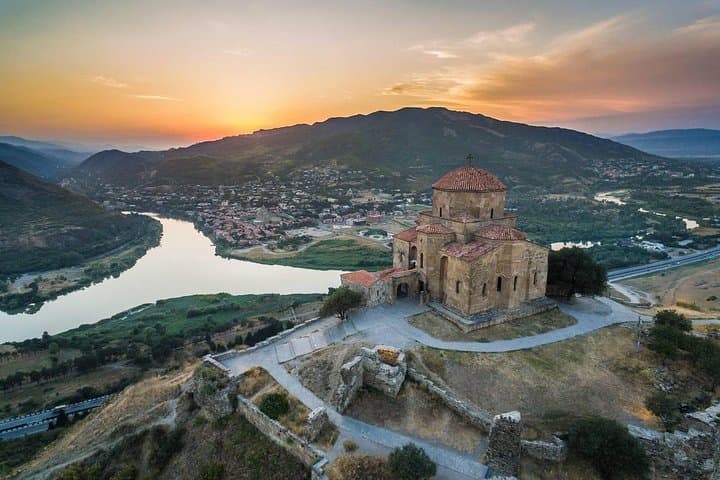
Cold air clings to the hill above Mtskheta as drivers pull into the small parking area for Jvari Monastery. From the terrace, the Kura (Mtkvari) and Aragvi rivers braid below, their different shades of water meeting like two hands joining the valley. Visitors move slowly here — cameras raised, voices lowered — because the view and the stone church demand a measured pace.
Verified experiences and guided adventures in the surrounding area.
Operated by TurGeorgia · Mtskheta, Mtskheta-Mtianeti
Cold air clings to the hill above Mtskheta as drivers pull into the small parking area for Jvari Monastery. From the terrace, the Kura (Mtkvari) and Aragvi rivers braid below, their different shades of water meeting like two hands joining the valley. Visitors move slowly here — cameras raised, voices lowered — because the view and the stone church demand a measured pace.
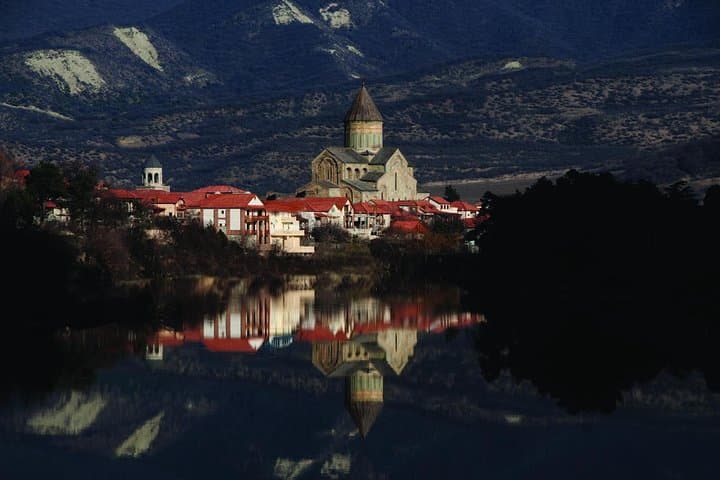
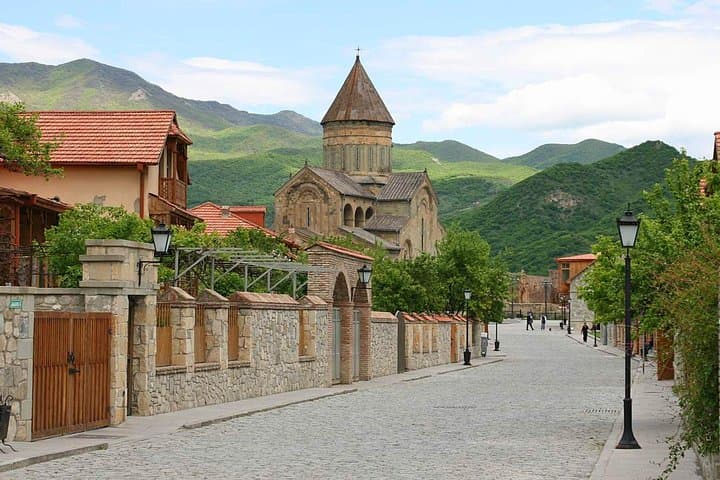
The tour threads together two of Georgia’s most consequential medieval sites. Jvari, a compact 6th-century cross-domed church, crowns a rocky promontory and was among Georgia’s first World Heritage entries. Down in the town, Svetitskhoveli Cathedral — rebuilt in the 11th century on earlier foundations — holds a long spiritual history as the traditional burial place of Georgian kings and, by legend, the robe of Christ.
Geologically the ridge is limestone and clay, cut by rivers that have shaped a broad confluence plain; culturally the place marks the shift from pagan to Christian Georgia and the rise of Mtskheta as an early capital. Expect short but uneven stone paths, low stone steps to viewpoints and a steady uphill approach to Jvari: plan for 10–30 minutes of firm walking from the lot.
Practically, this is a half-day outing from Tbilisi with simple logistics — a private vehicle, a short guided stop at each site, and minimal exertion. Wear sturdy shoes for cobbles, bring water and sun protection, and arrive early or late afternoon to avoid midday crowds and to see the rivers glow in slanted light.
easy.
3–4 hours.
Suitable for most fitness levels; involves short uphill walking (10–30 minutes) on stone steps and uneven paths
The typical tour lasts about 3–4 hours, covering transport from Tbilisi, a stop at Jvari Monastery and time in Mtskheta at Svetitskhoveli Cathedral.
Admissions to the exteriors and grounds are generally accessible; specific entry fees for interior access may not be included — check with the operator in advance.
No — walking is short but involves uneven stone surfaces and some steps; people of most fitness levels can participate, though mobility limitations may make parts difficult.
Early morning or late afternoon provides the best light and fewer visitors; midday is busiest, especially in summer.
Mtskheta served as Georgia’s early capital and major religious center; Svetitskhoveli dates to an earlier Christian complex with an 11th-century cathedral built over older foundations.
Visitor pressure concentrates on narrow paths and historic masonry; stick to marked routes and avoid touching fragile stonework to help preserve the monuments.
TurGeorgia operates guided outdoor trips and adventures with an emphasis on safety, stewardship, and memorable experiences.
Cold air clings to the hill above Mtskheta as drivers pull into the small parking area for Jvari Monastery. From the terrace, the Kura (Mtkvari) and Aragvi rivers braid below, their different shades of water meeting like two hands joining the valley. Visitors move slowly here — cameras raised, voices lowered — because the view and the stone church demand a measured pace.
Cold air clings to the hill above Mtskheta as drivers pull into the small parking area for Jvari Monastery. From the terrace, the Kura (Mtkvari) and Aragvi rivers braid below, their different shades of water meeting like two hands joining the valley. Visitors move slowly here — cameras raised, voices lowered — because the view and the stone church demand a measured pace.
The tour threads together two of Georgia’s most consequential medieval sites. Jvari, a compact 6th-century cross-domed church, crowns a rocky promontory and was among Georgia’s first World Heritage entries. Down in the town, Svetitskhoveli Cathedral — rebuilt in the 11th century on earlier foundations — holds a long spiritual history as the traditional burial place of Georgian kings and, by legend, the robe of Christ.
Geologically the ridge is limestone and clay, cut by rivers that have shaped a broad confluence plain; culturally the place marks the shift from pagan to Christian Georgia and the rise of Mtskheta as an early capital. Expect short but uneven stone paths, low stone steps to viewpoints and a steady uphill approach to Jvari: plan for 10–30 minutes of firm walking from the lot.
Practically, this is a half-day outing from Tbilisi with simple logistics — a private vehicle, a short guided stop at each site, and minimal exertion. Wear sturdy shoes for cobbles, bring water and sun protection, and arrive early or late afternoon to avoid midday crowds and to see the rivers glow in slanted light.