THE ADVENTURE COLLECTIVE® · Independent discovery and booking for outdoor travel

Spend a day outside Tbilisi moving through Georgia’s layered history: hilltop monasteries, a UNESCO cathedral, a Soviet-era museum and an ancient cave city. This guided day tour combines short walks, striking views and deep cultural context.
Spend a day outside Tbilisi moving through Georgia’s layered history: hilltop monasteries, a UNESCO cathedral, a Soviet-era museum and an ancient cave city. This guided day tour combines short walks, striking views and deep cultural context.
You step out of Tbilisi’s traffic and into a landscape where rivers meet and stone keeps score of centuries. The first light on Jvari’s compact cross-domed church cuts across the valley as the Kura (Mtkvari) and Aragvi rivers curve below; from the hilltop the panorama reads like the spine of Georgia’s history.
Verified experiences and guided adventures in the surrounding area.
Operated by Georgian Travel Guide · Mtskheta, Mtskheta-Mtianeti
You step out of Tbilisi’s traffic and into a landscape where rivers meet and stone keeps score of centuries. The first light on Jvari’s compact cross-domed church cuts across the valley as the Kura (Mtkvari) and Aragvi rivers curve below; from the hilltop the panorama reads like the spine of Georgia’s history.
Mtskheta was the early capital and Svetitskhoveli Cathedral (an 11th-century UNESCO landmark) anchors the town with Byzantine and Georgian masonry. Jvari, a 6th-century monastery, perches on a volcanic ridge and offers a clear view of confluence geology—river terraces, alluvial plains and the folded Lesser Caucasus foothills.
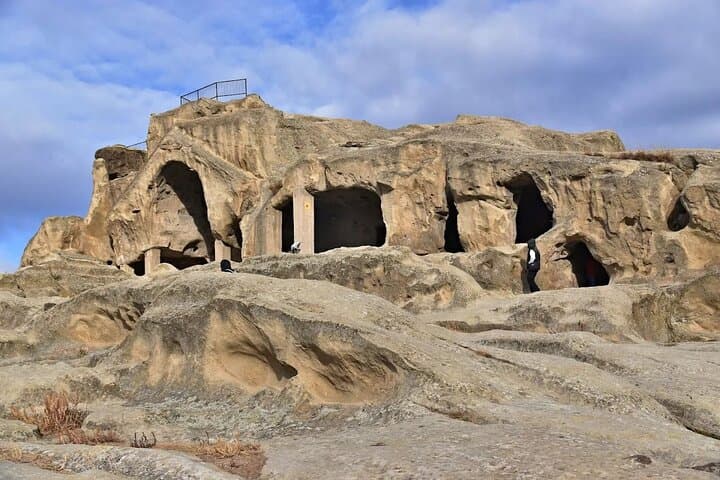
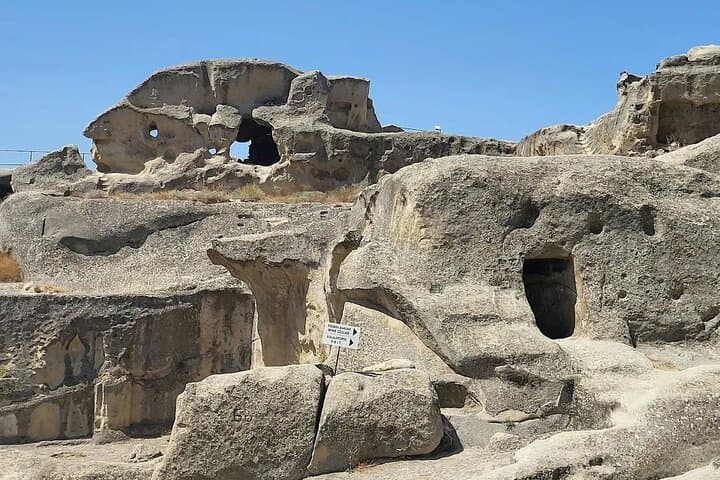
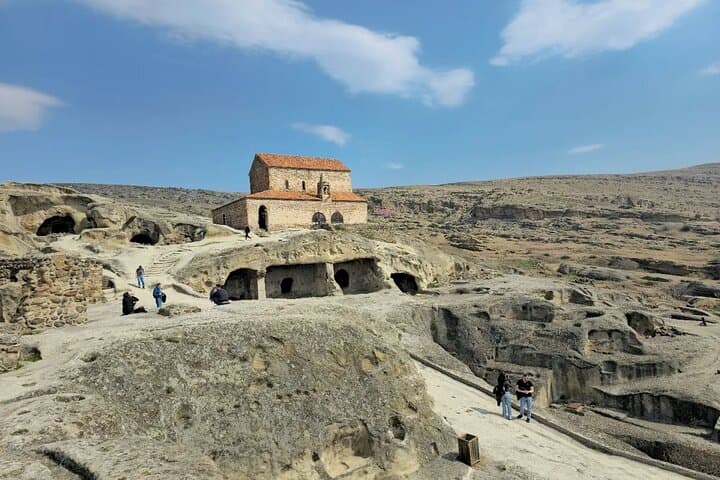
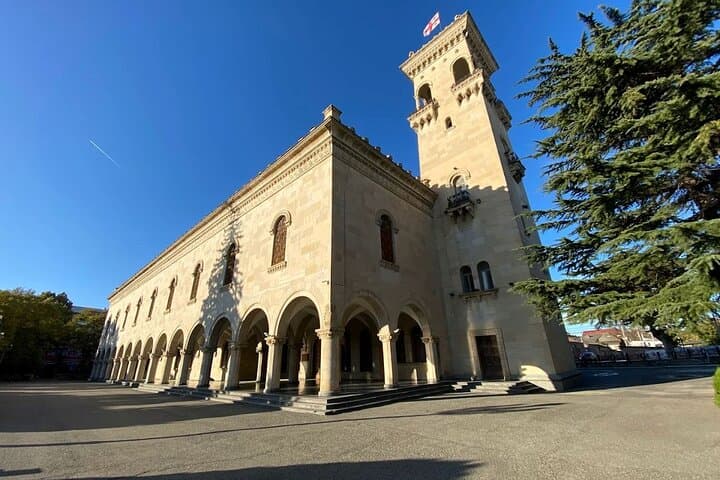
Gori brings a different layer: a Soviet-era biography museum in a provincial city that explains 20th-century politics and industrial growth. Then Uplistsikhe flips the script to prehistoric ingenuity—rock-cut halls, wine cellars and a rudimentary water system carved into a ridge dating back to the first millennium BCE.
Expect short walks on cobbles and uneven rock, a steep 10–20 minute climb to Jvari’s viewpoint, and carved stairways at Uplistsikhe that require steady footing. The day runs roughly 8–10 hours including transfers (Tbilisi to Mtskheta ~30 minutes, to Gori ~1.5 hours). Bring a light layer, modest clothing for religious sites, sun protection and comfortable shoes. Guides fluent in English and Russian often provide cultural context, local legends and routing that avoids midday crowds.
Practical timing: arrive early for Jvari and plan Uplistsikhe before late afternoon light softens the rock—both for cooler walking and clearer photography.
moderate.
8–10 hours.
Suitable for people with basic fitness who can handle multiple short walks, stairs and uneven terrain.
This is a full-day guided excursion of roughly 8–10 hours, typically covering Mtskheta and Jvari in the morning, Gori and the Stalin Museum around midday, and Uplistsikhe in the afternoon.
The tour itinerary indicates admission for key sites like Svetitskhoveli and Jvari; confirm at booking whether all museum and site fees are included in your price.
The pace is moderate with short walks; children and those with limited mobility can participate but should note steep paths and uneven stone at Jvari and Uplistsikhe.
Guides on this tour often speak Georgian, English, Russian and German—check the specific booking to confirm language availability.
Mtskheta was Georgia’s early political and spiritual center; Svetitskhoveli became a cathedral in the 11th century and Jvari represents early Georgian Christian architecture from the 6th century.
Sites face erosion from foot traffic and weathering; stay on marked paths, avoid climbing delicate rock faces and follow local signage to reduce impact.
Georgian Travel Guide operates guided outdoor trips and adventures with an emphasis on safety, stewardship, and memorable experiences.
You step out of Tbilisi’s traffic and into a landscape where rivers meet and stone keeps score of centuries. The first light on Jvari’s compact cross-domed church cuts across the valley as the Kura (Mtkvari) and Aragvi rivers curve below; from the hilltop the panorama reads like the spine of Georgia’s history.
You step out of Tbilisi’s traffic and into a landscape where rivers meet and stone keeps score of centuries. The first light on Jvari’s compact cross-domed church cuts across the valley as the Kura (Mtkvari) and Aragvi rivers curve below; from the hilltop the panorama reads like the spine of Georgia’s history.
Mtskheta was the early capital and Svetitskhoveli Cathedral (an 11th-century UNESCO landmark) anchors the town with Byzantine and Georgian masonry. Jvari, a 6th-century monastery, perches on a volcanic ridge and offers a clear view of confluence geology—river terraces, alluvial plains and the folded Lesser Caucasus foothills.
Gori brings a different layer: a Soviet-era biography museum in a provincial city that explains 20th-century politics and industrial growth. Then Uplistsikhe flips the script to prehistoric ingenuity—rock-cut halls, wine cellars and a rudimentary water system carved into a ridge dating back to the first millennium BCE.
Expect short walks on cobbles and uneven rock, a steep 10–20 minute climb to Jvari’s viewpoint, and carved stairways at Uplistsikhe that require steady footing. The day runs roughly 8–10 hours including transfers (Tbilisi to Mtskheta ~30 minutes, to Gori ~1.5 hours). Bring a light layer, modest clothing for religious sites, sun protection and comfortable shoes. Guides fluent in English and Russian often provide cultural context, local legends and routing that avoids midday crowds.
Practical timing: arrive early for Jvari and plan Uplistsikhe before late afternoon light softens the rock—both for cooler walking and clearer photography.