THE ADVENTURE COLLECTIVE® · Independent discovery and booking for outdoor travel

Spend a full day from Tbilisi exploring Georgia’s early capital, a mountaintop monastery and an ancient cave town. This practical guide prepares you for the terrain, history and logistics of Mtskheta, Gori and Uplistsikhe.
Spend a full day from Tbilisi exploring Georgia’s early capital, a mountaintop monastery and an ancient cave town. This practical guide prepares you for the terrain, history and logistics of Mtskheta, Gori and Uplistsikhe.
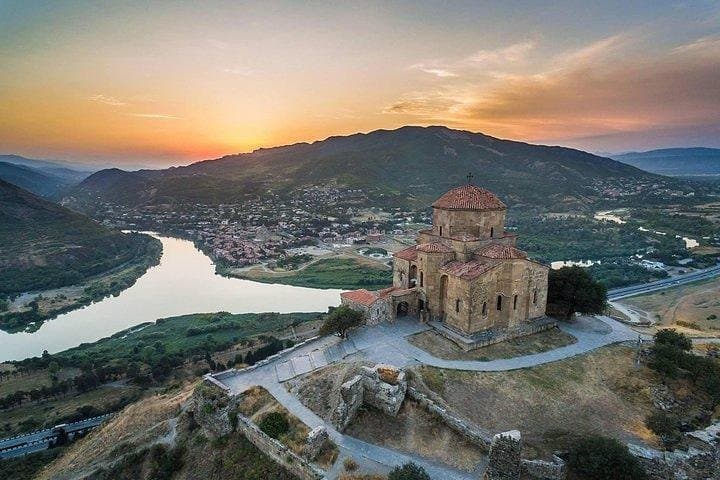
You step out of Tbilisi’s morning hush and the road unfurls through the Kartli plain—orchard rows and low ridges rolling past the van’s windows as Mtkvari and Aragvi rivers converge below Jvari Monastery. Wind tugs at your jacket on the monastery ridge; the view demands a slow inhale and a steady camera hand.
Verified experiences and guided adventures in the surrounding area.
Operated by MNS Global · Mtskheta, Kartli
You step out of Tbilisi’s morning hush and the road unfurls through the Kartli plain—orchard rows and low ridges rolling past the van’s windows as Mtkvari and Aragvi rivers converge below Jvari Monastery. Wind tugs at your jacket on the monastery ridge; the view demands a slow inhale and a steady camera hand.
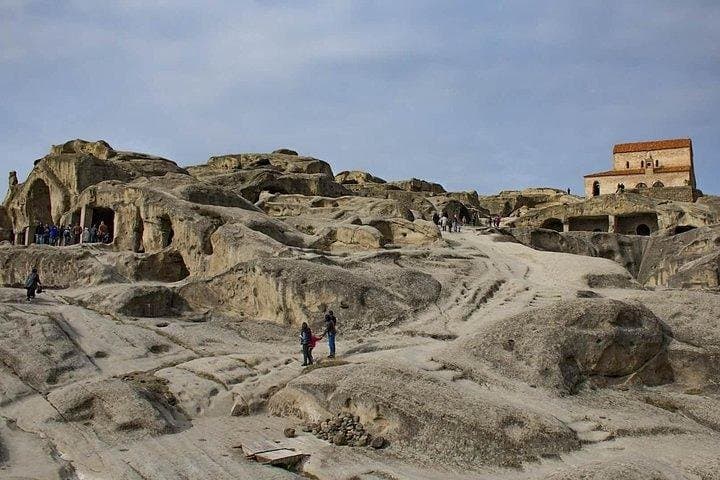
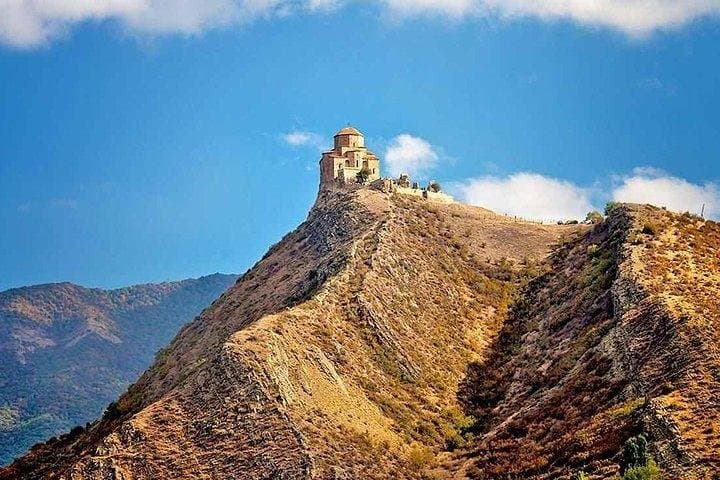
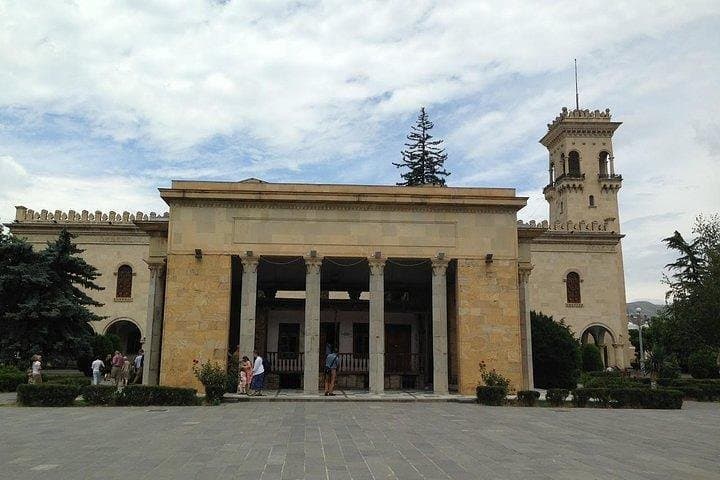
This route threads centuries of Georgian history: Mtskheta was the kingdom’s early capital and keeps Svetitskhoveli Cathedral, a 10th-century cruciform church central to Georgian Orthodoxy. Jvari crowns a rocky promontory—a 6th-century cross-plan monastery that watches where rivers meet. Further west, Gori offers a sharp 20th-century pivot with the Stalin Museum and preserved birth house. Uplistsikhe, the cave-town carved into the sandstone, dates back to the 2nd–1st millennium BC and reveals streets, cellars and rock-hewn halls that speak to trade routes linking the region to the Black Sea and beyond.
Geology here is plain to see: soft volcanic tuff allowed extensive rock-cut architecture, while wind and water continue to sculpt exposed cliff faces. Cultural layers are live—pilgrims, farmers and museum curators keep these sites in use.
Practical guidance: expect uneven steps, dusty trails and strong winds at ridgelines—sturdy shoes and a light wind layer are non-negotiable. Bring cash for small museum fees and local snacks; pace the day to allow 10 hours with stops for photography and short walks. Respect site boundaries: the best views come from paths, not climbing fragile ruins.
easy.
8–10 hours.
Basic fitness for walking short trails and climbing stone steps; suitable for most travelers without severe mobility issues.
Most small admission fees (e.g., museums or site entry) are typically not included; bring cash or check with your operator beforehand.
This private full-day tour runs about 8–10 hours with private transportation and usually includes pickup from central Tbilisi; confirm your pickup point when booking.
Some sites require climbing uneven stairs and short hikes; travelers with serious spinal or cardiovascular conditions should consult the operator—this itinerary is labeled as not recommended for such conditions.
Basic facilities and small cafes are available in Mtskheta and Gori; carry snacks if you have dietary needs as options can be limited at smaller sites.
Mtskheta served as the political and spiritual capital of early Georgian kingdoms; Uplistsikhe’s rock-cut town grew along trade arteries linking the Caucasus to the Black Sea and beyond.
Erosion and visitor wear affect the soft tuff rock; follow established paths, avoid touching frescoes and support local preservation by using guided routes.
MNS Global operates guided outdoor trips and adventures with an emphasis on safety, stewardship, and memorable experiences.
You step out of Tbilisi’s morning hush and the road unfurls through the Kartli plain—orchard rows and low ridges rolling past the van’s windows as Mtkvari and Aragvi rivers converge below Jvari Monastery. Wind tugs at your jacket on the monastery ridge; the view demands a slow inhale and a steady camera hand.
You step out of Tbilisi’s morning hush and the road unfurls through the Kartli plain—orchard rows and low ridges rolling past the van’s windows as Mtkvari and Aragvi rivers converge below Jvari Monastery. Wind tugs at your jacket on the monastery ridge; the view demands a slow inhale and a steady camera hand.
This route threads centuries of Georgian history: Mtskheta was the kingdom’s early capital and keeps Svetitskhoveli Cathedral, a 10th-century cruciform church central to Georgian Orthodoxy. Jvari crowns a rocky promontory—a 6th-century cross-plan monastery that watches where rivers meet. Further west, Gori offers a sharp 20th-century pivot with the Stalin Museum and preserved birth house. Uplistsikhe, the cave-town carved into the sandstone, dates back to the 2nd–1st millennium BC and reveals streets, cellars and rock-hewn halls that speak to trade routes linking the region to the Black Sea and beyond.
Geology here is plain to see: soft volcanic tuff allowed extensive rock-cut architecture, while wind and water continue to sculpt exposed cliff faces. Cultural layers are live—pilgrims, farmers and museum curators keep these sites in use.
Practical guidance: expect uneven steps, dusty trails and strong winds at ridgelines—sturdy shoes and a light wind layer are non-negotiable. Bring cash for small museum fees and local snacks; pace the day to allow 10 hours with stops for photography and short walks. Respect site boundaries: the best views come from paths, not climbing fragile ruins.