THE ADVENTURE COLLECTIVE® · Independent discovery and booking for outdoor travel

Explore Georgia’s ancient capital in a single day: hilltop Jvari, holy Svetitskhoveli, and a hands-on cooking class that ends in a boisterous Georgian supra. This tour pairs compact history with practical culinary skills—khinkali by hand, khachapuri from the oven.
Explore Georgia’s ancient capital in a single day: hilltop Jvari, holy Svetitskhoveli, and a hands-on cooking class that ends in a boisterous Georgian supra. This tour pairs compact history with practical culinary skills—khinkali by hand, khachapuri from the oven.
You step out of the van onto a sun-baked hill and the river valley opens beneath you—two rivers meet and the town of Mtskheta sprawls by the water like a living map of Georgia’s past. Jvari Monastery perches above the confluence, its stone silhouette daring the wind while the arched domes of Svetitskhoveli rise a short walk away, heavy with centuries of ritual.
Verified experiences and guided adventures in the surrounding area.
Operated by Imperial Travelers · Mtskheta, Mtskheta-Mtianeti
You step out of the van onto a sun-baked hill and the river valley opens beneath you—two rivers meet and the town of Mtskheta sprawls by the water like a living map of Georgia’s past. Jvari Monastery perches above the confluence, its stone silhouette daring the wind while the arched domes of Svetitskhoveli rise a short walk away, heavy with centuries of ritual.
Mtskheta was Georgia’s first capital and one of the cradles of Eastern Orthodox Christianity; its churches date from the 6th–11th centuries and are UNESCO-listed for their architecture and historical role. Geologically the plain is carved by the Aragvi and Mtkvari rivers, which have shaped fertile terraces used by local farmers for generations. Cultural life centers on communal food and toasts led by a tamada—expect warmth, structured drinking etiquette, and slow-building feasts.
Practical guidance: this is a full-day, mostly low-impact tour (≈7 hours) with short walks between sites and a hands-on cooking segment where you’ll shape khinkali and bake khachapuri. Wear comfortable walking shoes and dress modestly for churches (shoulders and knees covered). Bring a refillable water bottle, a small daypack, and sun protection; layers help when the hilltop wind picks up. The cooking class accommodates beginners—no culinary background required—but plan to stand for the lesson and the ensuing supra. Photography is allowed at most exterior sites; check interiors for restrictions. Timing your visit for morning light at Jvari gives clearer views and cooler temperatures. Whether you come for history or the food, the day balances measured cultural immersion with practical, hands-on hospitality.
easy.
7 hours.
Suitable for most fitness levels; involves short walks and periods of standing during the cooking class
The tour runs about 7 hours with short guided visits (≈40 minutes each) at key sites and a 3-hour cooking and supra session—expect low-intensity walking and standing.
Major visits are guided as part of the tour; check your booking details for specific admissions—this itinerary lists sites as visited but may not require separate ticket purchases.
Yes—inform the operator of allergies or dietary needs when you book so the host can adapt recipes or provide alternatives during the supra.
Yes—physical demands are low, but the cooking segment requires standing; coordinate with the operator if mobility assistance is needed.
Mtskheta served as Georgia’s early capital and became a center of Christian life after the 4th century; its cathedrals hold relic status in Georgian tradition.
UNESCO protection helps preserve monuments and restricts alterations—visitors should avoid candles and respect restricted zones; support local businesses to bolster community-based conservation.
Imperial Travelers operates guided outdoor trips and adventures with an emphasis on safety, stewardship, and memorable experiences.
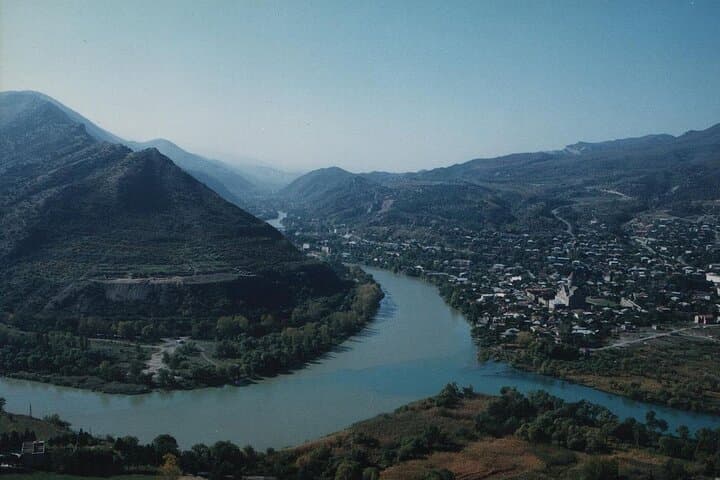
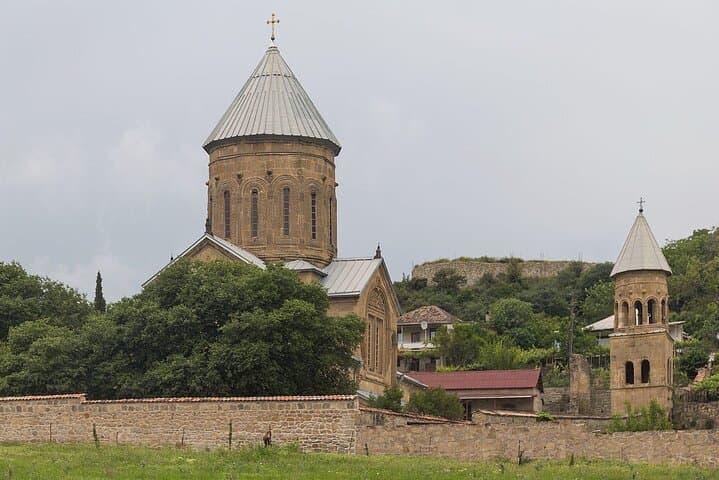
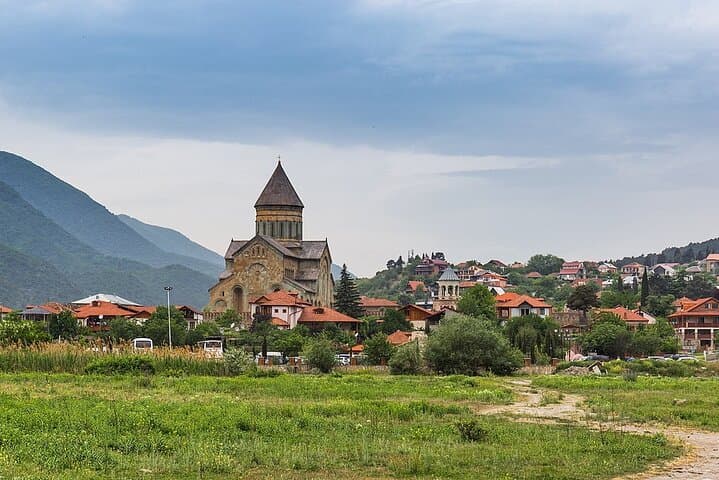
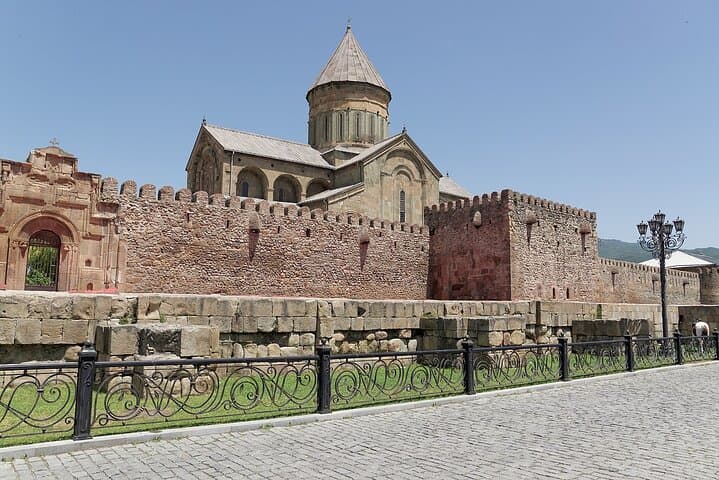
You step out of the van onto a sun-baked hill and the river valley opens beneath you—two rivers meet and the town of Mtskheta sprawls by the water like a living map of Georgia’s past. Jvari Monastery perches above the confluence, its stone silhouette daring the wind while the arched domes of Svetitskhoveli rise a short walk away, heavy with centuries of ritual.
You step out of the van onto a sun-baked hill and the river valley opens beneath you—two rivers meet and the town of Mtskheta sprawls by the water like a living map of Georgia’s past. Jvari Monastery perches above the confluence, its stone silhouette daring the wind while the arched domes of Svetitskhoveli rise a short walk away, heavy with centuries of ritual.
Mtskheta was Georgia’s first capital and one of the cradles of Eastern Orthodox Christianity; its churches date from the 6th–11th centuries and are UNESCO-listed for their architecture and historical role. Geologically the plain is carved by the Aragvi and Mtkvari rivers, which have shaped fertile terraces used by local farmers for generations. Cultural life centers on communal food and toasts led by a tamada—expect warmth, structured drinking etiquette, and slow-building feasts.
Practical guidance: this is a full-day, mostly low-impact tour (≈7 hours) with short walks between sites and a hands-on cooking segment where you’ll shape khinkali and bake khachapuri. Wear comfortable walking shoes and dress modestly for churches (shoulders and knees covered). Bring a refillable water bottle, a small daypack, and sun protection; layers help when the hilltop wind picks up. The cooking class accommodates beginners—no culinary background required—but plan to stand for the lesson and the ensuing supra. Photography is allowed at most exterior sites; check interiors for restrictions. Timing your visit for morning light at Jvari gives clearer views and cooler temperatures. Whether you come for history or the food, the day balances measured cultural immersion with practical, hands-on hospitality.