THE ADVENTURE COLLECTIVE® · Independent discovery and booking for outdoor travel

Less than an hour from Tbilisi, Mtskheta compresses Georgia’s history into a walkable town of hilltop churches and river views. This half-day excursion visits Jvari, Svetitskhoveli and Samtavro—ideal for travelers who want culture, short climbs and sweeping panoramas.
Less than an hour from Tbilisi, Mtskheta compresses Georgia’s history into a walkable town of hilltop churches and river views. This half-day excursion visits Jvari, Svetitskhoveli and Samtavro—ideal for travelers who want culture, short climbs and sweeping panoramas.
A low hill above two rivers frames the town: the Mtkvari and the Aragvi meet in a braided ribbon of blue and silver, and the stone silhouette of Jvari Monastery watches the confluence like an old guardian. Step out of Tbilisi traffic and into sunlight that paints the ochre facades of Mtskheta; the air here tastes of river dust and warmed stone.
Verified experiences and guided adventures in the surrounding area.
Operated by Irina Kartvelishvili · Mtskheta, Mtskheta-Mtianeti
A low hill above two rivers frames the town: the Mtkvari and the Aragvi meet in a braided ribbon of blue and silver, and the stone silhouette of Jvari Monastery watches the confluence like an old guardian. Step out of Tbilisi traffic and into sunlight that paints the ochre facades of Mtskheta; the air here tastes of river dust and warmed stone.
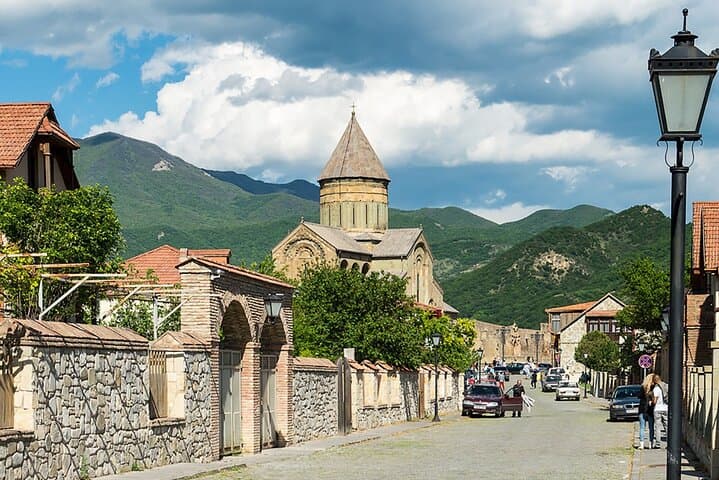
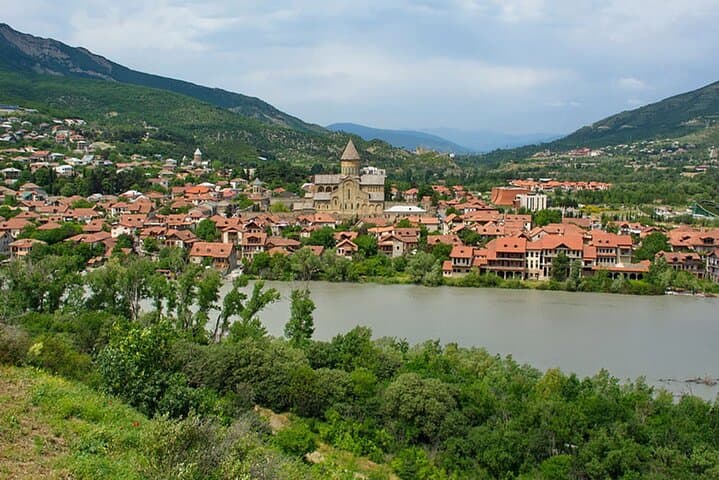
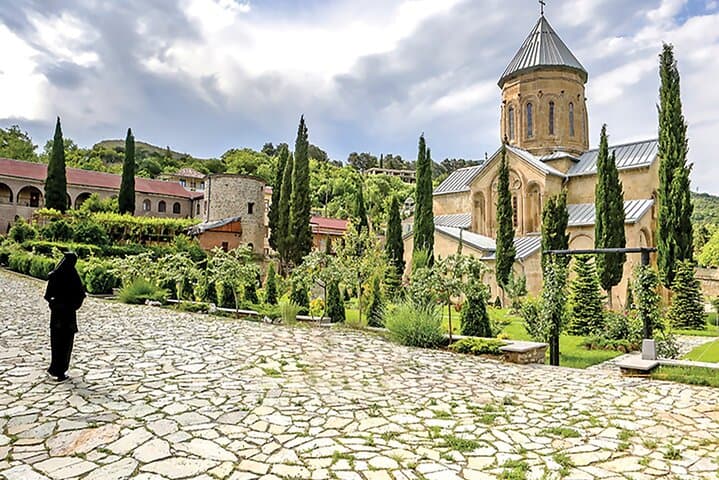
Mtskheta was Georgia’s first capital and the cradle of Georgian Christianity. The town’s compact historic core — Svetitskhoveli Cathedral, Samtavro Monastery and the hilltop Jvari — speaks in stone: 4th–11th century masonry, carved reliefs, and narrow cloistered courtyards that still draw pilgrims. The geology is simple but dramatic — river terraces, limestone outcrops and steep approach roads that show why people built churches where they could be seen for miles.
Culture here is tactile: bell tolls, local markets selling church candles and tklapi fruit leather, and hosts who know family recipes and routes to quieter viewpoints. Conservation measures protect the UNESCO-listed ensemble, but the sites remain lived-in places of worship.
Practical guidance: expect a 30–45 minute transfer from central Tbilisi and roughly four hours on a standard day tour with short walks, stair climbs and viewpoints. Wear comfortable shoes for uneven stone and bring water, sun protection and modest clothing for interiors. Arrive mid-morning to avoid the busiest crowds and allow time to stand quietly inside Svetitskhoveli — the scale and carved capitals reward patience. With its short hikes and concentrated history, Mtskheta is an ideal half-day escape that delivers geology, faith and clear river views in a single run of memory.
easy.
4 hours.
Suitable for most fitness levels; involves short walks and stairs but no sustained hiking.
The transfer typically takes 30–45 minutes each way depending on traffic; allow extra time during rush hours.
Standard day tours often do not include individual site entrance fees; small fees or donations may be payable on-site, often in local currency.
Yes — routes involve short, manageable walks and stair climbs; however those with mobility limitations may find Jvari’s access uphill more challenging.
Most guided tours provide an English-speaking guide; confirm language availability at booking if you need another language.
Mtskheta was the capital of the early Georgian kingdom until the 5th century and became a focal point of Georgian Christianity after conversion in the 4th century.
As a UNESCO World Heritage Site the town enforces preservation rules; visitors should stick to marked paths, avoid touching frescoes and minimize plastic waste to protect fragile stone and religious spaces.
Irina Kartvelishvili operates guided outdoor trips and adventures with an emphasis on safety, stewardship, and memorable experiences.
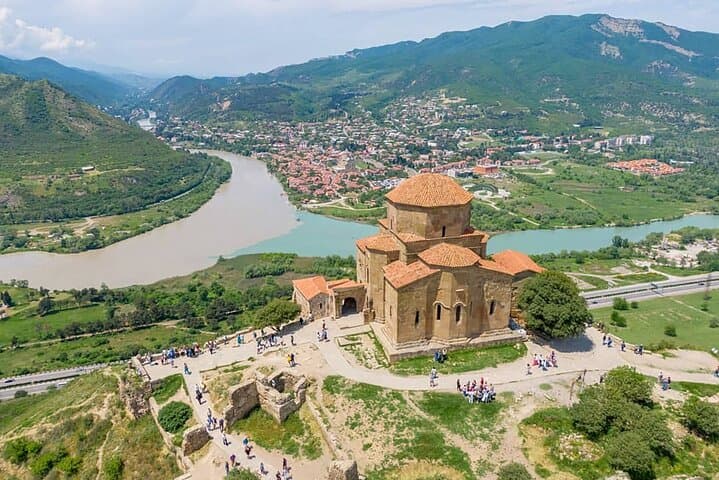
A low hill above two rivers frames the town: the Mtkvari and the Aragvi meet in a braided ribbon of blue and silver, and the stone silhouette of Jvari Monastery watches the confluence like an old guardian. Step out of Tbilisi traffic and into sunlight that paints the ochre facades of Mtskheta; the air here tastes of river dust and warmed stone.
A low hill above two rivers frames the town: the Mtkvari and the Aragvi meet in a braided ribbon of blue and silver, and the stone silhouette of Jvari Monastery watches the confluence like an old guardian. Step out of Tbilisi traffic and into sunlight that paints the ochre facades of Mtskheta; the air here tastes of river dust and warmed stone.
Mtskheta was Georgia’s first capital and the cradle of Georgian Christianity. The town’s compact historic core — Svetitskhoveli Cathedral, Samtavro Monastery and the hilltop Jvari — speaks in stone: 4th–11th century masonry, carved reliefs, and narrow cloistered courtyards that still draw pilgrims. The geology is simple but dramatic — river terraces, limestone outcrops and steep approach roads that show why people built churches where they could be seen for miles.
Culture here is tactile: bell tolls, local markets selling church candles and tklapi fruit leather, and hosts who know family recipes and routes to quieter viewpoints. Conservation measures protect the UNESCO-listed ensemble, but the sites remain lived-in places of worship.
Practical guidance: expect a 30–45 minute transfer from central Tbilisi and roughly four hours on a standard day tour with short walks, stair climbs and viewpoints. Wear comfortable shoes for uneven stone and bring water, sun protection and modest clothing for interiors. Arrive mid-morning to avoid the busiest crowds and allow time to stand quietly inside Svetitskhoveli — the scale and carved capitals reward patience. With its short hikes and concentrated history, Mtskheta is an ideal half-day escape that delivers geology, faith and clear river views in a single run of memory.