THE ADVENTURE COLLECTIVE® · Independent discovery and booking for outdoor travel

Explore Georgia’s former capital and a hilltop 6th‑century monastery on a private half‑day from Tbilisi. This short tour blends medieval architecture, riverside panoramas, and local flavors with minimal walking.
Explore Georgia’s former capital and a hilltop 6th‑century monastery on a private half‑day from Tbilisi. This short tour blends medieval architecture, riverside panoramas, and local flavors with minimal walking.
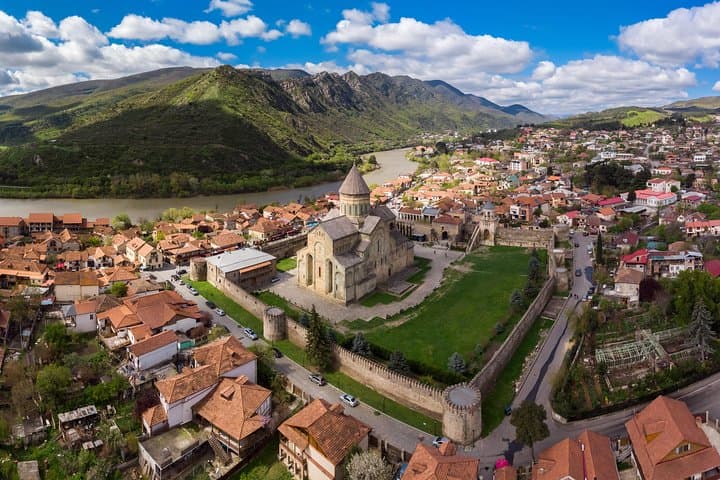
You step out of the car onto a narrow street where stone houses lean toward the sky and the scent of fresh bread drifts from a courtyard. Mtskheta unfolds like a lived-in postcard: low-domed churches, cobbled lanes, and the river plain opening toward the high ridge where Jvari watches over the confluence.
Verified experiences and guided adventures in the surrounding area.
Operated by Hey Geo · Mtskheta, Mtskheta-Mtianeti
You step out of the car onto a narrow street where stone houses lean toward the sky and the scent of fresh bread drifts from a courtyard. Mtskheta unfolds like a lived-in postcard: low-domed churches, cobbled lanes, and the river plain opening toward the high ridge where Jvari watches over the confluence.
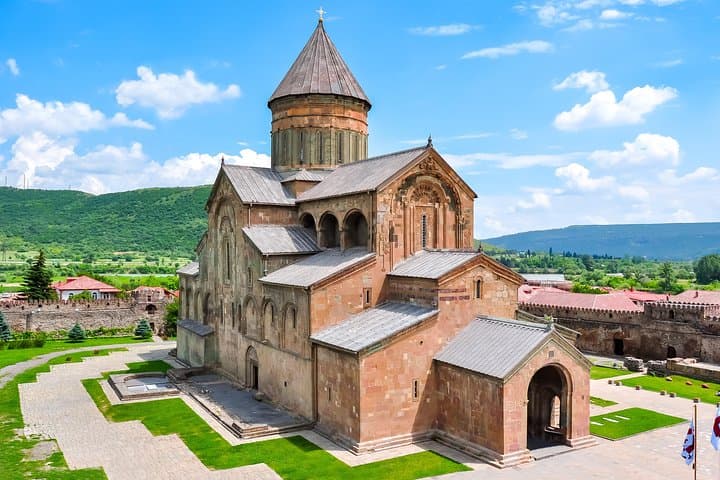
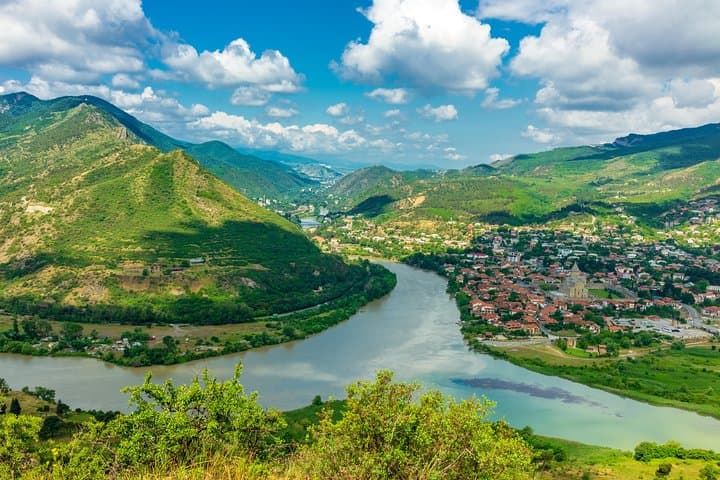
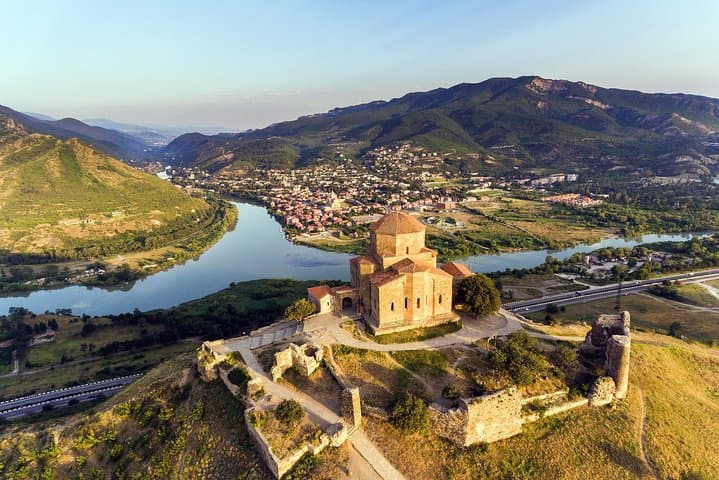
Mtskheta was Georgia’s early capital and remains the spiritual heart of the country. Svetitskhoveli Cathedral (11th century) anchors the town; its carved facades and cool interior reflect centuries of Orthodox worship. A short drive and a brief uphill walk bring you to Jvari Monastery, a compact 6th-century cruciform church set on a rocky spur with panoramic views where the Aragvi meets the Mtkvari (Kura) River.
Geology is subtle but present: weathered limestone and river terraces create the terraces that shaped settlement, while the ridge above the confluence shelters the monastery. Along the route you’ll pass local stalls selling churchkhelas—walnut strings dipped in grape must—and small craft workshops.
Practical guidance: the tour runs about 4–5 hours with private transportation included and minimal walking—expect cobbles and short stone steps at viewpoints. Modest dress is required inside churches; carry water, sun protection, and small cash for souvenirs or donations. Arrive early for softer light and fewer buses, and respect photography restrictions indoors. The pace suits most fitness levels; the reward is concentrated history and a landscape where two rivers argue with one another and the hill answers with silence.
easy.
4–5 hours.
Suitable for most fitness levels; involves short walks on uneven cobbles and a brief uphill to Jvari.
The itinerary runs about 4–5 hours from Tbilisi, including driving time, walks, and stops for photos and refreshments.
Entrance to Jvari is typically included; confirm if any extra museum fees or tastings are optional and paid locally.
Yes—walking is light and the tour is rated easy, though cobbles and short steps may be challenging for some mobility limitations.
Photography is often allowed but restricted in some interior spaces; be respectful of services and posted signs.
Mtskheta served as the capital of the early Georgian kingdom and is a UNESCO World Heritage site for its medieval ecclesiastical monuments.
Both sites are managed to protect fragile stonework and frescoes; stick to marked paths and avoid touching ancient surfaces to reduce wear.
Hey Geo operates guided outdoor trips and adventures with an emphasis on safety, stewardship, and memorable experiences.
You step out of the car onto a narrow street where stone houses lean toward the sky and the scent of fresh bread drifts from a courtyard. Mtskheta unfolds like a lived-in postcard: low-domed churches, cobbled lanes, and the river plain opening toward the high ridge where Jvari watches over the confluence.
You step out of the car onto a narrow street where stone houses lean toward the sky and the scent of fresh bread drifts from a courtyard. Mtskheta unfolds like a lived-in postcard: low-domed churches, cobbled lanes, and the river plain opening toward the high ridge where Jvari watches over the confluence.
Mtskheta was Georgia’s early capital and remains the spiritual heart of the country. Svetitskhoveli Cathedral (11th century) anchors the town; its carved facades and cool interior reflect centuries of Orthodox worship. A short drive and a brief uphill walk bring you to Jvari Monastery, a compact 6th-century cruciform church set on a rocky spur with panoramic views where the Aragvi meets the Mtkvari (Kura) River.
Geology is subtle but present: weathered limestone and river terraces create the terraces that shaped settlement, while the ridge above the confluence shelters the monastery. Along the route you’ll pass local stalls selling churchkhelas—walnut strings dipped in grape must—and small craft workshops.
Practical guidance: the tour runs about 4–5 hours with private transportation included and minimal walking—expect cobbles and short stone steps at viewpoints. Modest dress is required inside churches; carry water, sun protection, and small cash for souvenirs or donations. Arrive early for softer light and fewer buses, and respect photography restrictions indoors. The pace suits most fitness levels; the reward is concentrated history and a landscape where two rivers argue with one another and the hill answers with silence.