THE ADVENTURE COLLECTIVE® · Independent discovery and booking for outdoor travel

A five-day journey that pairs a two-day ascent of Mount Toubkal with a cultural road trip to Dades Valley and the dunes of Merzouga. Expect high mountain trails, Berber villages, long transfers, and a desert camp under vast stars.
A five-day journey that pairs a two-day ascent of Mount Toubkal with a cultural road trip to Dades Valley and the dunes of Merzouga. Expect high mountain trails, Berber villages, long transfers, and a desert camp under vast stars.
You step out of Marrakech’s cool morning bustle and watch the city recede as the Atlas mountains grow taller, their granite ridges catching light like old knives. By afternoon the village of Imlil sits below you—a scatter of flat-roofed houses at 1,740 m—and the trail rises into scrub and stone toward the Toubkal refuge. The mountain seems to breathe: wind that pushes and then softens, sun that presses on exposed slopes.
Verified experiences and guided adventures in the surrounding area.
Operated by Toubkal Trekking · Marrakech, Marrakesh-Safi
You step out of Marrakech’s cool morning bustle and watch the city recede as the Atlas mountains grow taller, their granite ridges catching light like old knives. By afternoon the village of Imlil sits below you—a scatter of flat-roofed houses at 1,740 m—and the trail rises into scrub and stone toward the Toubkal refuge. The mountain seems to breathe: wind that pushes and then softens, sun that presses on exposed slopes.
Toubkal is the highest summit in the Atlas and North Africa, a peak formed by tectonic uplift and ancient erosion; its flanks show dark volcanic and metamorphic bands above cedars and juniper. The route is historic—used by shepherds and muleteers for centuries—and modern trekking lodges in Imlil reflect Berber hospitality: tea, tajine, and stories of the range.
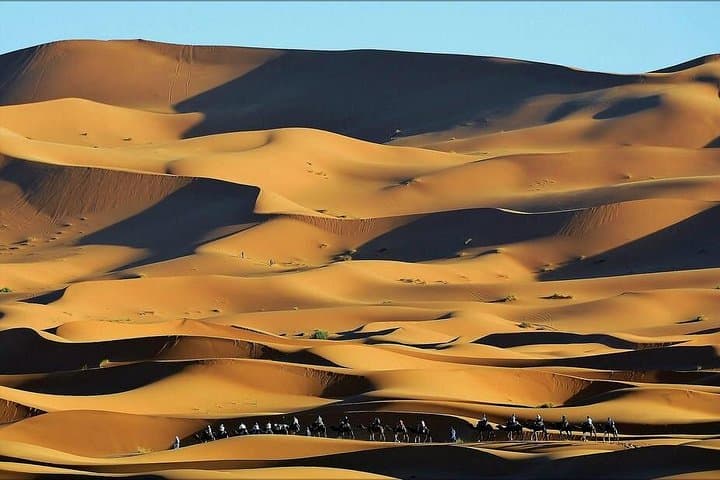
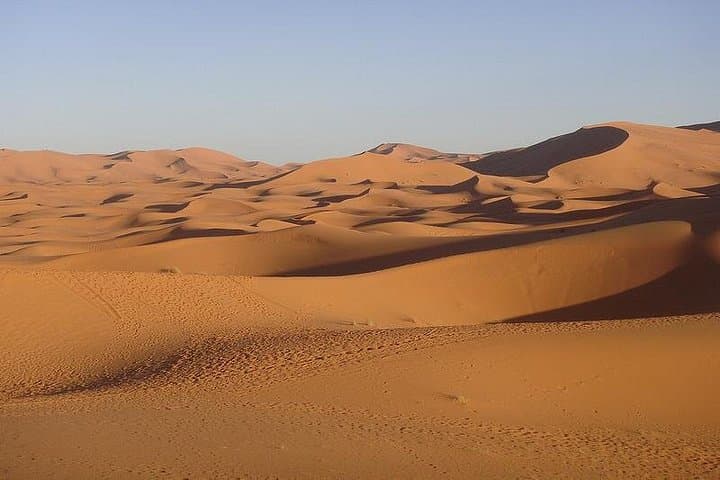
After the high-country silence, the itinerary folds south along the Road of a Thousand Kasbahs into Dades Valley and on to Merzouga, where the dunes of Erg Chebbi stand like a warm, moving wall. Camels negotiate sand with deliberate patience; nights at camp give wide, cold skies and constellations that feel dangerously close.
Practical guide: expect two days of sustained hiking with altitude gain to roughly 4,167 m at the summit, mule support for luggage, and vehicle transfers covering long distances between sites. Footwear with good ankle support, layered insulation for alpine mornings, sun protection for the desert, and plenty of water are essential. Plan for early starts on summit day, moderate to strong fitness, and flexible pacing—the terrain shifts from rocky scree to soft sand in a single itinerary.
challenging.
5 days.
Good aerobic base and leg strength; comfortable with full-day hikes and long vehicle transfers
Expect a strenuous 6–8 hour push from refuge to summit with ~1,000–1,200 m elevation gain; pace matters more than speed.
No technical climbing is required on the standard route in summer; winter ascents may need crampons and an ice axe.
The trip includes a mix of refuges, guesthouses and an overnight desert camp—simple, clean lodging typical for multi-day Atlas treks.
Children can join but must be accompanied by adults; summit day and long transfers make it better for older teens used to hiking.
The Atlas range has long been a corridor for Berber communities; many kasbahs along the Road of a Thousand Kasbahs are 19th-century fortified homes tied to caravan routes.
Stick to marked trails in the high atlas and avoid littering in camps; dune ecosystems are fragile—avoid driving on dunes and support local guides who practice low-impact camping.
Toubkal Trekking operates guided outdoor trips and adventures with an emphasis on safety, stewardship, and memorable experiences.
You step out of Marrakech’s cool morning bustle and watch the city recede as the Atlas mountains grow taller, their granite ridges catching light like old knives. By afternoon the village of Imlil sits below you—a scatter of flat-roofed houses at 1,740 m—and the trail rises into scrub and stone toward the Toubkal refuge. The mountain seems to breathe: wind that pushes and then softens, sun that presses on exposed slopes.
You step out of Marrakech’s cool morning bustle and watch the city recede as the Atlas mountains grow taller, their granite ridges catching light like old knives. By afternoon the village of Imlil sits below you—a scatter of flat-roofed houses at 1,740 m—and the trail rises into scrub and stone toward the Toubkal refuge. The mountain seems to breathe: wind that pushes and then softens, sun that presses on exposed slopes.
Toubkal is the highest summit in the Atlas and North Africa, a peak formed by tectonic uplift and ancient erosion; its flanks show dark volcanic and metamorphic bands above cedars and juniper. The route is historic—used by shepherds and muleteers for centuries—and modern trekking lodges in Imlil reflect Berber hospitality: tea, tajine, and stories of the range.
After the high-country silence, the itinerary folds south along the Road of a Thousand Kasbahs into Dades Valley and on to Merzouga, where the dunes of Erg Chebbi stand like a warm, moving wall. Camels negotiate sand with deliberate patience; nights at camp give wide, cold skies and constellations that feel dangerously close.
Practical guide: expect two days of sustained hiking with altitude gain to roughly 4,167 m at the summit, mule support for luggage, and vehicle transfers covering long distances between sites. Footwear with good ankle support, layered insulation for alpine mornings, sun protection for the desert, and plenty of water are essential. Plan for early starts on summit day, moderate to strong fitness, and flexible pacing—the terrain shifts from rocky scree to soft sand in a single itinerary.