THE ADVENTURE COLLECTIVE® · Independent discovery and booking for outdoor travel

A full-day private tour from Tokyo that combines a cable-car ascent to Mt. Nokogiri, cliff-edge viewpoints, the carved Great Buddha at Nihon-ji, and visits to terraced rice fields and coastal piers. Expect stair climbs, coastal views, and strong cultural context.
A full-day private tour from Tokyo that combines a cable-car ascent to Mt. Nokogiri, cliff-edge viewpoints, the carved Great Buddha at Nihon-ji, and visits to terraced rice fields and coastal piers. Expect stair climbs, coastal views, and strong cultural context.
You step off an air-conditioned van into a wind that smells of salt and stone, the slope cutting up toward a saw-toothed ridge. A short cable-car lift pulls you above bamboo and terraced paddies; the bay opens like a bright bruise below and, on a clear day, Mount Fuji punctures the skyline. The rock here feels old and worked—quarried faces and hand-carved steps lead into a Buddhist complex hewn from the mountain itself.
Verified experiences and guided adventures in the surrounding area.
Operated by H.I.S.Co., Ltd. · Futtsu, Chiba Prefecture
You step off an air-conditioned van into a wind that smells of salt and stone, the slope cutting up toward a saw-toothed ridge. A short cable-car lift pulls you above bamboo and terraced paddies; the bay opens like a bright bruise below and, on a clear day, Mount Fuji punctures the skyline. The rock here feels old and worked—quarried faces and hand-carved steps lead into a Buddhist complex hewn from the mountain itself.
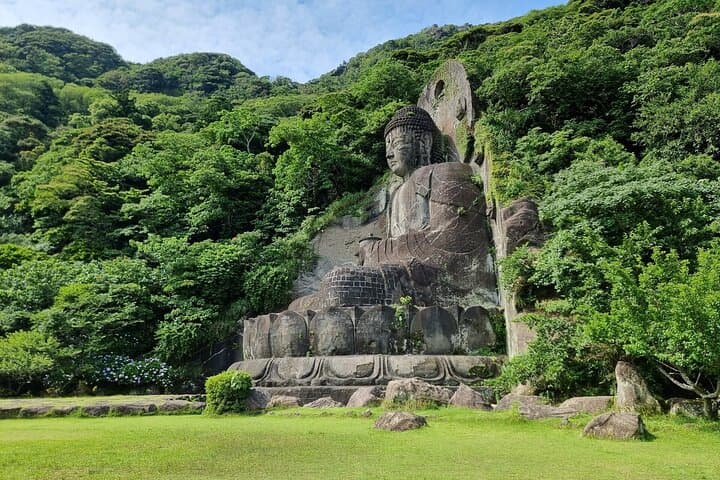
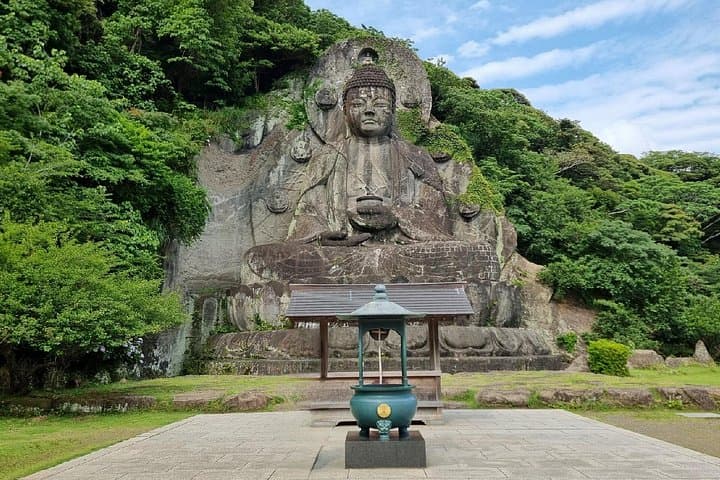
Nihon-ji’s Great Buddha and thousands of smaller stone figures reflect a history of religious carving and coastal quarrying that supplied stone for Edo-era construction. Geologically, Nokogiriyama is part of the Boso Peninsula’s uplifted formations, where softer zones were cut away to reveal dramatic cliffs and ledges. Culturally the area mixes rural farming—rice terraces that follow seasonal rhythms—with coastal fishing villages; lunch options often center on fresh seafood.
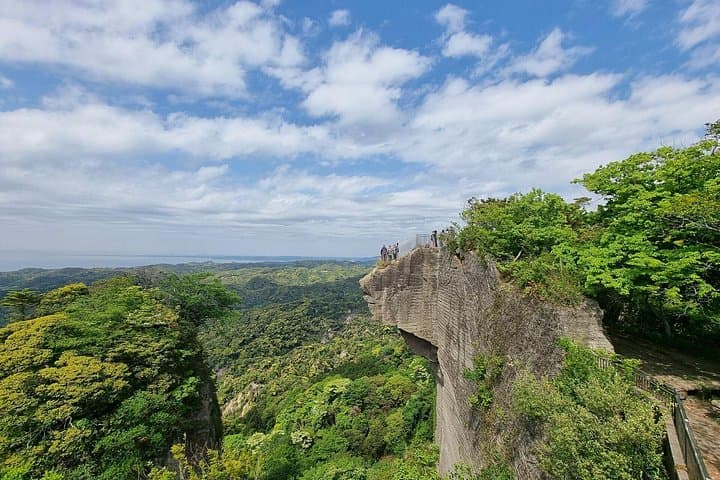
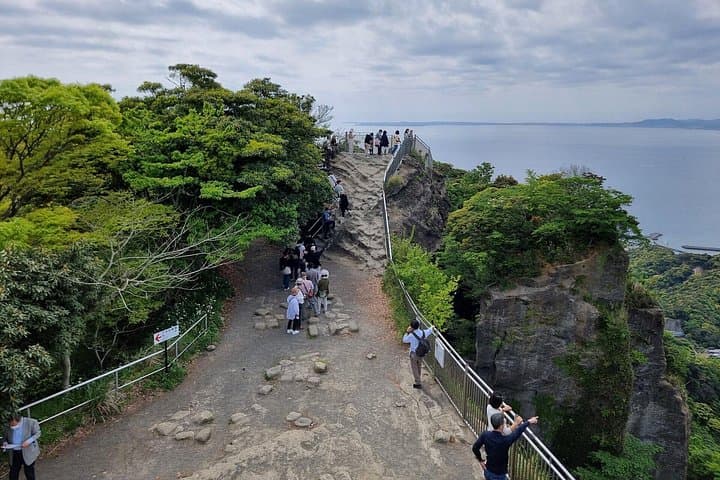
Expect a mix of light hiking and stair climbs: some trails are compacted dirt with exposed roots, others are carved steps and viewing platforms like Jigoku-nozoki (Hell’s Lookout). Wear grippy shoes; those prone to vertigo should approach observation edges cautiously. Timing matters—spring and autumn bring milder hiking conditions; summer is humid and hot, and winter offers clearer air and memorable sunsets over Tokyo Bay.
Practical notes: the full private loop runs about eleven hours including pickup from Tokyo, cable-car fare and guide; meals are typically not included. Bring water, a small towel, and a camera with spare battery. The route balances cultural sightseeing with enough uneven terrain to feel like a genuine day in the outdoors.
moderate.
11 hours.
Moderate fitness recommended—able to climb several hundred steps and walk uneven trails for multiple short segments.
The private tour is approximately 11 hours round-trip from Tokyo and includes round-trip hotel pickup in an air-conditioned vehicle; cable-car fare is included.
There are several hundred carved steps and uneven surfaces; children with reasonable stamina can manage shorter segments but supervision is required.
Lunch is not included by default; many suggested lunches feature seafood and sashimi—request a non-seafood option when booking if needed.
On clear days you can see Mount Fuji from the mountaintop observatory, though visibility depends on weather and air clarity.
Nokogiriyama’s slopes were quarried for centuries to supply stone for regional construction; Nihon-ji’s stone carvings date to Edo-period religious expansion and earlier temple activity.
Local groups work to maintain terraced rice fields and prevent abandonment; visitors are asked to stick to paths to protect fragile agricultural terraces and temple rock faces.
H.I.S.Co., Ltd. operates guided outdoor trips and adventures with an emphasis on safety, stewardship, and memorable experiences.
You step off an air-conditioned van into a wind that smells of salt and stone, the slope cutting up toward a saw-toothed ridge. A short cable-car lift pulls you above bamboo and terraced paddies; the bay opens like a bright bruise below and, on a clear day, Mount Fuji punctures the skyline. The rock here feels old and worked—quarried faces and hand-carved steps lead into a Buddhist complex hewn from the mountain itself.
You step off an air-conditioned van into a wind that smells of salt and stone, the slope cutting up toward a saw-toothed ridge. A short cable-car lift pulls you above bamboo and terraced paddies; the bay opens like a bright bruise below and, on a clear day, Mount Fuji punctures the skyline. The rock here feels old and worked—quarried faces and hand-carved steps lead into a Buddhist complex hewn from the mountain itself.
Nihon-ji’s Great Buddha and thousands of smaller stone figures reflect a history of religious carving and coastal quarrying that supplied stone for Edo-era construction. Geologically, Nokogiriyama is part of the Boso Peninsula’s uplifted formations, where softer zones were cut away to reveal dramatic cliffs and ledges. Culturally the area mixes rural farming—rice terraces that follow seasonal rhythms—with coastal fishing villages; lunch options often center on fresh seafood.
Expect a mix of light hiking and stair climbs: some trails are compacted dirt with exposed roots, others are carved steps and viewing platforms like Jigoku-nozoki (Hell’s Lookout). Wear grippy shoes; those prone to vertigo should approach observation edges cautiously. Timing matters—spring and autumn bring milder hiking conditions; summer is humid and hot, and winter offers clearer air and memorable sunsets over Tokyo Bay.
Practical notes: the full private loop runs about eleven hours including pickup from Tokyo, cable-car fare and guide; meals are typically not included. Bring water, a small towel, and a camera with spare battery. The route balances cultural sightseeing with enough uneven terrain to feel like a genuine day in the outdoors.