THE ADVENTURE COLLECTIVE® · Independent discovery and booking for outdoor travel

Walk cedar-lined avenues and centuries-old temple grounds with a government-licensed guide on a four-hour private tour of Mt. Koya. Learn Shingon history, visit Okunoin and Danjo Garan, and get practical tips for navigating sacred spaces.
Walk cedar-lined avenues and centuries-old temple grounds with a government-licensed guide on a four-hour private tour of Mt. Koya. Learn Shingon history, visit Okunoin and Danjo Garan, and get practical tips for navigating sacred spaces.
You step off the quiet regional train into the thin highland air of Koyasan — cedar trunks rise like columns, lanterns punctuate the mist, and the low chime of temple bells threads through the morning. A licensed local guide meets you at Koyasan Station and leads the group along shaded avenues toward Okunoin, where moss-carpeted gravestones stretch beneath an ancient canopy and the founder Kobo Daishi seems to preside over the forest.
Verified experiences and guided adventures in the surrounding area.
Operated by Japan Guide Agency · Koyasan, Wakayama Prefecture
You step off the quiet regional train into the thin highland air of Koyasan — cedar trunks rise like columns, lanterns punctuate the mist, and the low chime of temple bells threads through the morning. A licensed local guide meets you at Koyasan Station and leads the group along shaded avenues toward Okunoin, where moss-carpeted gravestones stretch beneath an ancient canopy and the founder Kobo Daishi seems to preside over the forest.
Mt. Koya sits on a folded highland of the Kii Peninsula, a volcanic-origin plateau carved into hollows that became sacred ground in the 9th century when Kukai established Shingon Buddhism here. The walk ties geology to ritual: volcanic rock underfoot; temple architecture and lacquered ornament that speak to Edo- and Heian-period patronage; and the Reihokan’s collection of mandala and statuary that explain devotional practice.
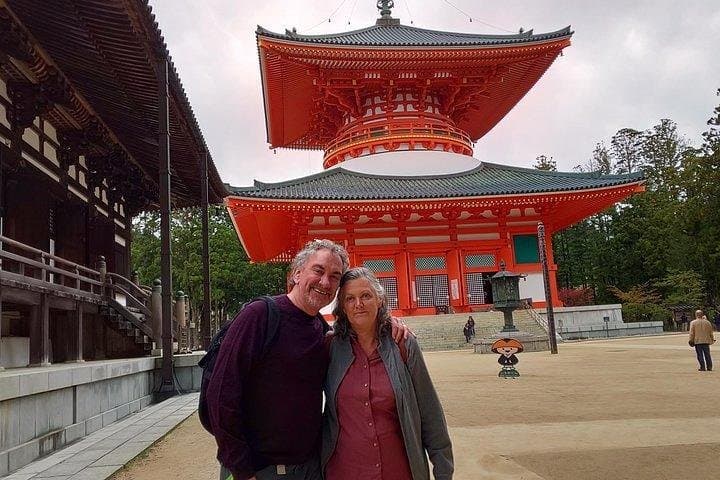
Your guide customizes the route to include 2–3 highlights — Okunoin’s lantern approach, the Danjo Garan complex with its Konpon Daito tower, or the Reihokan museum — while adding cultural context, stories about Tokugawa mausolea, and practical notes on etiquette.
Prepare for four hours of steady walking on paved and gravel paths, occasional steps, and cool microclimates under canopy. Hydrate, wear non-slip shoes, and bring a modest cash reserve for temple offerings or museum admission. The experience balances contemplative silence with precise interpretation: history, ritual, and the living culture of a mountain that still shapes Japanese pilgrimage.
easy.
4 hours.
Suitable for travelers in normal walking fitness; involves steady walking on groomed paths and some steps.
Meeting point is Koyasan Station; the licensed guide will wait outside the station entrance and take you on foot to the itinerary start.
Admissions are not typically included; your guide will advise which sites charge entry and you should budget small amounts for museums or special halls.
Many areas in Koyasan have wheelchair access and the operator notes accessibility, but specific stops may have steps—confirm needs at booking so the guide can tailor the route.
Yes — the private tour lets you select 2–3 must-see sites from the provided list and the guide will adapt pacing and stops to your interests.
Founded by Kukai (Kobo Daishi) in the early 9th century, Koyasan became the headquarters of Shingon Buddhism and hosts mausolea of prominent historical figures.
Koyasan’s temple forests are protected as part of the UNESCO Sacred Sites of Kii Mountain Range; visitors are asked to stay on paths, avoid single-use plastics, and respect quiet to minimize cultural and ecological impact.
Japan Guide Agency operates guided outdoor trips and adventures with an emphasis on safety, stewardship, and memorable experiences.
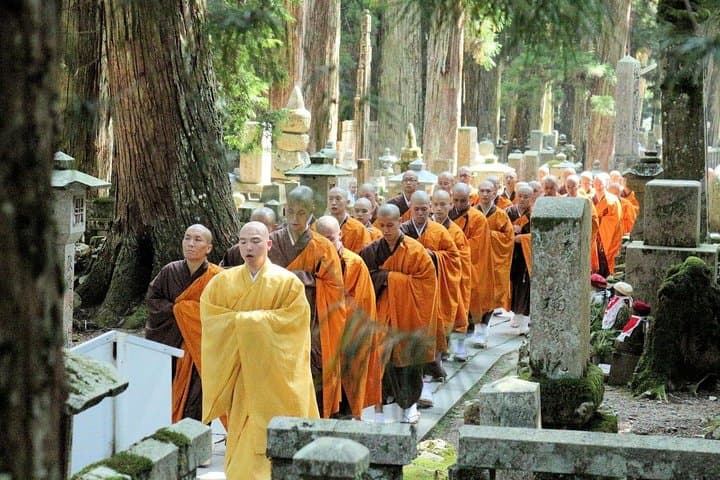
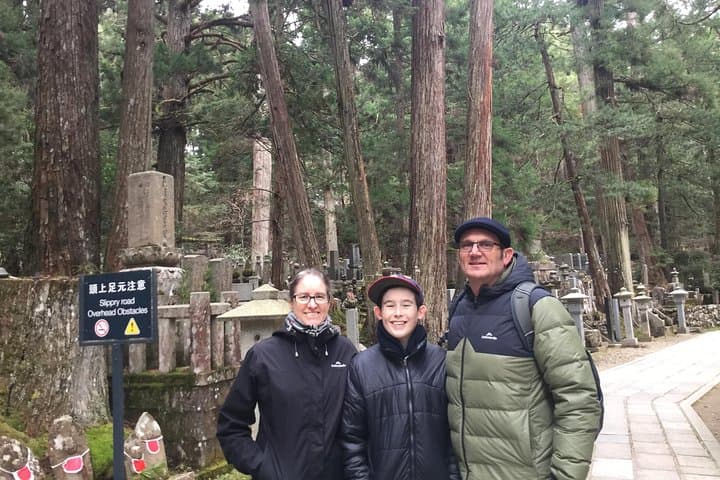
You step off the quiet regional train into the thin highland air of Koyasan — cedar trunks rise like columns, lanterns punctuate the mist, and the low chime of temple bells threads through the morning. A licensed local guide meets you at Koyasan Station and leads the group along shaded avenues toward Okunoin, where moss-carpeted gravestones stretch beneath an ancient canopy and the founder Kobo Daishi seems to preside over the forest.
You step off the quiet regional train into the thin highland air of Koyasan — cedar trunks rise like columns, lanterns punctuate the mist, and the low chime of temple bells threads through the morning. A licensed local guide meets you at Koyasan Station and leads the group along shaded avenues toward Okunoin, where moss-carpeted gravestones stretch beneath an ancient canopy and the founder Kobo Daishi seems to preside over the forest.
Mt. Koya sits on a folded highland of the Kii Peninsula, a volcanic-origin plateau carved into hollows that became sacred ground in the 9th century when Kukai established Shingon Buddhism here. The walk ties geology to ritual: volcanic rock underfoot; temple architecture and lacquered ornament that speak to Edo- and Heian-period patronage; and the Reihokan’s collection of mandala and statuary that explain devotional practice.
Your guide customizes the route to include 2–3 highlights — Okunoin’s lantern approach, the Danjo Garan complex with its Konpon Daito tower, or the Reihokan museum — while adding cultural context, stories about Tokugawa mausolea, and practical notes on etiquette.
Prepare for four hours of steady walking on paved and gravel paths, occasional steps, and cool microclimates under canopy. Hydrate, wear non-slip shoes, and bring a modest cash reserve for temple offerings or museum admission. The experience balances contemplative silence with precise interpretation: history, ritual, and the living culture of a mountain that still shapes Japanese pilgrimage.