THE ADVENTURE COLLECTIVE® · Independent discovery and booking for outdoor travel

Escape Osaka for a day and step into Koyasan’s cedar-shaded world of temples, tombs and museum treasures. This private, licensed-guide tour covers Okunoin, Danjo Garan and Reihokan with flexible stops and accessible transport.
Escape Osaka for a day and step into Koyasan’s cedar-shaded world of temples, tombs and museum treasures. This private, licensed-guide tour covers Okunoin, Danjo Garan and Reihokan with flexible stops and accessible transport.
A soft mountain mist parts as the guide steers a private vehicle up into Wakayama’s higher ridges, and the roadside cedars of Koyasan loom like watchful guardians. You step out into a hush punctuated by the patter of tap water in temple basins and the distant toll of a bell; this is a place where the landscape itself seems to slow its breath.
Verified experiences and guided adventures in the surrounding area.
Operated by Japan Guide Agency · Koyasan, Wakayama Prefecture
A soft mountain mist parts as the guide steers a private vehicle up into Wakayama’s higher ridges, and the roadside cedars of Koyasan loom like watchful guardians. You step out into a hush punctuated by the patter of tap water in temple basins and the distant toll of a bell; this is a place where the landscape itself seems to slow its breath.
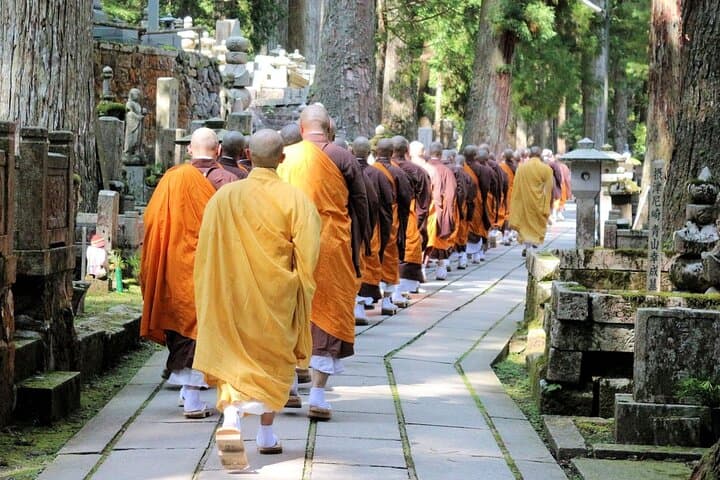
Mount Koya (Koyasan) is the cradle of Shingon Buddhism, founded by Kobo Daishi (Kukai) in the early 9th century. Geologically the plateau rests on folded volcanic strata, creating forested slopes that funnel springs and fog into Okunoin’s cemetery approach. Culture here is lived—temple architecture ranges from austere wooden halls at Danjo Garan to lacquered Tokugawa mausoleums, while Reihokan guards art and mandala that map medieval spiritual practice.
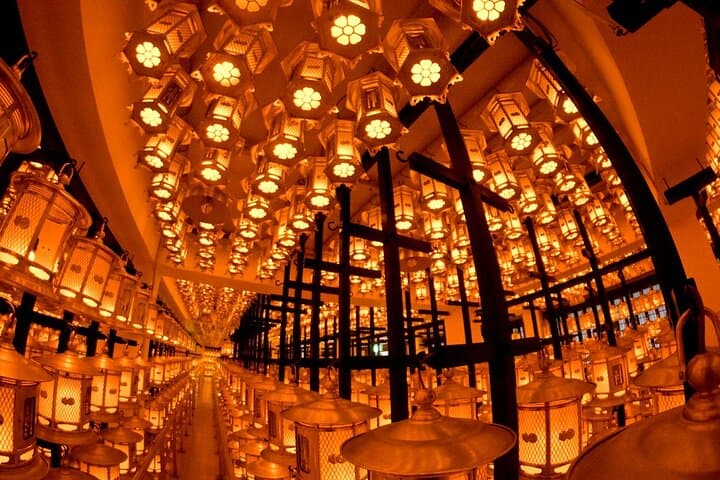
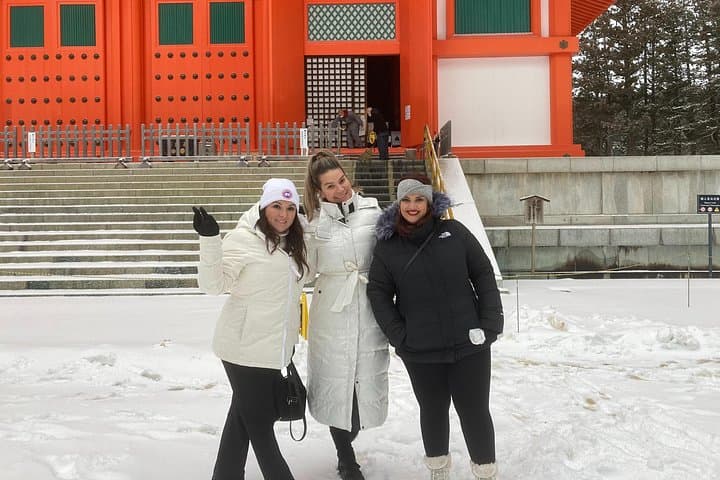
On a full-day private tour from Osaka you’ll visit Okunoin’s lantern-lined path, the Konpon Daito and Garan complex, Reihokan museum, and administrative Daishi Kyokai, with the flexibility to choose 3–4 sites. Expect guided stories about feudal patrons, pilgrimage routes and ritual practice, plus short walks on uneven stone and wooded trails.
Practical notes: travel time from Osaka is about 1.5–2 hours each way by car; bring a rain layer, comfortable walking shoes, and cash for small shrine offerings. Mornings are best for softer light and fewer visitors; allow at least 6–8 hours for a comprehensive visit. Respect temple rules—quiet, no flash photography in halls, and leave no trace in sacred spaces.
easy.
8 hours.
Light fitness; able to walk short distances, climb steps and stand for guided explanations
Expect about 1.5–2 hours each way by private vehicle, depending on traffic and pickup location in Osaka.
Admission varies by site; confirm with the operator which museums or special exhibits are covered, and bring cash if not included.
Transportation is wheelchair accessible, but some temple grounds and older buildings have steps and uneven surfaces—check specific site access with the guide in advance.
This tour includes a National Government Licensed Guide Interpreter in English who can explain history, rituals and architecture in detail.
Koyasan was established in the early 9th century by Kobo Daishi and became the administrative center of Shingon Buddhism; Tokugawa-era mausoleums reflect later patronage.
Temple precincts are protected and managed to preserve cultural assets; visitors should stay on paths, refrain from littering or drone use, and respect rituals to limit impact.
Japan Guide Agency operates guided outdoor trips and adventures with an emphasis on safety, stewardship, and memorable experiences.
A soft mountain mist parts as the guide steers a private vehicle up into Wakayama’s higher ridges, and the roadside cedars of Koyasan loom like watchful guardians. You step out into a hush punctuated by the patter of tap water in temple basins and the distant toll of a bell; this is a place where the landscape itself seems to slow its breath.
A soft mountain mist parts as the guide steers a private vehicle up into Wakayama’s higher ridges, and the roadside cedars of Koyasan loom like watchful guardians. You step out into a hush punctuated by the patter of tap water in temple basins and the distant toll of a bell; this is a place where the landscape itself seems to slow its breath.
Mount Koya (Koyasan) is the cradle of Shingon Buddhism, founded by Kobo Daishi (Kukai) in the early 9th century. Geologically the plateau rests on folded volcanic strata, creating forested slopes that funnel springs and fog into Okunoin’s cemetery approach. Culture here is lived—temple architecture ranges from austere wooden halls at Danjo Garan to lacquered Tokugawa mausoleums, while Reihokan guards art and mandala that map medieval spiritual practice.
On a full-day private tour from Osaka you’ll visit Okunoin’s lantern-lined path, the Konpon Daito and Garan complex, Reihokan museum, and administrative Daishi Kyokai, with the flexibility to choose 3–4 sites. Expect guided stories about feudal patrons, pilgrimage routes and ritual practice, plus short walks on uneven stone and wooded trails.
Practical notes: travel time from Osaka is about 1.5–2 hours each way by car; bring a rain layer, comfortable walking shoes, and cash for small shrine offerings. Mornings are best for softer light and fewer visitors; allow at least 6–8 hours for a comprehensive visit. Respect temple rules—quiet, no flash photography in halls, and leave no trace in sacred spaces.