THE ADVENTURE COLLECTIVE® · Independent discovery and booking for outdoor travel

Trek the Narumoru route on Mount Kenya over five days to reach Point Lenana (4,985 m). This non-technical but high-altitude itinerary weaves forest, moorland and alpine rock with summit sunrise views.
Trek the Narumoru route on Mount Kenya over five days to reach Point Lenana (4,985 m). This non-technical but high-altitude itinerary weaves forest, moorland and alpine rock with summit sunrise views.
Dawn slips pale across a ragged skyline as you step out of Narumoru River Lodge and into the pine-scented air. The Narumoru route threads up from 2,600 m through forest, then into moorland and the vertical bogs that guard the higher flanks, finally opening onto the rocky ramparts that lead to Point Lenana. On summit day you start in the dark, the headlamp cone cutting through thin air; sunrise from 4,985 m washes the peaks and valleys in hard, cold light.
Verified experiences and guided adventures in the surrounding area.
Operated by Kenya Bush Expeditions Tour and Travel · Nanyuki, Laikipia County
Dawn slips pale across a ragged skyline as you step out of Narumoru River Lodge and into the pine-scented air. The Narumoru route threads up from 2,600 m through forest, then into moorland and the vertical bogs that guard the higher flanks, finally opening onto the rocky ramparts that lead to Point Lenana. On summit day you start in the dark, the headlamp cone cutting through thin air; sunrise from 4,985 m washes the peaks and valleys in hard, cold light.
Geologically Mount Kenya is an eroded stratovolcano whose jagged summits—Batian and Nelion—rise above the accessible trekkers’ peak, Lenana. The massif forms a climatic divide and supports Afro-alpine moorland and montane forest that local Kikuyu communities have long regarded with cultural reverence. The park was protected mid-20th century and remains a UNESCO World Heritage site because of its unique flora and fragile ecosystems.
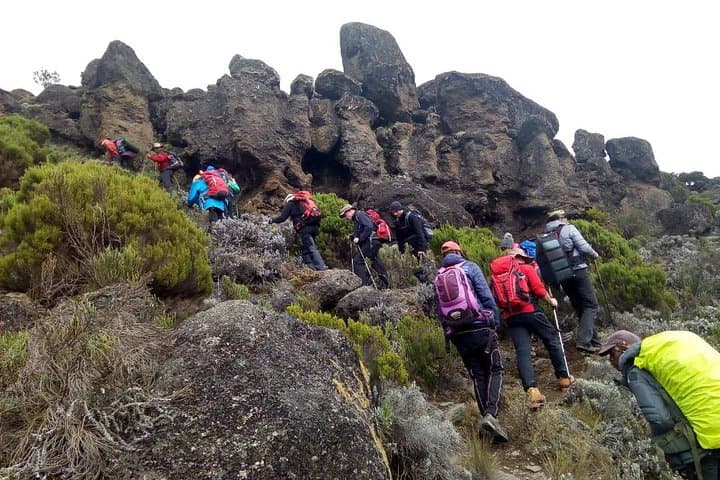
The itinerary is straightforward: Narumoru gate (2,600 m) to Met Station (3,000 m), up to Mackinders Camp (~4,200 m), a pre-dawn push to Point Lenana (4,985 m) and a descent back over two days. Expect boggy moorland, rocky scree, and steep switchbacks. Altitude, not technical climbing, is the main challenge; only Lenana is non-technical.
Practical guidance: acclimatize slowly, drink frequently, layer for rapid temperature swings, and carry a headlamp for the summit push. Sturdy waterproof boots, trekking poles, and a warm insulated layer make long descents and the summit dawn far more manageable. Guides, porters and a cook manage logistics, but be prepared for basic camp facilities and brisk mountain weather.
challenging.
5 days.
Strong cardiovascular fitness and prior multi-day hiking experience recommended; ability to carry a daypack and manage long summit-day effort.
No—Point Lenana is a non-technical trek, but the route is steep and high; technical climbs to Batian and Nelion require ropes and experience.
Dry months (January–March and June–September) offer more stable conditions, but the mountain can be climbed year-round with appropriate gear.
Altitude can affect fit hikers; follow staged ascents, hydrate, move slowly and descend if symptoms (severe headache, nausea, dizziness) worsen.
Yes—tents, communal camp setups and meals are usually provided by the operator; confirm porter limits and dietary needs when booking.
Mount Kenya is a former stratovolcano and a cultural landmark for local Kikuyu people; the park was established mid-20th century and later became a UNESCO World Heritage Site.
The alpine flora is fragile—stick to established tracks, pack out waste, and respect camping limits to reduce erosion and ecological disturbance.
Kenya Bush Expeditions Tour and Travel operates guided outdoor trips and adventures with an emphasis on safety, stewardship, and memorable experiences.

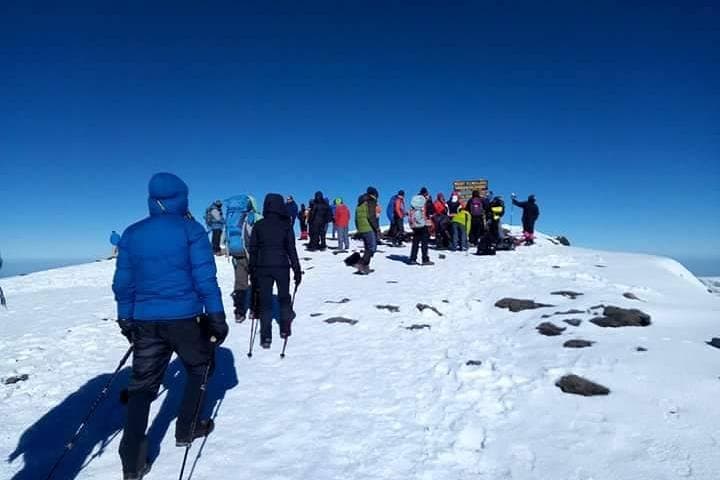
Dawn slips pale across a ragged skyline as you step out of Narumoru River Lodge and into the pine-scented air. The Narumoru route threads up from 2,600 m through forest, then into moorland and the vertical bogs that guard the higher flanks, finally opening onto the rocky ramparts that lead to Point Lenana. On summit day you start in the dark, the headlamp cone cutting through thin air; sunrise from 4,985 m washes the peaks and valleys in hard, cold light.
Dawn slips pale across a ragged skyline as you step out of Narumoru River Lodge and into the pine-scented air. The Narumoru route threads up from 2,600 m through forest, then into moorland and the vertical bogs that guard the higher flanks, finally opening onto the rocky ramparts that lead to Point Lenana. On summit day you start in the dark, the headlamp cone cutting through thin air; sunrise from 4,985 m washes the peaks and valleys in hard, cold light.
Geologically Mount Kenya is an eroded stratovolcano whose jagged summits—Batian and Nelion—rise above the accessible trekkers’ peak, Lenana. The massif forms a climatic divide and supports Afro-alpine moorland and montane forest that local Kikuyu communities have long regarded with cultural reverence. The park was protected mid-20th century and remains a UNESCO World Heritage site because of its unique flora and fragile ecosystems.
The itinerary is straightforward: Narumoru gate (2,600 m) to Met Station (3,000 m), up to Mackinders Camp (~4,200 m), a pre-dawn push to Point Lenana (4,985 m) and a descent back over two days. Expect boggy moorland, rocky scree, and steep switchbacks. Altitude, not technical climbing, is the main challenge; only Lenana is non-technical.
Practical guidance: acclimatize slowly, drink frequently, layer for rapid temperature swings, and carry a headlamp for the summit push. Sturdy waterproof boots, trekking poles, and a warm insulated layer make long descents and the summit dawn far more manageable. Guides, porters and a cook manage logistics, but be prepared for basic camp facilities and brisk mountain weather.