THE ADVENTURE COLLECTIVE® · Independent discovery and booking for outdoor travel

A compact 4-day expedition that climbs from montane forest to the alpine cap of Mt. Kenya and the non-technical summit Point Lenana (4,985 m). Expect long days, dramatic terrain changes, and pre-dawn summit pushes with panoramic sunrise views.
A compact 4-day expedition that climbs from montane forest to the alpine cap of Mt. Kenya and the non-technical summit Point Lenana (4,985 m). Expect long days, dramatic terrain changes, and pre-dawn summit pushes with panoramic sunrise views.
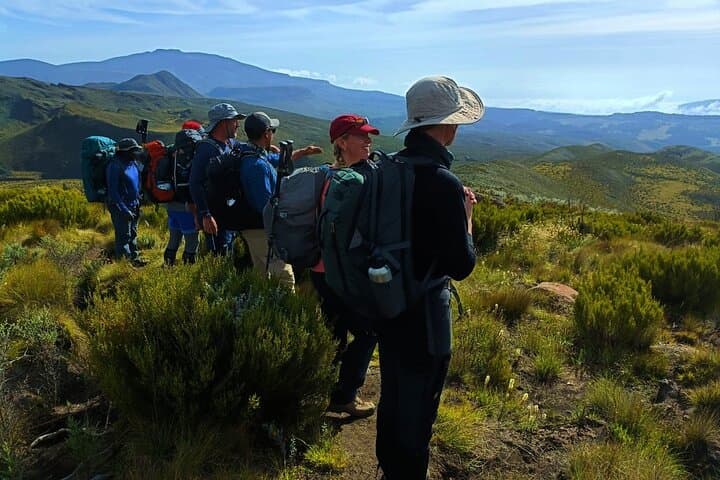
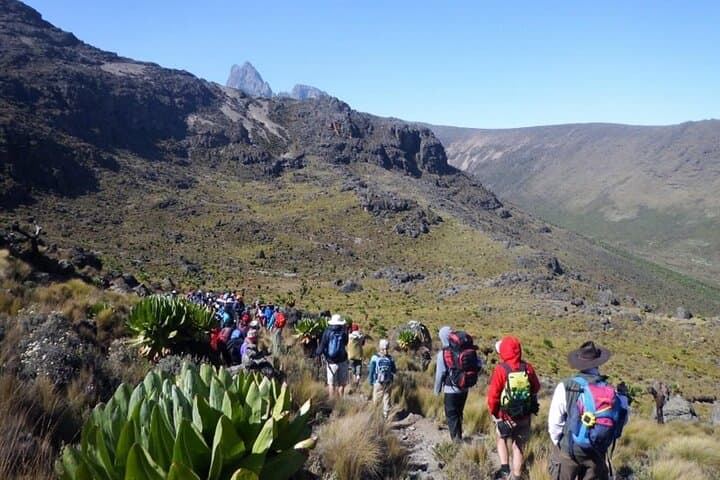
You leave Nairobi before dawn and the road unwinds toward a high, craggy skyline: jagged ridgelines of Mt. Kenya sharpening against a cold blue. The trail begins in dense montane forest — mossy trunks, bamboo curtains and the calls of colobus monkeys — then climbs through moorland where giant lobelia and senecio stand like alien sentries. By the third night you’ll start the summit push under a star-bright sky, setting off around 03:00 for Point Lenana, the highest non-technical trekking point at about 4,985 m.
Verified experiences and guided adventures in the surrounding area.
Operated by Wild Pro Adventures · Nanyuki, Laikipia County
You leave Nairobi before dawn and the road unwinds toward a high, craggy skyline: jagged ridgelines of Mt. Kenya sharpening against a cold blue. The trail begins in dense montane forest — mossy trunks, bamboo curtains and the calls of colobus monkeys — then climbs through moorland where giant lobelia and senecio stand like alien sentries. By the third night you’ll start the summit push under a star-bright sky, setting off around 03:00 for Point Lenana, the highest non-technical trekking point at about 4,985 m.
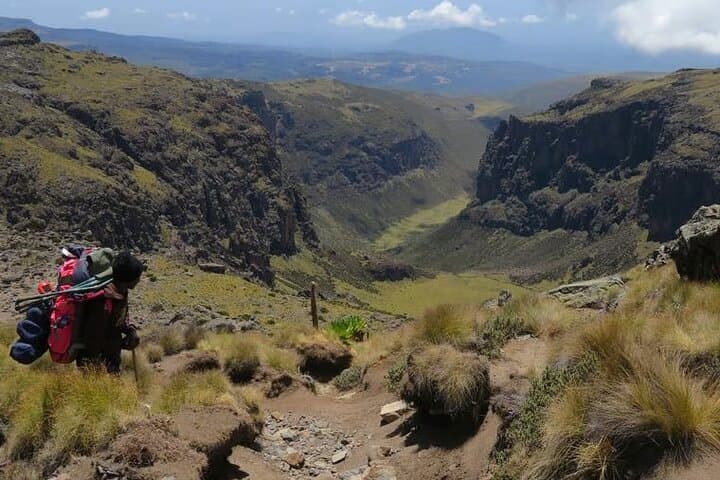
Geology here is unapologetically raw: an eroded volcanic massif whose peaks, carved by ancient glaciers, form steep ridges, corries and glacial valleys. The mountain is central to local Kikuyu culture and history; it served as both a navigation landmark and a sacred place for generations. Wildlife is concentrated at lower elevations — black-and-white colobus, forest birds and occasional buffalo signs — while the alpine zone hosts specialist plants adapted to thin air and fierce sun.
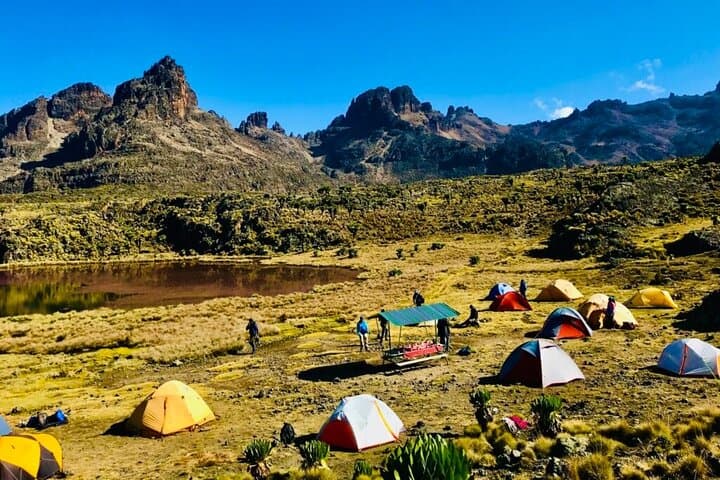
Practically, expect 4 days of trekking: day 1 ~4 hours up through forest to camp, day 2 ~8 hours into moorland and high camps, day 3 ~10 hours including a pre-dawn summit push, day 4 ~4 hours descent to the gate. Elevation gain to Point Lenana is roughly 1,500–2,000 m depending on route; the footing ranges from soft trail to scree and rocky slabs. Guides and porters handle logistics and park permits; you should carry a daypack with water, warm layers, headlamp and snacks. Hydrate, pace conservatively on the summit night, and give the mountain time—its weather and altitude will set the tempo.
challenging.
4 days.
Good aerobic fitness and prior multi-day hiking experience recommended; ability to handle long uphill days and altitude.
Point Lenana is about 4,985 m and is the highest non-technical trekking summit on Mt. Kenya; ropes and technical climbing gear are not required for the standard route.
The clearest windows are the dry periods—January–February and June–September—when trails are drier and visibility is better for sunrise views.
This expedition includes park entrance fees and on-mountain accommodation in huts or tents; confirm exact inclusions with the operator at booking.
Prior multi-day hiking experience is helpful, but the main requirement is solid fitness and the ability to manage altitude; guides monitor pacing and symptoms.
Mt. Kenya is an ancient volcanic massif and has cultural significance for the Kikuyu people; early European exploration in the late 19th and early 20th centuries mapped its peaks.
The alpine zone is fragile—stick to established trails, avoid picking plants like giant lobelia, and pack out all waste; park permits support conservation and local communities.
Wild Pro Adventures operates guided outdoor trips and adventures with an emphasis on safety, stewardship, and memorable experiences.
You leave Nairobi before dawn and the road unwinds toward a high, craggy skyline: jagged ridgelines of Mt. Kenya sharpening against a cold blue. The trail begins in dense montane forest — mossy trunks, bamboo curtains and the calls of colobus monkeys — then climbs through moorland where giant lobelia and senecio stand like alien sentries. By the third night you’ll start the summit push under a star-bright sky, setting off around 03:00 for Point Lenana, the highest non-technical trekking point at about 4,985 m.
You leave Nairobi before dawn and the road unwinds toward a high, craggy skyline: jagged ridgelines of Mt. Kenya sharpening against a cold blue. The trail begins in dense montane forest — mossy trunks, bamboo curtains and the calls of colobus monkeys — then climbs through moorland where giant lobelia and senecio stand like alien sentries. By the third night you’ll start the summit push under a star-bright sky, setting off around 03:00 for Point Lenana, the highest non-technical trekking point at about 4,985 m.
Geology here is unapologetically raw: an eroded volcanic massif whose peaks, carved by ancient glaciers, form steep ridges, corries and glacial valleys. The mountain is central to local Kikuyu culture and history; it served as both a navigation landmark and a sacred place for generations. Wildlife is concentrated at lower elevations — black-and-white colobus, forest birds and occasional buffalo signs — while the alpine zone hosts specialist plants adapted to thin air and fierce sun.
Practically, expect 4 days of trekking: day 1 ~4 hours up through forest to camp, day 2 ~8 hours into moorland and high camps, day 3 ~10 hours including a pre-dawn summit push, day 4 ~4 hours descent to the gate. Elevation gain to Point Lenana is roughly 1,500–2,000 m depending on route; the footing ranges from soft trail to scree and rocky slabs. Guides and porters handle logistics and park permits; you should carry a daypack with water, warm layers, headlamp and snacks. Hydrate, pace conservatively on the summit night, and give the mountain time—its weather and altitude will set the tempo.