THE ADVENTURE COLLECTIVE® · Independent discovery and booking for outdoor travel

Spend a day escaping Portland for a one-way love letter to the Columbia River Gorge and Mount Hood. This guided loop drops you at Multnomah Falls, Hood River viewpoints, and Timberline Lodge—ideal for travelers who want big scenery without the driving logistics.
Spend a day escaping Portland for a one-way love letter to the Columbia River Gorge and Mount Hood. This guided loop drops you at Multnomah Falls, Hood River viewpoints, and Timberline Lodge—ideal for travelers who want big scenery without the driving logistics.
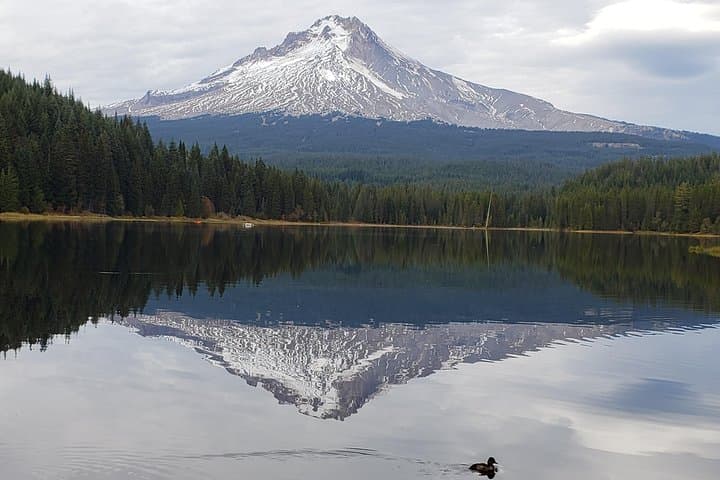
The van pulls away from downtown Portland before first light and the city rubs sleep from its eyes. As you climb out of the Willamette Valley, the air thins and the skyline yields to a sweep of basalt cliffs and rushing water—the Columbia River Gorge already daring you to look closer. By midmorning the road threads viewpoints where waterfalls volley down the cliff face, and Mount Hood appears white and unmoved over the valley, its glaciers bright against a cobalt sky.
Verified experiences and guided adventures in the surrounding area.
Operated by Oregon Tour Co., LLC · Portland, Oregon
The van pulls away from downtown Portland before first light and the city rubs sleep from its eyes. As you climb out of the Willamette Valley, the air thins and the skyline yields to a sweep of basalt cliffs and rushing water—the Columbia River Gorge already daring you to look closer. By midmorning the road threads viewpoints where waterfalls volley down the cliff face, and Mount Hood appears white and unmoved over the valley, its glaciers bright against a cobalt sky.
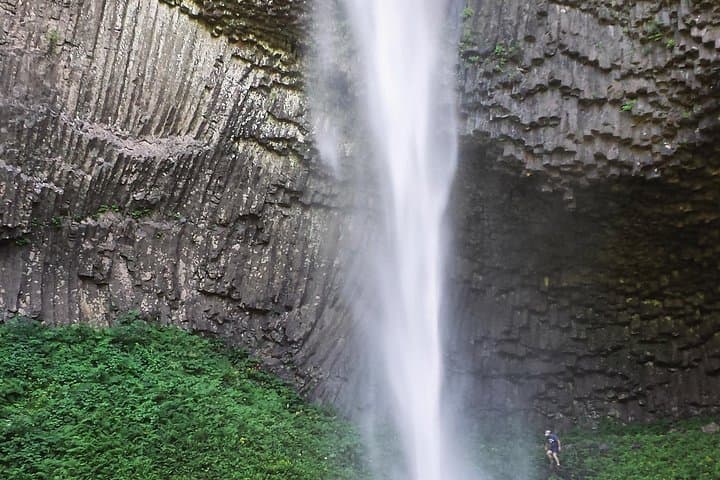
This full-day loop stitches together the region's big draws: the historic Columbia River Gorge, Multnomah Falls (Oregon's tallest cascade), the pastoral orchards and windswept waterfront of Hood River, and Timberline Lodge half up Mount Hood where alpine weather shapes both architecture and activity. Geologically the gorge is an incision carved by the Columbia River and refined by repeated cataclysmic Missoula Floods; the cliffs reveal layers of ancient lava flows, and the waterfalls are where the basalt yields to softer seams.
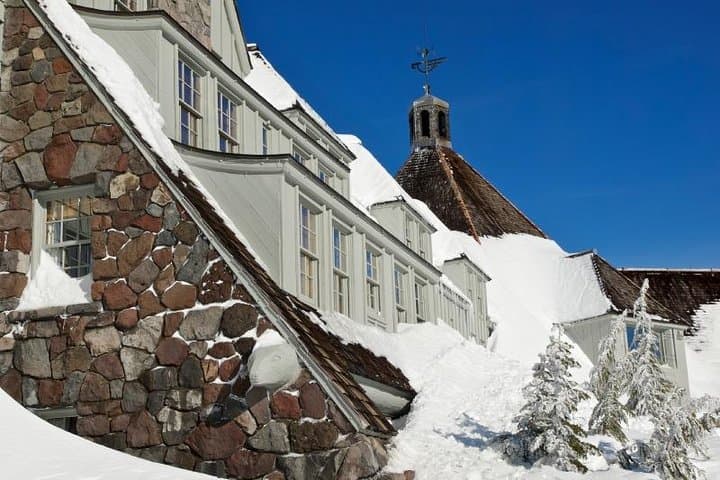
Culturally the corridor has been shaped by the Native Multnomah and Wasco peoples, later by the daring engineering of the early 20th-century Columbia River Highway, and by New Deal-era projects like Timberline Lodge, a rugged stone-and-timber refuge built in the 1930s. Today small orchard towns like Hood River hum with windsurfers and brewers; the area marries outdoor life with a stubborn, local sense of craft.
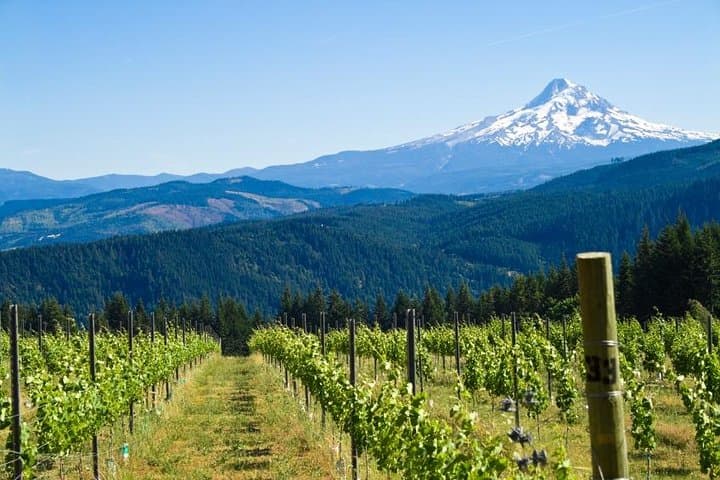
On the ground, the tour is equally practical and cinematic. Guides—often local, family-run operators—steer you between short walks and viewpoint stops, keeping the route tight enough to hit signature spots without turning the day into a long slog. Multnomah Falls has a short paved approach and a visitor center; other stops are brief walk-and-shoot moments or a relaxed lunch in Hood River with views of Mt. Hood and the Columbia spread beneath.
For planning: expect an 8-hour day with several 10–45 minute walking pauses and one longer 60-minute stop for lunch. Weather shifts quickly here—sun can turn to drizzle by noon—so layer. Footwear should handle paved paths plus muddy, rooty sections at smaller falls. Bring water, a light rain shell, and a charged phone or camera; cell service is patchy in pockets along the gorge.
Timing matters: spring brings swollen falls and wildflowers; summer offers clear mountain views but crowds; fall crowns the orchards and cools the air; winter turns Timberline into a snow-scape where glacier travel may be visible from the lodge. The tour is a compact way to experience the Pacific Northwest's dramatic geology, working landscapes, and high-mountain presence—all without the logistics of driving and parking every viewpoint.
moderate.
8 hours.
Suitable for most fitness levels; expect several short walks up to 45 minutes and one longer break for lunch.
The tour lasts about 8 hours, with multiple short stops and a 60-minute lunch stop in Hood River.
Yes—hotel pickup and drop-off in downtown Portland or meeting at a central pickup point are included.
No—most walks are short and family-friendly, but some paths to lesser waterfalls are uneven and can be muddy.
Guides typically stop near Timberline Lodge for views and a short visit; access to interior spaces depends on lodge hours and events.
Yes—infants and small children can be accommodated; some shorter viewpoints are stroller-accessible but trails to smaller falls may not be.
The tour operator may cancel in severe weather for safety; cancel at least 24 hours in advance for a full refund under the standard policy.
The Columbia River Gorge and Mt. Hood sit on ancestral lands of the Multnomah and Wasco peoples; Timberline Lodge was constructed as a New Deal project in the 1930s.
Stay on designated paths and pack out trash—the gorge's fragile plant communities and high-use trailheads are sensitive to erosion and human impact.
Oregon Tour Co., LLC operates guided outdoor trips and adventures with an emphasis on safety, stewardship, and memorable experiences.
The van pulls away from downtown Portland before first light and the city rubs sleep from its eyes. As you climb out of the Willamette Valley, the air thins and the skyline yields to a sweep of basalt cliffs and rushing water—the Columbia River Gorge already daring you to look closer. By midmorning the road threads viewpoints where waterfalls volley down the cliff face, and Mount Hood appears white and unmoved over the valley, its glaciers bright against a cobalt sky.
The van pulls away from downtown Portland before first light and the city rubs sleep from its eyes. As you climb out of the Willamette Valley, the air thins and the skyline yields to a sweep of basalt cliffs and rushing water—the Columbia River Gorge already daring you to look closer. By midmorning the road threads viewpoints where waterfalls volley down the cliff face, and Mount Hood appears white and unmoved over the valley, its glaciers bright against a cobalt sky.
This full-day loop stitches together the region's big draws: the historic Columbia River Gorge, Multnomah Falls (Oregon's tallest cascade), the pastoral orchards and windswept waterfront of Hood River, and Timberline Lodge half up Mount Hood where alpine weather shapes both architecture and activity. Geologically the gorge is an incision carved by the Columbia River and refined by repeated cataclysmic Missoula Floods; the cliffs reveal layers of ancient lava flows, and the waterfalls are where the basalt yields to softer seams.
Culturally the corridor has been shaped by the Native Multnomah and Wasco peoples, later by the daring engineering of the early 20th-century Columbia River Highway, and by New Deal-era projects like Timberline Lodge, a rugged stone-and-timber refuge built in the 1930s. Today small orchard towns like Hood River hum with windsurfers and brewers; the area marries outdoor life with a stubborn, local sense of craft.
On the ground, the tour is equally practical and cinematic. Guides—often local, family-run operators—steer you between short walks and viewpoint stops, keeping the route tight enough to hit signature spots without turning the day into a long slog. Multnomah Falls has a short paved approach and a visitor center; other stops are brief walk-and-shoot moments or a relaxed lunch in Hood River with views of Mt. Hood and the Columbia spread beneath.
For planning: expect an 8-hour day with several 10–45 minute walking pauses and one longer 60-minute stop for lunch. Weather shifts quickly here—sun can turn to drizzle by noon—so layer. Footwear should handle paved paths plus muddy, rooty sections at smaller falls. Bring water, a light rain shell, and a charged phone or camera; cell service is patchy in pockets along the gorge.
Timing matters: spring brings swollen falls and wildflowers; summer offers clear mountain views but crowds; fall crowns the orchards and cools the air; winter turns Timberline into a snow-scape where glacier travel may be visible from the lodge. The tour is a compact way to experience the Pacific Northwest's dramatic geology, working landscapes, and high-mountain presence—all without the logistics of driving and parking every viewpoint.