THE ADVENTURE COLLECTIVE® · Independent discovery and booking for outdoor travel

Spend a day from Tokyo exploring Mt. Fuji’s cultural sites, waterfalls and a Mazuma wasabi farm via Shinkansen and the Hokusai Special Train. Expect theater exhibits, shrine visits, waterfall viewpoints and a hands-on wasabi tasting.
Spend a day from Tokyo exploring Mt. Fuji’s cultural sites, waterfalls and a Mazuma wasabi farm via Shinkansen and the Hokusai Special Train. Expect theater exhibits, shrine visits, waterfall viewpoints and a hands-on wasabi tasting.
The day starts on a bullet train, windows framing lowland rice paddies that give way to the raw profile of Mt. Fuji. A Hokusai-themed local train slows at viewpoints the artist once painted, inviting passengers to compare print and peak.
Verified experiences and guided adventures in the surrounding area.
Operated by JTB Global Marketing & Travel Inc. · Fujinomiya, Shizuoka Prefecture
The day starts on a bullet train, windows framing lowland rice paddies that give way to the raw profile of Mt. Fuji. A Hokusai-themed local train slows at viewpoints the artist once painted, inviting passengers to compare print and peak.
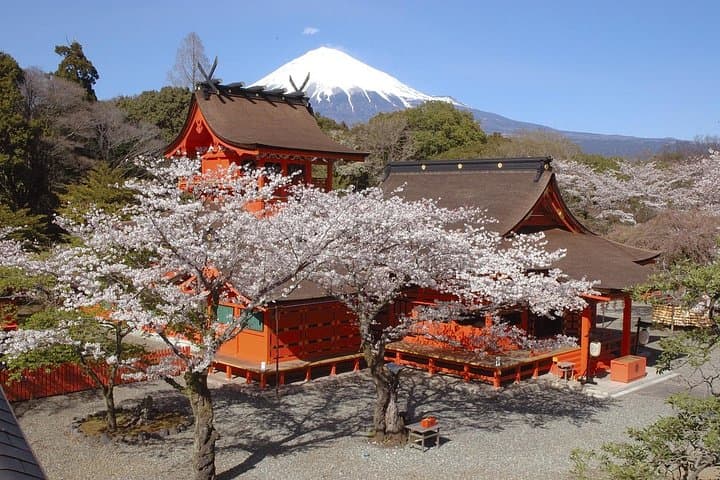
This full-day loop through Shizuoka and Fujinomiya reads like a compact cultural primer: the Mt. Fuji World Heritage Centre explains volcanic history and pilgrimage culture, while Fujisan Hongu Sengen Taisha illustrates centuries of mountain worship by samurai and townsfolk alike. Geologically, the region is young—lava flows and glacially sculpted valleys feed the clear springs that create Shiraito and Otodome Falls, the former spilling in delicate threads, the latter crashing with audible force.
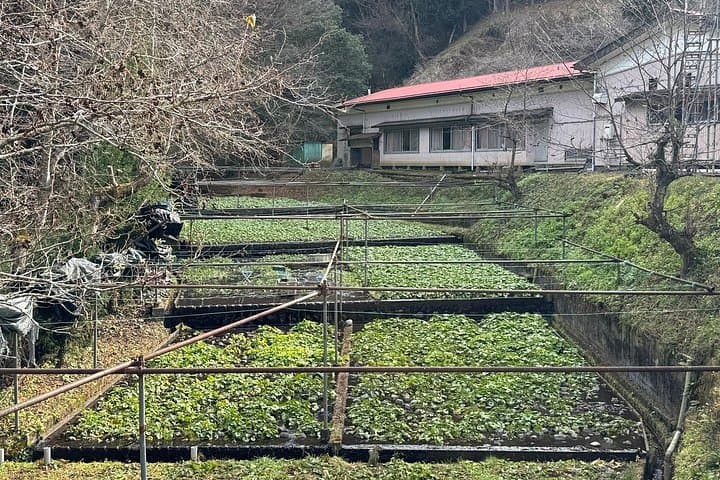
Agriculture here depends on cold, oxygen-rich spring water; Mazuma wasabi farms channel that water into shaded terraces, where tasting freshly grated wasabi is as much about texture and heat as terroir. Along the way, the guide provides context on Hokusai’s Thirty-six Views and how modern rail lines map to older pilgrimage routes.
Practical essentials: this is a guided, bus-and-train day tour lasting roughly 7.5–10 hours with short walks at sites. Mt. Fuji visibility is weather-dependent and not guaranteed. Wear sturdy walking shoes and layered outerwear—mornings near the mountain are cool even in summer. Large luggage is not allowed on the tour; travel light. Lunch choices accommodate vegetarian and Muslim-friendly needs, but strict allergy substitutions are limited. Plan for photos, short theater presentations, and a hands-on wasabi-grating slot—an efficient, sensory way to sample Shizuoka’s landscape and culture in a single, travel-friendly day.
easy.
7.5–10 hours.
Suitable for most fitness levels; participants should be able to stand and walk short distances on uneven surfaces.
No — visibility depends on weather; the itinerary proceeds even if the mountain is not fully visible and refunds are not offered for obscured views.
Lunch options include Japanese, vegetarian, Muslim-friendly, and Indian thali; strict allergy- or gluten-free meals are not available.
Yes — drop-off at Gotemba is available if selected, but the tour does not include time inside the outlets or return transport from there.
Yes — the tour is rated easy with short walks; children under five may join free but will not automatically receive seats or meals unless booked separately.
Fujisan Hongu Sengen Taisha is the head shrine for Sengen worship, long associated with rituals to appease and pray for safety from volcanic activity.
Water quality from Mt. Fuji springs is critical to wasabi cultivation and waterfall ecosystems; visitors are asked to avoid litter and respect protected waterways.
JTB Global Marketing & Travel Inc. operates guided outdoor trips and adventures with an emphasis on safety, stewardship, and memorable experiences.
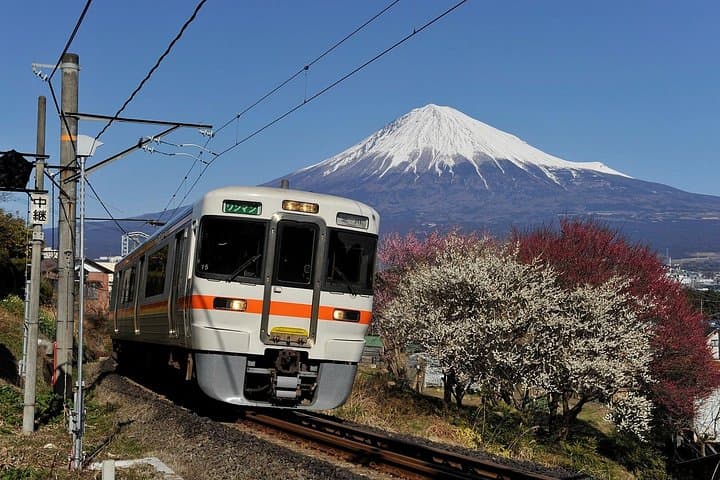

The day starts on a bullet train, windows framing lowland rice paddies that give way to the raw profile of Mt. Fuji. A Hokusai-themed local train slows at viewpoints the artist once painted, inviting passengers to compare print and peak.
The day starts on a bullet train, windows framing lowland rice paddies that give way to the raw profile of Mt. Fuji. A Hokusai-themed local train slows at viewpoints the artist once painted, inviting passengers to compare print and peak.
This full-day loop through Shizuoka and Fujinomiya reads like a compact cultural primer: the Mt. Fuji World Heritage Centre explains volcanic history and pilgrimage culture, while Fujisan Hongu Sengen Taisha illustrates centuries of mountain worship by samurai and townsfolk alike. Geologically, the region is young—lava flows and glacially sculpted valleys feed the clear springs that create Shiraito and Otodome Falls, the former spilling in delicate threads, the latter crashing with audible force.
Agriculture here depends on cold, oxygen-rich spring water; Mazuma wasabi farms channel that water into shaded terraces, where tasting freshly grated wasabi is as much about texture and heat as terroir. Along the way, the guide provides context on Hokusai’s Thirty-six Views and how modern rail lines map to older pilgrimage routes.
Practical essentials: this is a guided, bus-and-train day tour lasting roughly 7.5–10 hours with short walks at sites. Mt. Fuji visibility is weather-dependent and not guaranteed. Wear sturdy walking shoes and layered outerwear—mornings near the mountain are cool even in summer. Large luggage is not allowed on the tour; travel light. Lunch choices accommodate vegetarian and Muslim-friendly needs, but strict allergy substitutions are limited. Plan for photos, short theater presentations, and a hands-on wasabi-grating slot—an efficient, sensory way to sample Shizuoka’s landscape and culture in a single, travel-friendly day.