THE ADVENTURE COLLECTIVE® · Independent discovery and booking for outdoor travel

See Mt Fuji and Hakone’s highlights in a single day: a stop near Fuji’s 5th Station, a ninja-themed village lunch, a volcanic ropeway ride over Owakudani, and a Lake Ashi cruise. This guided bus tour is time-efficient and family-friendly, but weather and ropeway schedules can alter the route.
See Mt Fuji and Hakone’s highlights in a single day: a stop near Fuji’s 5th Station, a ninja-themed village lunch, a volcanic ropeway ride over Owakudani, and a Lake Ashi cruise. This guided bus tour is time-efficient and family-friendly, but weather and ropeway schedules can alter the route.
The morning begins at Shinjuku’s LOVE statue: a green-and-white flag rises, the coach doors close, and Tokyo’s glass towers give way to rice fields and the rising bulk of Fuji.
Verified experiences and guided adventures in the surrounding area.
Operated by Beauty of Japan · Tokyo, Tokyo
The morning begins at Shinjuku’s LOVE statue: a green-and-white flag rises, the coach doors close, and Tokyo’s glass towers give way to rice fields and the rising bulk of Fuji.
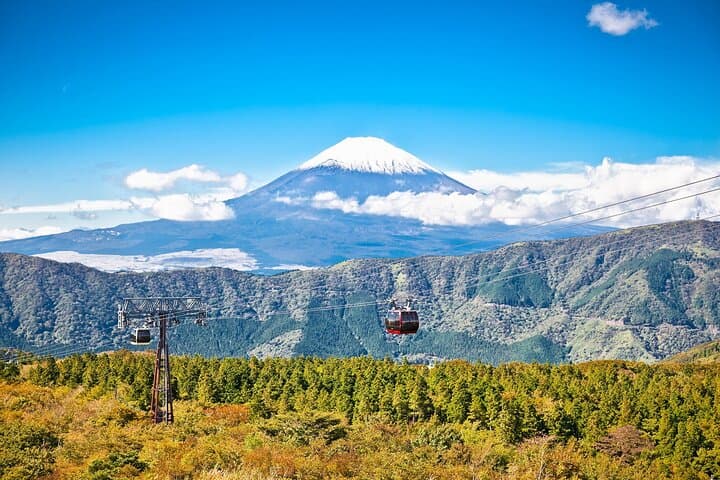
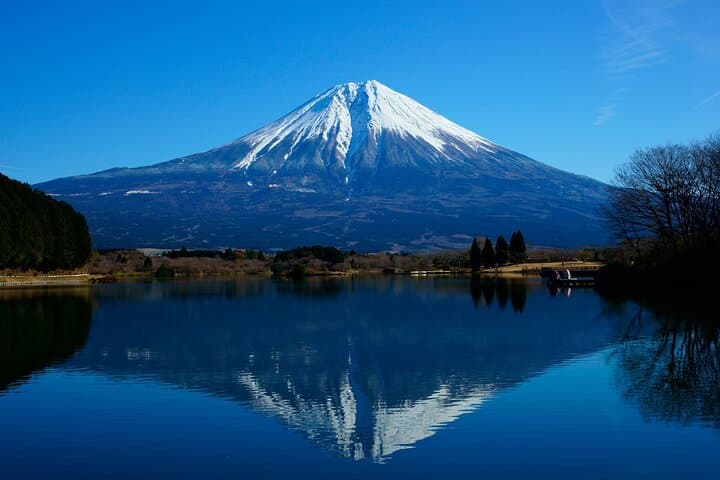
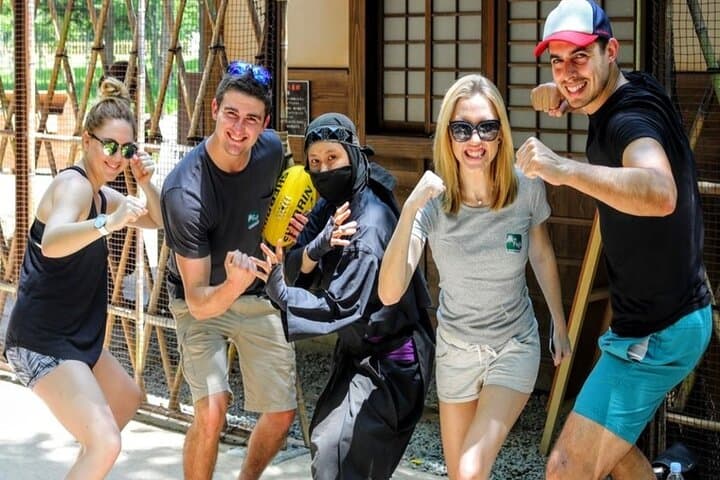
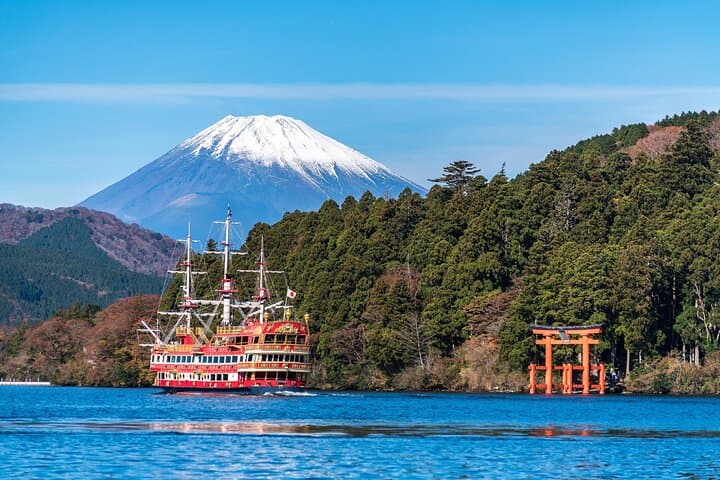
By midmorning the bus climbs toward the eastern Subashiri approach where a stop near the 5th Station brings visitors within the mountain’s mid-slope air—thin, cool, and sharp—while views open and close with clouds. The itinerary strings together different faces of the region: a thematic ninja village with a buffet lunch, the Hakone Ropeway over steaming Owakudani, and a leisurely Lake Ashi cruise framed by pine-clad banks and the slanting silhouette of Fuji.
Geology is on display at Owakudani: sulfur vents that have shaped local hot springs for millennia and produced the famous kuro-tamago (black eggs). Culturally, Mt. Fuji has been revered in Shinto and inspired centuries of pilgrimage, while Hakone was a vital checkpoint on the old Tokaido route.
Practicalities drive the second half of the day. Expect a nine-hour outing with multiple short stops, accessible walking at each site, and some altitude exposure near Fuji’s 5th Station (about 2,000 m). Dress in layers, bring a camera with a polarizing filter for lake-and-mountain contrasts, and allow flexibility—ropeway or 5th Station access can change with weather or inspections. Families will find the pace manageable, but anyone with spine or heart conditions should consult a doctor before booking.
easy.
9 hours.
Suitable for travelers with basic mobility; involves short walks, stairs, and brief altitude exposure around 2,000 m.
Meet at the LOVE statue in front of i-Land Tower, Shinjuku at 7:50 AM; the tour returns to Shinjuku by about 6:50 PM (some guests may finish at Odawara depending on option selected).
Access depends on weather and road conditions; if the 5th Station is unavailable the itinerary includes alternatives such as Fuji Sengen Shrine.
Yes—the tour includes ropeway fare, the Lake Ashi cruise, Shinobi no Sato admission, buffet lunch, and multilingual audio guidance as listed in inclusions.
Yes; the tour is family-friendly and stroller-accessible for short transfers, but infants must sit on an adult’s lap and infant meals are not included.
Mount Fuji has been a sacred mountain in Shinto tradition for centuries and was a target for Edo-period pilgrims; Hakone served as an important post and barrier on the Tokaido highway between Edo (Tokyo) and Kyoto.
Heavy tourism pressures require visitors to stay on designated paths, respect shrine grounds, and avoid feeding wildlife; Owakudani occasionally limits access to protect visitors from volcanic gases.
Beauty of Japan operates guided outdoor trips and adventures with an emphasis on safety, stewardship, and memorable experiences.
The morning begins at Shinjuku’s LOVE statue: a green-and-white flag rises, the coach doors close, and Tokyo’s glass towers give way to rice fields and the rising bulk of Fuji.
The morning begins at Shinjuku’s LOVE statue: a green-and-white flag rises, the coach doors close, and Tokyo’s glass towers give way to rice fields and the rising bulk of Fuji.
By midmorning the bus climbs toward the eastern Subashiri approach where a stop near the 5th Station brings visitors within the mountain’s mid-slope air—thin, cool, and sharp—while views open and close with clouds. The itinerary strings together different faces of the region: a thematic ninja village with a buffet lunch, the Hakone Ropeway over steaming Owakudani, and a leisurely Lake Ashi cruise framed by pine-clad banks and the slanting silhouette of Fuji.
Geology is on display at Owakudani: sulfur vents that have shaped local hot springs for millennia and produced the famous kuro-tamago (black eggs). Culturally, Mt. Fuji has been revered in Shinto and inspired centuries of pilgrimage, while Hakone was a vital checkpoint on the old Tokaido route.
Practicalities drive the second half of the day. Expect a nine-hour outing with multiple short stops, accessible walking at each site, and some altitude exposure near Fuji’s 5th Station (about 2,000 m). Dress in layers, bring a camera with a polarizing filter for lake-and-mountain contrasts, and allow flexibility—ropeway or 5th Station access can change with weather or inspections. Families will find the pace manageable, but anyone with spine or heart conditions should consult a doctor before booking.