THE ADVENTURE COLLECTIVE® · Independent discovery and booking for outdoor travel

In a single long day this tour threads the high, sacred flanks of Mt. Fuji with the steaming woods and mirrored waters of Hakone. Expect a 5th Station visit, a Lake Ashi cruise, a Komagatake ropeway ascent, and a swift Shinkansen return to Tokyo.
In a single long day this tour threads the high, sacred flanks of Mt. Fuji with the steaming woods and mirrored waters of Hakone. Expect a 5th Station visit, a Lake Ashi cruise, a Komagatake ropeway ascent, and a swift Shinkansen return to Tokyo.
You step off the coach at 2,300 meters and the air feels different—thin, cool, insistent. A low cloud bank presses like a living thing against the flanks of Fuji, and the wooden shrine at the Fifth Station holds its quiet as if waiting for pilgrims past and present. This is where the tour lands: a handful of minutes to breathe in elevation, to scan a horizon where the mountain either reveals its cone in perfect symmetry or hides behind a dramatic shroud.
Verified experiences and guided adventures in the surrounding area.
Operated by VIP Japan Tours · Hakone, Kanagawa
You step off the coach at 2,300 meters and the air feels different—thin, cool, insistent. A low cloud bank presses like a living thing against the flanks of Fuji, and the wooden shrine at the Fifth Station holds its quiet as if waiting for pilgrims past and present. This is where the tour lands: a handful of minutes to breathe in elevation, to scan a horizon where the mountain either reveals its cone in perfect symmetry or hides behind a dramatic shroud.
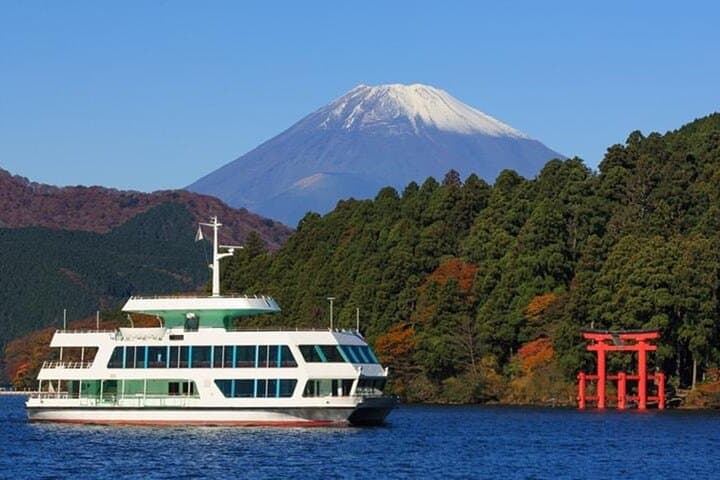
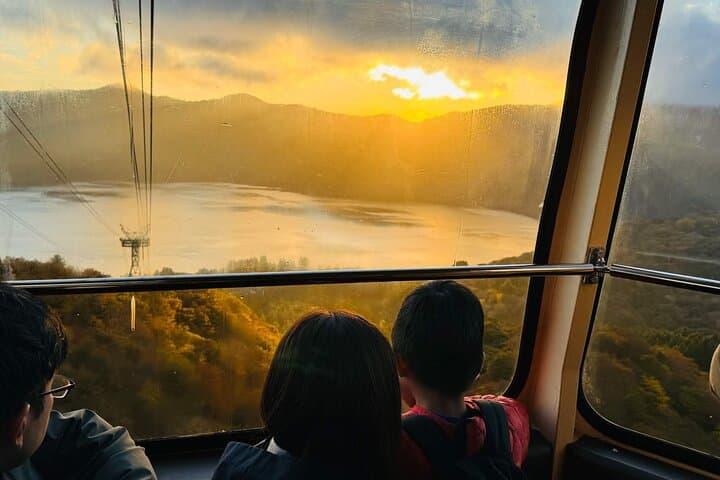
The day moves like a film cut between extremes. After the Subaru Line and the Fifth Station—where the Fujiyama Komitake Shrine offers a brief cultural pause—you descend toward the lakes and cedars of Hakone. There, Lake Ashi broadens the scene, reflecting peaks, forests, and the occasional torii of Hakone Shrine that seems to float on the water. A short cruise aboard the Hakone Yufune SORAKAZE lets the lake do the talking; the boat glides, the wind at the bow dares you to look farther, and the ropeway up Komagatake crowns the day with a seven-minute ascent and panoramic views across Sagami Bay and the Izu Peninsula.
Geology and culture are braided here. Mount Fuji, a stratovolcano that shaped local livelihoods and religious life for centuries, dominates the skyline and inspired woodblock artists and worship rituals. Hakone sits on the volcanic arc leading away from Fuji—hot springs and fumaroles are reminders that tectonic forces still tune the landscape. Hakone Shrine, with its vermillion gate and cedar approaches, has been a spiritual waypoint for travelers since medieval times.
Practicalities are straightforward but matter. The tour runs roughly nine to ten hours and returns by Shinkansen from Odawara to Tokyo or Shinagawa—expect a high-speed buffer after a slow day of sightseeing. Weather dictates the schedule more than any other factor: if the Subaru Line is closed, the Mt. Fuji World Heritage Center replaces the stop. The pace is gentle—mostly bus transfers, short walks, a cruise and a ropeway ride—so this is accessible even for travelers of modest fitness.
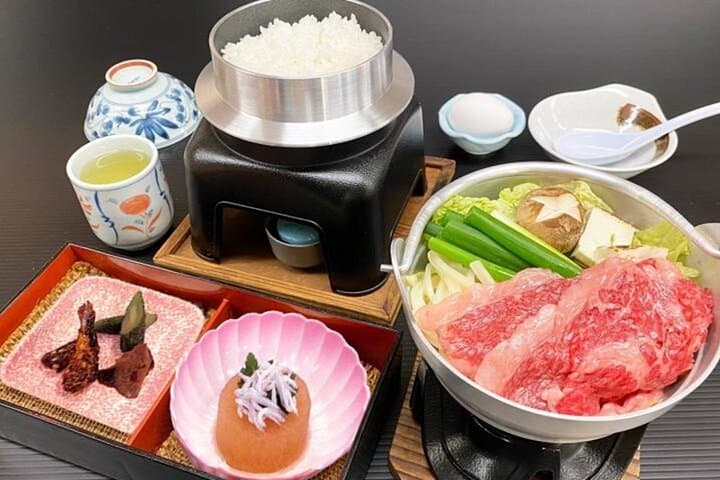
Tips to make the day smoother: layer up for the 2,300m exposure, bring motion-sickness remedies if you’re prone, and carry a compact daypack for camera gear and water. Food is robust and local—expect a Sukiyaki Gozen with regional rice from Gotemba—and timings are tight so arrive at your meeting point early. The Shinkansen imposes luggage size limits; pack accordingly.
By dusk the city lights of Tokyo feel a world away. What remains is a sequence of sharp impressions: Fuji’s cap, the torii reflected in Ashi, the ropeway’s hush. It’s a long day, but the landscape keeps giving—angles, weather and history conspiring to make a single, unforgettable Japan in one continuous line.
easy.
9–10 hours.
Light fitness—mostly sitting on the coach with short, stepped walks and easy inclines at viewpoints.
Visibility depends on weather—clear mornings offer the best views; if the Subaru Line is closed due to conditions the itinerary includes the Mt. Fuji World Heritage Center instead.
Morning meetups are in Shinjuku or Shinagawa with return by Shinkansen from Odawara to either Tokyo or Shinagawa—inform the guide of your preferred drop-off.
Infants under 3 ride free on laps; the schedule is family-friendly but includes long coach transfers—plan breaks and snacks accordingly.
A Sukiyaki Gozen lunch is provided; menu items may vary with season and stock but regional rice from Gotemba is typically featured.
Large items over 160 cm combined dimensions can be problematic—use station coin lockers at Odawara or travel with smaller bags.
Some changes are possible (substitutions like the Heritage Center); cancellations for insufficient travelers are possible and full refund rules apply if canceled 24+ hours ahead.
Hakone’s hot-spring inns and torii approaches grew up over centuries around pilgrimage routes; Fuji has been a sacred mountain in Shinto and Buddhist practice for over a millennium.
Parts of this route lie inside Fuji-Hakone-Izu National Park—stay on designated paths, minimize waste, and respect shrine precincts to reduce visitor impact.
VIP Japan Tours operates guided outdoor trips and adventures with an emphasis on safety, stewardship, and memorable experiences.
You step off the coach at 2,300 meters and the air feels different—thin, cool, insistent. A low cloud bank presses like a living thing against the flanks of Fuji, and the wooden shrine at the Fifth Station holds its quiet as if waiting for pilgrims past and present. This is where the tour lands: a handful of minutes to breathe in elevation, to scan a horizon where the mountain either reveals its cone in perfect symmetry or hides behind a dramatic shroud.
You step off the coach at 2,300 meters and the air feels different—thin, cool, insistent. A low cloud bank presses like a living thing against the flanks of Fuji, and the wooden shrine at the Fifth Station holds its quiet as if waiting for pilgrims past and present. This is where the tour lands: a handful of minutes to breathe in elevation, to scan a horizon where the mountain either reveals its cone in perfect symmetry or hides behind a dramatic shroud.
The day moves like a film cut between extremes. After the Subaru Line and the Fifth Station—where the Fujiyama Komitake Shrine offers a brief cultural pause—you descend toward the lakes and cedars of Hakone. There, Lake Ashi broadens the scene, reflecting peaks, forests, and the occasional torii of Hakone Shrine that seems to float on the water. A short cruise aboard the Hakone Yufune SORAKAZE lets the lake do the talking; the boat glides, the wind at the bow dares you to look farther, and the ropeway up Komagatake crowns the day with a seven-minute ascent and panoramic views across Sagami Bay and the Izu Peninsula.
Geology and culture are braided here. Mount Fuji, a stratovolcano that shaped local livelihoods and religious life for centuries, dominates the skyline and inspired woodblock artists and worship rituals. Hakone sits on the volcanic arc leading away from Fuji—hot springs and fumaroles are reminders that tectonic forces still tune the landscape. Hakone Shrine, with its vermillion gate and cedar approaches, has been a spiritual waypoint for travelers since medieval times.
Practicalities are straightforward but matter. The tour runs roughly nine to ten hours and returns by Shinkansen from Odawara to Tokyo or Shinagawa—expect a high-speed buffer after a slow day of sightseeing. Weather dictates the schedule more than any other factor: if the Subaru Line is closed, the Mt. Fuji World Heritage Center replaces the stop. The pace is gentle—mostly bus transfers, short walks, a cruise and a ropeway ride—so this is accessible even for travelers of modest fitness.
Tips to make the day smoother: layer up for the 2,300m exposure, bring motion-sickness remedies if you’re prone, and carry a compact daypack for camera gear and water. Food is robust and local—expect a Sukiyaki Gozen with regional rice from Gotemba—and timings are tight so arrive at your meeting point early. The Shinkansen imposes luggage size limits; pack accordingly.
By dusk the city lights of Tokyo feel a world away. What remains is a sequence of sharp impressions: Fuji’s cap, the torii reflected in Ashi, the ropeway’s hush. It’s a long day, but the landscape keeps giving—angles, weather and history conspiring to make a single, unforgettable Japan in one continuous line.