THE ADVENTURE COLLECTIVE® · Independent discovery and booking for outdoor travel

A premium full‑day coach tour that circles Mt. Fuji and Lake Kawaguchi, visiting Arakurayama’s pagoda, Oshino Hakkai and seasonal flower parks for prime cherry blossom vistas. Best on a clear morning, it’s focused on photography and short walks.
A premium full‑day coach tour that circles Mt. Fuji and Lake Kawaguchi, visiting Arakurayama’s pagoda, Oshino Hakkai and seasonal flower parks for prime cherry blossom vistas. Best on a clear morning, it’s focused on photography and short walks.
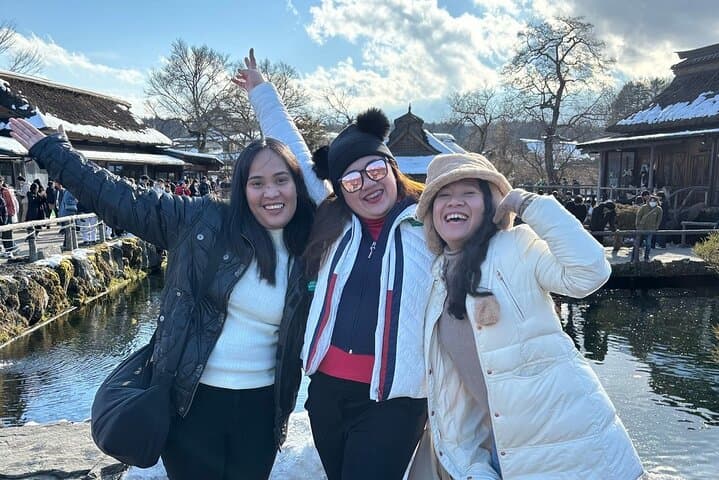
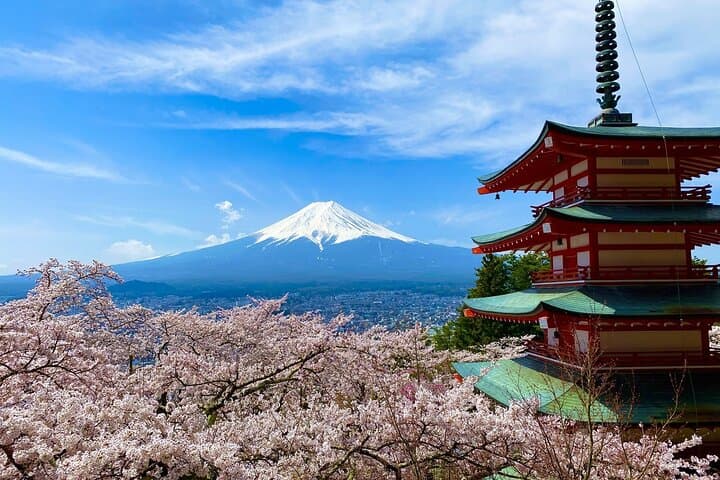
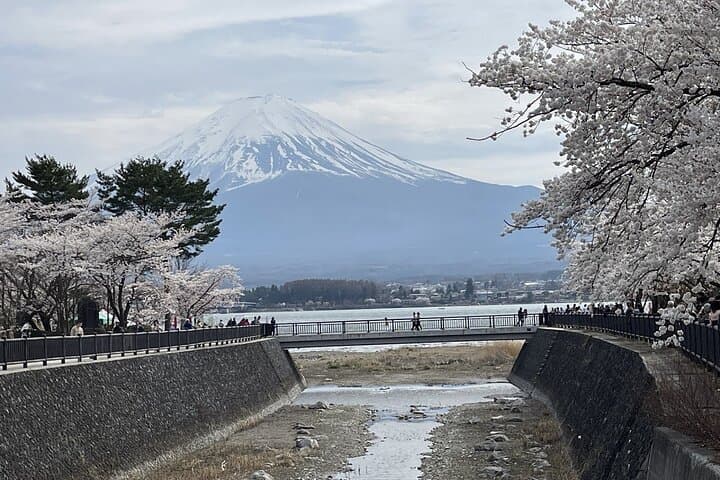
A low, clear morning lifts off Lake Kawaguchi and Mt. Fuji stands beyond it, uncompromising and still. On this full-day sightseeing loop, a high‑end coach drops you at the classic frames — the red five‑storied pagoda at Arakurayama, the village ponds of Oshino Hakkai, sweeping lawns of Oishi Park and the herb garden terraces — where cherry blossoms lean into the view and the mountain seems to hold its breath.
Verified experiences and guided adventures in the surrounding area.
Operated by LightSpeedStar · Fujikawaguchiko, Yamanashi
A low, clear morning lifts off Lake Kawaguchi and Mt. Fuji stands beyond it, uncompromising and still. On this full-day sightseeing loop, a high‑end coach drops you at the classic frames — the red five‑storied pagoda at Arakurayama, the village ponds of Oshino Hakkai, sweeping lawns of Oishi Park and the herb garden terraces — where cherry blossoms lean into the view and the mountain seems to hold its breath.
The route stitches together modern pilgrimage and Edo‑period imagery: Fuji appears on ukiyo‑e prints and in Shinto lore as both sacred summit and weathermaker. Geologically the volcano crowns a landscape of volcanic plains and moraine-fed lakes; Kawaguchiko’s glassy surface reflects ash‑formed ridgelines that built the region over millennia. Culturally the stop points are small clusters of lakeside shops, shrine steps and garden plots that still serve local rituals and seasonal festivals.
Practical guidance: expect multiple short walks and a climb of roughly 398 steps at Arakurayama for the pagoda view; most stops allow 20–90 minutes for photos and wandering. Wear grip‑soled shoes for stairs and damp paths, bring layers (mornings are cold near the lake), and carry a charged camera battery — the tour is designed for photography, and light travel means you’ll move between viewpoints quickly.
Timing is everything: clear mornings and low wind deliver the best Fuji reflections; when the mountain hides, the itinerary still offers village character, spring flowers and lake panoramas that make the day worthwhile.
easy.
10 hours.
Suitable for most fitness levels; be prepared for short walks and one steep stair climb (moderate stamina required for stairs).
Visibility depends on weather; clear mornings provide the best views but the tour runs rain or shine and won’t be refunded if Fuji is obscured.
No — the tour intentionally excludes lunch so you can choose local options during designated breaks; budget time for a quick meal or bento purchase.
Yes — the bus is stroller‑accessible and infants may sit on laps, but expect short walks and one stair climb at the pagoda viewpoint.
Yes — the itinerary includes restroom access at major stops and on the coach; carry hand sanitizer for convenience.
Mt. Fuji has been a religious and artistic symbol for centuries; the Arakurayama pagoda viewpoint became widely known for its compositional harmony of pagoda, blossoms and Fuji in modern photography.
Stick to marked paths and avoid touching spring‑fed pools in Oshino Hakkai to protect fragile aquatic ecosystems; local operators encourage no‑trace behavior to limit tourist impact.
LightSpeedStar operates guided outdoor trips and adventures with an emphasis on safety, stewardship, and memorable experiences.
A low, clear morning lifts off Lake Kawaguchi and Mt. Fuji stands beyond it, uncompromising and still. On this full-day sightseeing loop, a high‑end coach drops you at the classic frames — the red five‑storied pagoda at Arakurayama, the village ponds of Oshino Hakkai, sweeping lawns of Oishi Park and the herb garden terraces — where cherry blossoms lean into the view and the mountain seems to hold its breath.
A low, clear morning lifts off Lake Kawaguchi and Mt. Fuji stands beyond it, uncompromising and still. On this full-day sightseeing loop, a high‑end coach drops you at the classic frames — the red five‑storied pagoda at Arakurayama, the village ponds of Oshino Hakkai, sweeping lawns of Oishi Park and the herb garden terraces — where cherry blossoms lean into the view and the mountain seems to hold its breath.
The route stitches together modern pilgrimage and Edo‑period imagery: Fuji appears on ukiyo‑e prints and in Shinto lore as both sacred summit and weathermaker. Geologically the volcano crowns a landscape of volcanic plains and moraine-fed lakes; Kawaguchiko’s glassy surface reflects ash‑formed ridgelines that built the region over millennia. Culturally the stop points are small clusters of lakeside shops, shrine steps and garden plots that still serve local rituals and seasonal festivals.
Practical guidance: expect multiple short walks and a climb of roughly 398 steps at Arakurayama for the pagoda view; most stops allow 20–90 minutes for photos and wandering. Wear grip‑soled shoes for stairs and damp paths, bring layers (mornings are cold near the lake), and carry a charged camera battery — the tour is designed for photography, and light travel means you’ll move between viewpoints quickly.
Timing is everything: clear mornings and low wind deliver the best Fuji reflections; when the mountain hides, the itinerary still offers village character, spring flowers and lake panoramas that make the day worthwhile.