THE ADVENTURE COLLECTIVE® · Independent discovery and booking for outdoor travel

In one long day from Tokyo this coach tour takes you to Mount Fuji’s 5th Station, Kawaguchiko and the clear ponds of Oshino Hakkai. Expect alpine air at 2,300 m, short walks, local food, and weather-dependent views.
In one long day from Tokyo this coach tour takes you to Mount Fuji’s 5th Station, Kawaguchiko and the clear ponds of Oshino Hakkai. Expect alpine air at 2,300 m, short walks, local food, and weather-dependent views.
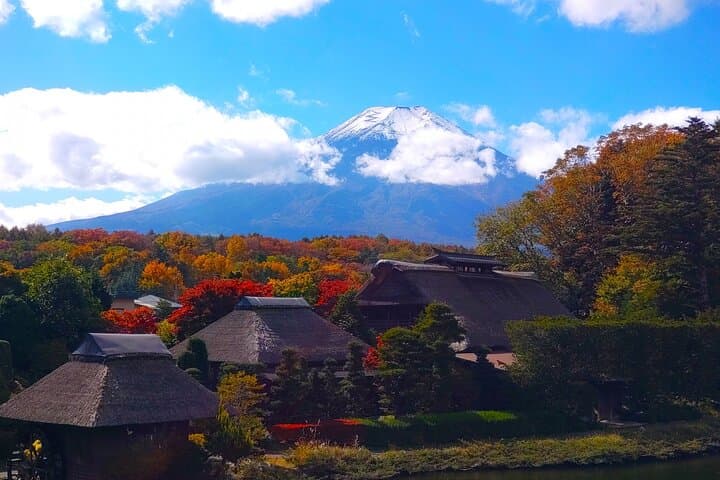
A cold wind meets the bus as it climbs toward the tree line, and for a moment Mount Fuji fills the window: a sheer cone rising above cloud and pines. At the 5th Station the air is thin, the viewpoint raw and immediate — a place where tourists trade city noise for brisk alpine light and long vistas across the Fuji Five Lakes.
Verified experiences and guided adventures in the surrounding area.
Operated by VIP Japan Tours · Fujikawaguchiko, Yamanashi
A cold wind meets the bus as it climbs toward the tree line, and for a moment Mount Fuji fills the window: a sheer cone rising above cloud and pines. At the 5th Station the air is thin, the viewpoint raw and immediate — a place where tourists trade city noise for brisk alpine light and long vistas across the Fuji Five Lakes.
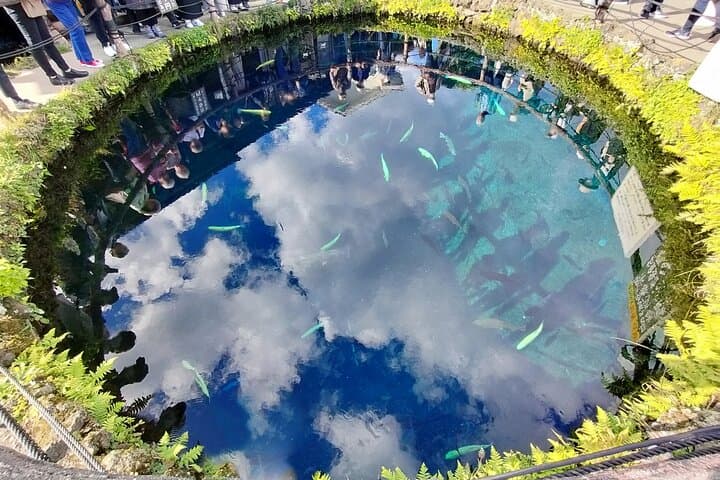
Geology and history sit side-by-side here. Mount Fuji is a young stratovolcano whose layers of lava and ash sculpted the surrounding basins; Kawaguchiko and the other lakes occupy depressions and valleys formed by past eruptions and glacial activity. The area has long been sacred in Shinto and Buddhist practice; Oshino Hakkai’s eight spring-fed ponds were once pilgrimage stops and remain culturally significant. Local specialties such as hot Hoto noodles and Koshu beef reflect Yamanashi’s mountain-food traditions.
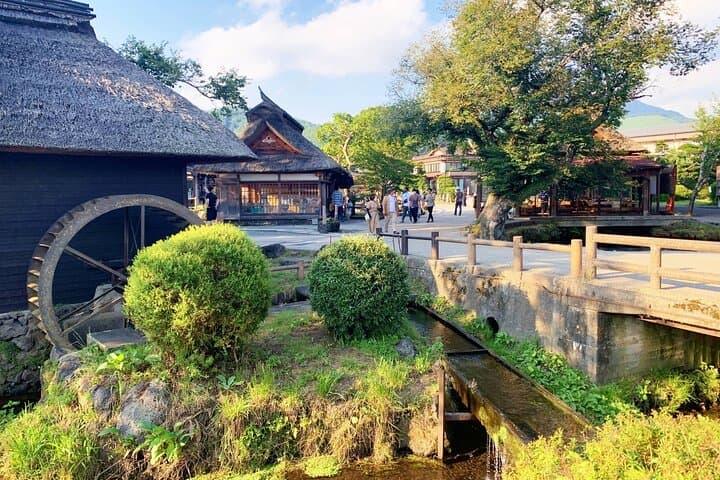
Practical guidance: this is a full, 9–10 hour coach loop with short, mostly flat strolls at each stop — expect light walking, wooden boardwalks at Oshino Hakkai, and a 5th Station elevation of roughly 2,300 meters where temperatures drop sharply. Visibility is weather-dependent; clear mornings give the best reflections on Lake Kawaguchi. Carry layers, a waterproof shell, and small cash for snacks and shrine offerings. Be punctual at designated Tokyo meeting points; the itinerary runs to a schedule and will not wait for late arrivals.
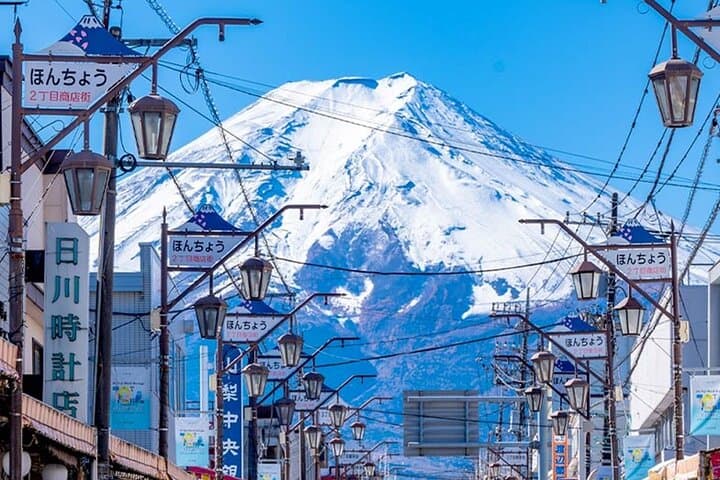
Respect local residents in Honcho Street photo spots, keep to marked paths at natural sites, and allow time during the Kawaguchiko stop to sample a craft or the music museum if you prefer a quieter pace.
easy.
9–10 hours.
Suitable for most fitness levels; minimal walking with short, mostly flat on-foot segments and standing viewpoints.
No, this tour visits the 5th Station (around 2,300 m) for views and short walks; it is not a summit or climbing tour.
No — visibility depends on weather and clouds; operators may substitute the Mt. Fuji World Heritage Center if the 5th Station is closed.
Lunch is a 60-minute stop at Kawaguchiko Craft Park; local meal options like Hoto noodles are available but specific meals are not pre-paid unless specified.
The tour departs from designated Tokyo meeting points (e.g., Shinjuku West Exit) and returns to Shinjuku; there is no Ueno drop-off on return.
Mount Fuji is a UNESCO World Heritage cultural site valued for its spiritual significance and centuries of depiction in art and poetry.
Oshino Hakkai and the Fuji Five Lakes rely on boardwalks and restricted paths to protect fragile springs; visitors should avoid trampling vegetation and take all litter home.
VIP Japan Tours operates guided outdoor trips and adventures with an emphasis on safety, stewardship, and memorable experiences.
A cold wind meets the bus as it climbs toward the tree line, and for a moment Mount Fuji fills the window: a sheer cone rising above cloud and pines. At the 5th Station the air is thin, the viewpoint raw and immediate — a place where tourists trade city noise for brisk alpine light and long vistas across the Fuji Five Lakes.
A cold wind meets the bus as it climbs toward the tree line, and for a moment Mount Fuji fills the window: a sheer cone rising above cloud and pines. At the 5th Station the air is thin, the viewpoint raw and immediate — a place where tourists trade city noise for brisk alpine light and long vistas across the Fuji Five Lakes.
Geology and history sit side-by-side here. Mount Fuji is a young stratovolcano whose layers of lava and ash sculpted the surrounding basins; Kawaguchiko and the other lakes occupy depressions and valleys formed by past eruptions and glacial activity. The area has long been sacred in Shinto and Buddhist practice; Oshino Hakkai’s eight spring-fed ponds were once pilgrimage stops and remain culturally significant. Local specialties such as hot Hoto noodles and Koshu beef reflect Yamanashi’s mountain-food traditions.
Practical guidance: this is a full, 9–10 hour coach loop with short, mostly flat strolls at each stop — expect light walking, wooden boardwalks at Oshino Hakkai, and a 5th Station elevation of roughly 2,300 meters where temperatures drop sharply. Visibility is weather-dependent; clear mornings give the best reflections on Lake Kawaguchi. Carry layers, a waterproof shell, and small cash for snacks and shrine offerings. Be punctual at designated Tokyo meeting points; the itinerary runs to a schedule and will not wait for late arrivals.
Respect local residents in Honcho Street photo spots, keep to marked paths at natural sites, and allow time during the Kawaguchiko stop to sample a craft or the music museum if you prefer a quieter pace.