THE ADVENTURE COLLECTIVE® · Independent discovery and booking for outdoor travel

Step off your ship into Tasmania’s cool rainforest and follow a gentle, guided walk to Russell Falls in Mt Field National Park. This four‑hour shore excursion pairs easy walking with dramatic waterfalls, towering eucalypts, and a close-up look at local wildlife.
Step off your ship into Tasmania’s cool rainforest and follow a gentle, guided walk to Russell Falls in Mt Field National Park. This four‑hour shore excursion pairs easy walking with dramatic waterfalls, towering eucalypts, and a close-up look at local wildlife.
You step off the ship into Hobart’s cool morning and the air immediately feels different — sharper, moss-scented, edged with eucalypt. The coach unspools through the Derwent Valley: neat paddocks, stone cottages, and hills folding toward Mount Field National Park. Within an hour the landscape tightens into rainforest; tree ferns lift fronds like green umbrellas and the guide’s voice lowers, pointing out the quick rustle of a pademelon vanishing into leaf litter.
Verified experiences and guided adventures in the surrounding area.
Operated by eGuide · Hobart, Tasmania
You step off the ship into Hobart’s cool morning and the air immediately feels different — sharper, moss-scented, edged with eucalypt. The coach unspools through the Derwent Valley: neat paddocks, stone cottages, and hills folding toward Mount Field National Park. Within an hour the landscape tightens into rainforest; tree ferns lift fronds like green umbrellas and the guide’s voice lowers, pointing out the quick rustle of a pademelon vanishing into leaf litter.
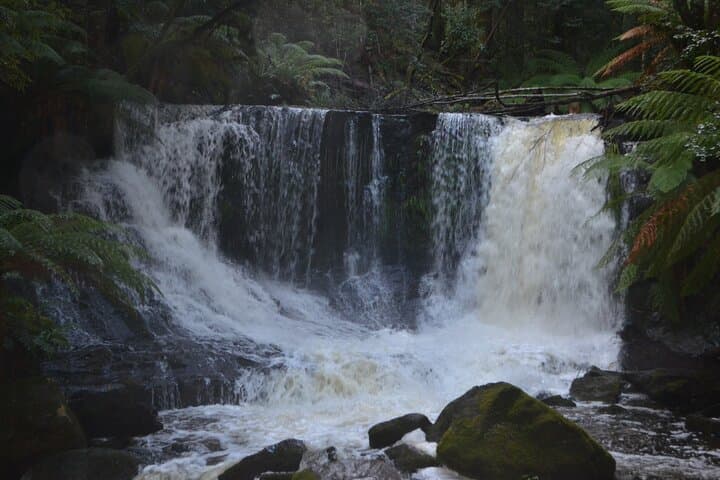
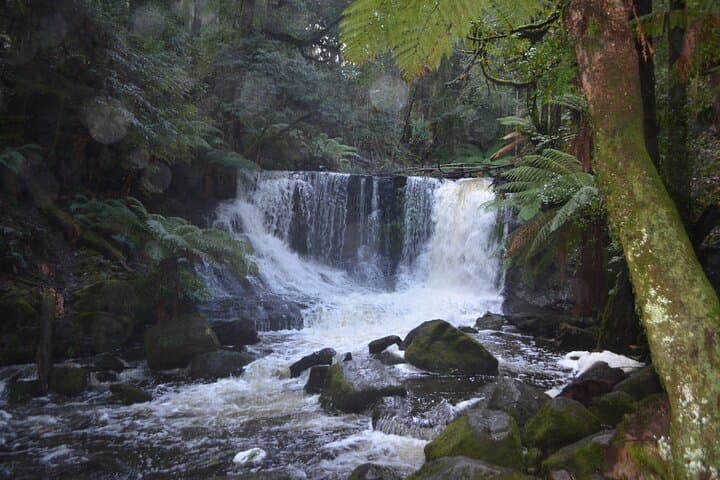
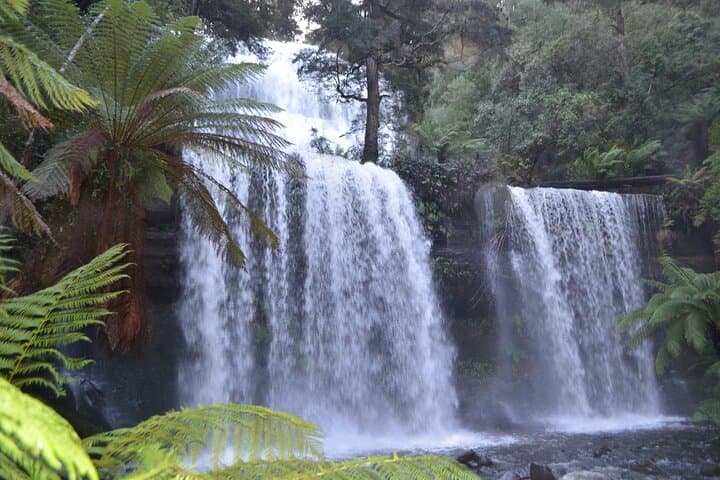
The highlight is Russell Falls, a falling sheet of water that reads well on camera and better in person. The walk is deliberate and relaxed: a well-formed track that threads through moss-carpeted gullies and past trunks like cathedral pillars. Water dares you closer at the viewing platform; the spray cools your face and the light breaks through canopy gaps to track the falling water in silver ribbons.
Mt Field is one of Tasmania’s oldest reserves, set aside in the early 20th century as an escape from city heat and a place to protect giant eucalypts. Geologically, the park is cut from dolerite and older sediments, with upland reaches shaped by ancient glaciation; the result is a compact range of contrasting habitats — cool temperate rainforest, wet sclerophyll forest, and alpine tarns higher on the plateau.
Culturally the area sits on the traditional lands of the Palawa people; the forest plants and animals formed part of local knowledge and seasonal movement long before it became a tourist destination. Today, guides balance interpretation with stewardship: stay on tracks, respect quiet, and keep an eye out for wildlife — shy wallabies and pademelons are common along the lower trails.
Practical details: the shore excursion runs about four hours total with roughly 1–2 km of walking in the park and under 100 meters of elevation gain on well-maintained paths and short boardwalks. The walking pace is easy — suitable for most fitness levels — but weather in Tasmania is famously changeable: bring a waterproof shell and layers even in summer. Photography is best in soft morning or late-afternoon light; overcast skies will actually render the greens more saturated.
The itinerary is designed for cruise passengers: you’ll meet near Franklin Wharf in Hobart, travel by coach, enjoy time at Russell Falls and nearby short circuits (including the Tall Trees walk), and return to the wharf with plenty of time to reboard. Small-group guidance means time to ask questions about the local flora and the park’s conservation efforts.
If you want to linger longer, consider returning to Mt Field on a land-based trip to explore Lake Dobson and the plateau. For a shore stop, this excursion balances comfort and real contact with Tasmania’s cool, ancient forest.
easy.
4 hours.
Suitable for most fitness levels; requires short, easy walks on maintained tracks and minor elevation changes.
The coach ride is just over an hour each way depending on traffic; the full excursion is scheduled for about four hours.
No — the path is short, well maintained and graded for easy walking; most guests can manage it without special fitness.
This shore excursion covers transportation and guiding; any park fees are typically included in the tour price but confirm at booking.
Sections of the track are boardwalked and accessible, but the approach includes steps and uneven surfaces; contact the operator for specific accessibility guidance.
Common sightings include Bennett’s wallabies and Tasmanian pademelons; birdlife like green rosellas and currawongs are also frequent.
Tours operate in most conditions — bring waterproofs and warm layers; if extreme weather forces a cancellation, the operator’s policy allows refunds if notified in time.
Mt Field National Park was one of Tasmania’s earliest protected areas, established in the early 20th century on land long used seasonally by Palawa people.
Stick to marked trails and avoid feeding wildlife; the park balances visitor access with protecting fragile understory and water quality.
eGuide operates guided outdoor trips and adventures with an emphasis on safety, stewardship, and memorable experiences.

You step off the ship into Hobart’s cool morning and the air immediately feels different — sharper, moss-scented, edged with eucalypt. The coach unspools through the Derwent Valley: neat paddocks, stone cottages, and hills folding toward Mount Field National Park. Within an hour the landscape tightens into rainforest; tree ferns lift fronds like green umbrellas and the guide’s voice lowers, pointing out the quick rustle of a pademelon vanishing into leaf litter.
You step off the ship into Hobart’s cool morning and the air immediately feels different — sharper, moss-scented, edged with eucalypt. The coach unspools through the Derwent Valley: neat paddocks, stone cottages, and hills folding toward Mount Field National Park. Within an hour the landscape tightens into rainforest; tree ferns lift fronds like green umbrellas and the guide’s voice lowers, pointing out the quick rustle of a pademelon vanishing into leaf litter.
The highlight is Russell Falls, a falling sheet of water that reads well on camera and better in person. The walk is deliberate and relaxed: a well-formed track that threads through moss-carpeted gullies and past trunks like cathedral pillars. Water dares you closer at the viewing platform; the spray cools your face and the light breaks through canopy gaps to track the falling water in silver ribbons.
Mt Field is one of Tasmania’s oldest reserves, set aside in the early 20th century as an escape from city heat and a place to protect giant eucalypts. Geologically, the park is cut from dolerite and older sediments, with upland reaches shaped by ancient glaciation; the result is a compact range of contrasting habitats — cool temperate rainforest, wet sclerophyll forest, and alpine tarns higher on the plateau.
Culturally the area sits on the traditional lands of the Palawa people; the forest plants and animals formed part of local knowledge and seasonal movement long before it became a tourist destination. Today, guides balance interpretation with stewardship: stay on tracks, respect quiet, and keep an eye out for wildlife — shy wallabies and pademelons are common along the lower trails.
Practical details: the shore excursion runs about four hours total with roughly 1–2 km of walking in the park and under 100 meters of elevation gain on well-maintained paths and short boardwalks. The walking pace is easy — suitable for most fitness levels — but weather in Tasmania is famously changeable: bring a waterproof shell and layers even in summer. Photography is best in soft morning or late-afternoon light; overcast skies will actually render the greens more saturated.
The itinerary is designed for cruise passengers: you’ll meet near Franklin Wharf in Hobart, travel by coach, enjoy time at Russell Falls and nearby short circuits (including the Tall Trees walk), and return to the wharf with plenty of time to reboard. Small-group guidance means time to ask questions about the local flora and the park’s conservation efforts.
If you want to linger longer, consider returning to Mt Field on a land-based trip to explore Lake Dobson and the plateau. For a shore stop, this excursion balances comfort and real contact with Tasmania’s cool, ancient forest.