THE ADVENTURE COLLECTIVE® · Independent discovery and booking for outdoor travel

Fly into Lukla and walk into high Himalayan country — the classic teahouse route to Everest Base Camp combines Sherpa culture, glacial geology, and raw alpine exposure. This guide explains what to expect on trail, how to acclimatize, and the practical gear and permits you need.
Fly into Lukla and walk into high Himalayan country — the classic teahouse route to Everest Base Camp combines Sherpa culture, glacial geology, and raw alpine exposure. This guide explains what to expect on trail, how to acclimatize, and the practical gear and permits you need.
The plane noses down toward a tiny runway clinging to the mountainside and the air smells of diesel and pine; from Lukla the trail unfurls in a string of villages, prayer flags and stone steps that climb toward the thin air above 5,000 meters. You hike through rhododendron forest, cross suspension bridges over rivers that dare you with their roar, and enter a high, glacial world where the Khumbu Glacier pushes forward like a slow, gray tide.
Verified experiences and guided adventures in the surrounding area.
Operated by Couch Adventure Nepal (CAN) · Lukla, Province No. 1 (Koshi Province)
The plane noses down toward a tiny runway clinging to the mountainside and the air smells of diesel and pine; from Lukla the trail unfurls in a string of villages, prayer flags and stone steps that climb toward the thin air above 5,000 meters. You hike through rhododendron forest, cross suspension bridges over rivers that dare you with their roar, and enter a high, glacial world where the Khumbu Glacier pushes forward like a slow, gray tide.
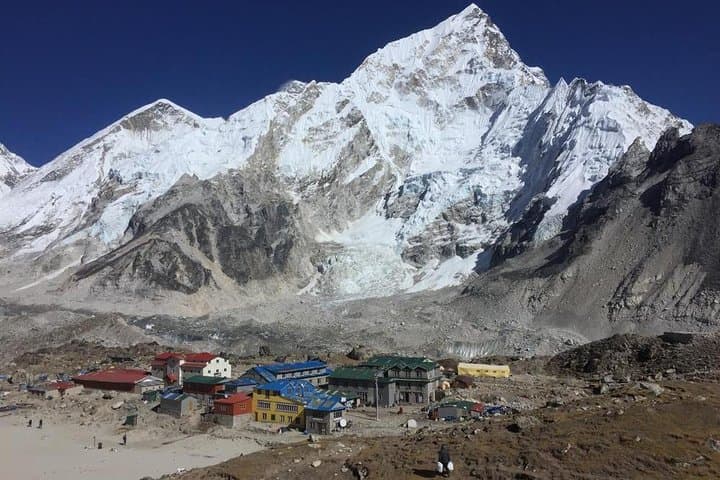
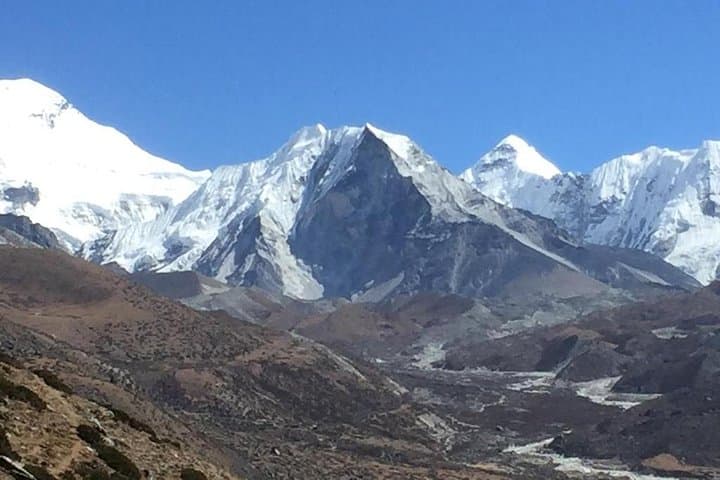
This route follows the classic teahouse trail first popularized by early Himalayan climbers; the region lies in Sagarmatha National Park (est. 1976) and is shaped by young Himalayan geology — steep granite faces, moraine fields and heavily crevassed ice near base camp. Sherpa culture is omnipresent: Tengboche monastery, mani walls, and tea houses where yak butter tea is poured with hospitable precision.
Expect roughly 65–70 km one-way from Lukla to EBC (about 130–140 km round trip) and an elevation gain of ~2,500 m from Lukla (≈2,860 m) to Everest Base Camp (≈5,364 m). Trails vary from packed stone to scree and moraines; acclimatization days in Namche Bazaar (3,440 m) and Dingboche (4,360 m) are essential.
Practical guidance: carry layered insulation, a reliable down jacket, and a water-treatment system; plan for flight delays into Lukla and build extra margin for weather. Get Sagarmatha NP and TIMS permits, acclimatize slowly, drink frequently, and buy travel insurance that covers helicopter evacuation. Teahouse sleeping is basic but warm; cash and low-denomination notes are necessary for tips and charging devices. With good fitness and respect for altitude, the reward is a front-row view of Everest and a deep encounter with high-mountain life.
challenging.
12–14 days.
You should be in strong aerobic condition (regular hiking, stair climbing and multi-day endurance); able to carry a 10–14 kg daypack and handle 6–8 hour hiking days.
Spring (March–May) and autumn (September–November) offer the clearest weather and warmer teahouse conditions; winter is colder and monsoon brings heavy precipitation and cloud cover.
Yes—foreign trekkers require a Sagarmatha National Park permit and a TIMS card; when organized through operators, these are usually arranged for you.
Acute Mountain Sickness is common at elevations above 3,000 m; manage it by ascending slowly, hydrating, monitoring symptoms, and carrying acetazolamide or arranging descent/helicopter evacuation plans if severe.
Flights are weather-dependent and often delayed; allow extra buffer days in Kathmandu or before scheduled international departures and consider flexible return plans.
The Khumbu region rose to prominence with 20th-century mountaineering; Sir Edmund Hillary and Tenzing Norgay’s 1953 ascent popularized routes that pass through Sherpa lands still rooted in Tibetan Buddhist practice.
Visitors are asked to reduce plastic waste and respect teahouse limits; local groups such as the Sagarmatha Pollution Control Committee work to minimize litter and manage human impact on fragile alpine ecosystems.
Couch Adventure Nepal (CAN) operates guided outdoor trips and adventures with an emphasis on safety, stewardship, and memorable experiences.


The plane noses down toward a tiny runway clinging to the mountainside and the air smells of diesel and pine; from Lukla the trail unfurls in a string of villages, prayer flags and stone steps that climb toward the thin air above 5,000 meters. You hike through rhododendron forest, cross suspension bridges over rivers that dare you with their roar, and enter a high, glacial world where the Khumbu Glacier pushes forward like a slow, gray tide.
The plane noses down toward a tiny runway clinging to the mountainside and the air smells of diesel and pine; from Lukla the trail unfurls in a string of villages, prayer flags and stone steps that climb toward the thin air above 5,000 meters. You hike through rhododendron forest, cross suspension bridges over rivers that dare you with their roar, and enter a high, glacial world where the Khumbu Glacier pushes forward like a slow, gray tide.
This route follows the classic teahouse trail first popularized by early Himalayan climbers; the region lies in Sagarmatha National Park (est. 1976) and is shaped by young Himalayan geology — steep granite faces, moraine fields and heavily crevassed ice near base camp. Sherpa culture is omnipresent: Tengboche monastery, mani walls, and tea houses where yak butter tea is poured with hospitable precision.
Expect roughly 65–70 km one-way from Lukla to EBC (about 130–140 km round trip) and an elevation gain of ~2,500 m from Lukla (≈2,860 m) to Everest Base Camp (≈5,364 m). Trails vary from packed stone to scree and moraines; acclimatization days in Namche Bazaar (3,440 m) and Dingboche (4,360 m) are essential.
Practical guidance: carry layered insulation, a reliable down jacket, and a water-treatment system; plan for flight delays into Lukla and build extra margin for weather. Get Sagarmatha NP and TIMS permits, acclimatize slowly, drink frequently, and buy travel insurance that covers helicopter evacuation. Teahouse sleeping is basic but warm; cash and low-denomination notes are necessary for tips and charging devices. With good fitness and respect for altitude, the reward is a front-row view of Everest and a deep encounter with high-mountain life.