THE ADVENTURE COLLECTIVE® · Independent discovery and booking for outdoor travel

Drive into the wild north slopes of Mount Etna on a 4x4 safari, walk among Sartorius craters and lava fields at 1,750 m, then finish at a family winery for Etna DOC tastings and local meats and cheeses. This four-hour shared tour pairs geology with gastronomy.
Drive into the wild north slopes of Mount Etna on a 4x4 safari, walk among Sartorius craters and lava fields at 1,750 m, then finish at a family winery for Etna DOC tastings and local meats and cheeses. This four-hour shared tour pairs geology with gastronomy.
The morning air tastes thin and metallic as the 4x4 motors up from Taormina toward Etna’s northern flank. Pine and chestnut woods give way to black, glassy lava fields; the vehicle climbs, wheels skittering over older flows until a raw sweep of rock opens out below the Sartorius craters. You step out at about 1,750 m and the volcano feels like an active presence — wind pushing at your jacket, steam seeping from fissures, and a silence that makes the small clack of boots on scoria sound very large.
Verified experiences and guided adventures in the surrounding area.
Operated by TUI italia s.r.l · Taormina, Sicily
The morning air tastes thin and metallic as the 4x4 motors up from Taormina toward Etna’s northern flank. Pine and chestnut woods give way to black, glassy lava fields; the vehicle climbs, wheels skittering over older flows until a raw sweep of rock opens out below the Sartorius craters. You step out at about 1,750 m and the volcano feels like an active presence — wind pushing at your jacket, steam seeping from fissures, and a silence that makes the small clack of boots on scoria sound very large.
Etna’s slopes are layered history: ancient eruptions carved terraces that local growers use for vineyards, while the 1865 Sartorius craters and the 2002 lava front are readable pages in the mountain’s recent past. Geologically dynamic, Etna alternates slow lava effusion and sudden explosive bursts; culturally, its soils feed some of Sicily’s most distinctive wines. A short walk across the lava and a visit to a lava tube reveal the island’s volcanic story in rock and void.
The last act of the morning moves from basalt to barrique. At a family-run winery on the lower slopes you’ll taste Etna DOC wines alongside local cheeses and cured meats — a direct line from volcanic soil to table.
Practical side: the tour is four hours with on- and off-road driving; footwear with good traction matters, and temperatures can be 8–12°C cooler at altitude. Bring layered clothing, water, and a hat. Expect uneven terrain, short walks of ~50 minutes, and a guided tasting; the experience pairs accessible adventure with a grounded introduction to Etna’s landscape and viticulture.
moderate.
4 hours.
Suitable for travelers with moderate fitness who can walk 50 minutes on uneven ground at altitude.
The guided walk near the Sartorius craters is about 40–60 minutes on uneven terrain at roughly 1,750 m elevation.
Infants must sit on laps; the tour is not recommended for pregnant travelers or those with significant spinal, cardiac or respiratory conditions.
Casual smart is fine; bring a light jacket as winery elevations can be cooler and tastings often take place outdoors or in rustic cellars.
The itinerary includes a short visit near a lava tube; cave access is shallow and guided but may not involve deep spelunking.
Etna has been active for millennia; the Sartorius craters date to an 1865 eruption, and the 2002 flow reshaped the north-eastern slopes used today by farmers and winemakers.
Stay on designated paths to protect fragile lichen and early-succession plants on fresh lava; local wineries often follow sustainable viticulture practices that limit soil erosion.
TUI italia s.r.l operates guided outdoor trips and adventures with an emphasis on safety, stewardship, and memorable experiences.
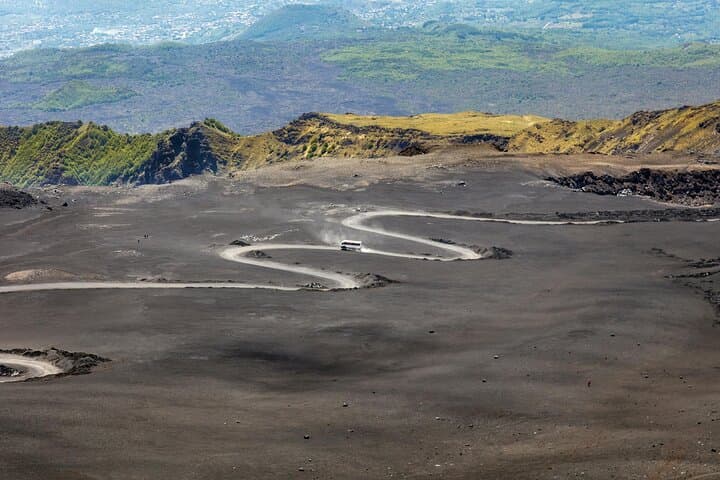


The morning air tastes thin and metallic as the 4x4 motors up from Taormina toward Etna’s northern flank. Pine and chestnut woods give way to black, glassy lava fields; the vehicle climbs, wheels skittering over older flows until a raw sweep of rock opens out below the Sartorius craters. You step out at about 1,750 m and the volcano feels like an active presence — wind pushing at your jacket, steam seeping from fissures, and a silence that makes the small clack of boots on scoria sound very large.
The morning air tastes thin and metallic as the 4x4 motors up from Taormina toward Etna’s northern flank. Pine and chestnut woods give way to black, glassy lava fields; the vehicle climbs, wheels skittering over older flows until a raw sweep of rock opens out below the Sartorius craters. You step out at about 1,750 m and the volcano feels like an active presence — wind pushing at your jacket, steam seeping from fissures, and a silence that makes the small clack of boots on scoria sound very large.
Etna’s slopes are layered history: ancient eruptions carved terraces that local growers use for vineyards, while the 1865 Sartorius craters and the 2002 lava front are readable pages in the mountain’s recent past. Geologically dynamic, Etna alternates slow lava effusion and sudden explosive bursts; culturally, its soils feed some of Sicily’s most distinctive wines. A short walk across the lava and a visit to a lava tube reveal the island’s volcanic story in rock and void.
The last act of the morning moves from basalt to barrique. At a family-run winery on the lower slopes you’ll taste Etna DOC wines alongside local cheeses and cured meats — a direct line from volcanic soil to table.
Practical side: the tour is four hours with on- and off-road driving; footwear with good traction matters, and temperatures can be 8–12°C cooler at altitude. Bring layered clothing, water, and a hat. Expect uneven terrain, short walks of ~50 minutes, and a guided tasting; the experience pairs accessible adventure with a grounded introduction to Etna’s landscape and viticulture.