THE ADVENTURE COLLECTIVE® · Independent discovery and booking for outdoor travel

Spend a day moving from the wind-swept slopes of Etna to the river-cut basalt of the Alcantara Gorge. This full-day tour from Taormina mixes short hikes, lava caves, local tastings and optional cable car or jeep rides for higher viewpoints.
Spend a day moving from the wind-swept slopes of Etna to the river-cut basalt of the Alcantara Gorge. This full-day tour from Taormina mixes short hikes, lava caves, local tastings and optional cable car or jeep rides for higher viewpoints.
Morning light on Mount Etna is blunt and honest: wind-scoured ridgelines, black lava rock that still remembers heat, and a guide who points to the ragged silhouette of old craters as if reading a map of the mountain’s temper. On this full-day from Taormina you climb out of the Mediterranean heat into high-altitude air, walk among Silvestri craters and lava tubes, then descend into the green hush of the Alcantara valley where basalt columns hold a river in tight hands.
Verified experiences and guided adventures in the surrounding area.
Operated by EtnaTribe · Taormina, Sicily
Morning light on Mount Etna is blunt and honest: wind-scoured ridgelines, black lava rock that still remembers heat, and a guide who points to the ragged silhouette of old craters as if reading a map of the mountain’s temper. On this full-day from Taormina you climb out of the Mediterranean heat into high-altitude air, walk among Silvestri craters and lava tubes, then descend into the green hush of the Alcantara valley where basalt columns hold a river in tight hands.
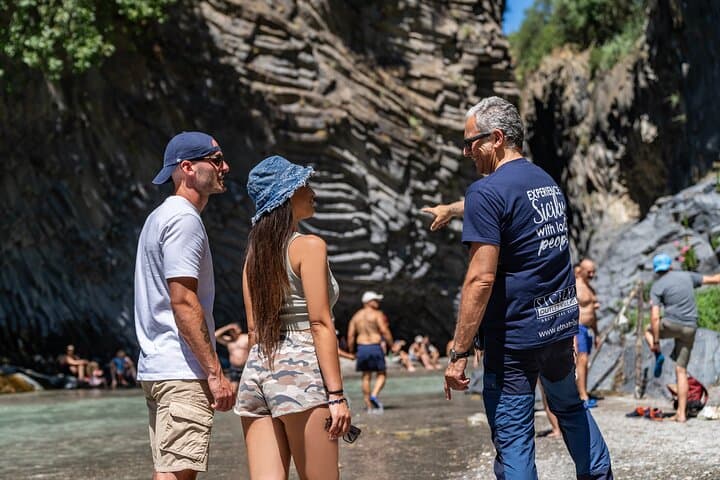
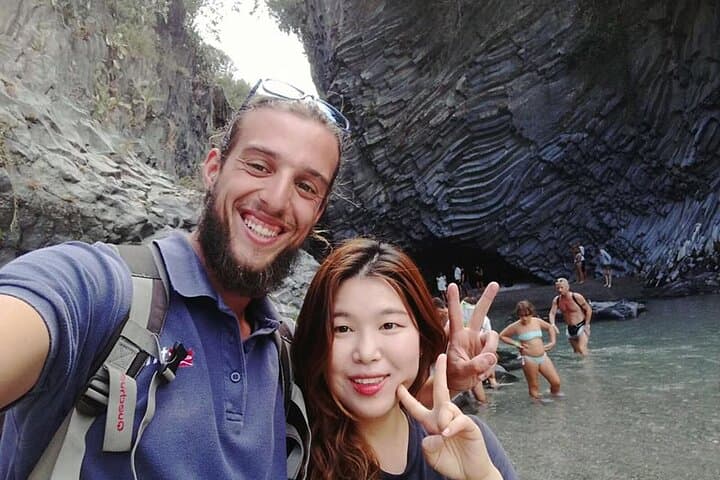
Geology and history sit side by side here. Etna is Europe’s highest active volcano; its slopes are layered with flows from eruptions that shaped local farms, towns and trade routes for millennia. The Silvestri craters, formed in the 19th century, are accessible low-elevation features—good first contacts with volcanic terrain—while lava caves nearby offer a tactile glimpse into cooled magma channels. Later, the Alcantara Gorge flips the script: cold water carved hexagonal basalt like imperfect columns, a rare geological page that has drawn scientists and artists alike.
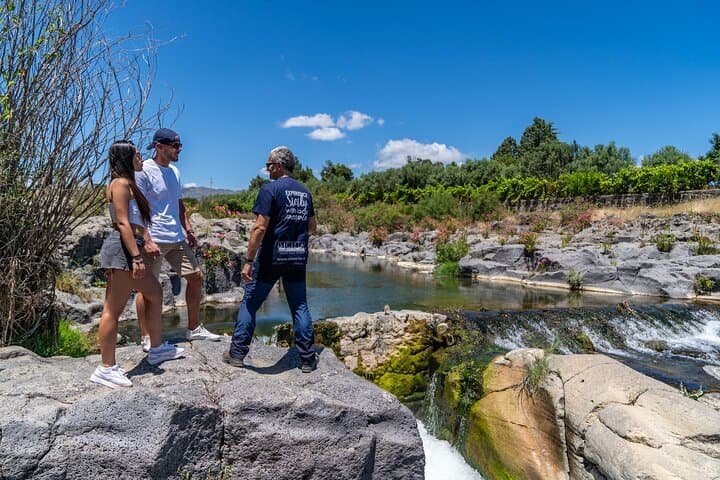
Culture arrives at a farm table. The tour stops at a biological farm for sampling: citrus, thick pistachio pesto, robust local honey and Etna wine that tastes of volcanic mineral. Guides often thread stories about lava-trained farmers, medieval hillside towns, and the ways locals read ash and wind as daily weather. The Alcantara Gurne—small plunge pools formed by the river—are an intimate counterpoint to the open slopes, a place where the river’s current nudges you onward.
Practical guidance: expect a roughly 9-hour day with a mix of short treks—plan for 3–6 km on Etna trails with up to 200–400 m of walking elevation gain depending on options chosen. The itinerary may include optional cable car and 4x4 segments for higher viewpoints at extra cost. Wear sturdy, closed-toe hiking shoes; volcanic scree and basalt steps demand grip and ankle support. Layer for temperature swings: sea-level Taormina can be warm while Etna’s trails are markedly cooler and windier.
Logistics: pickup from Taormina hotels and central points is usually provided; tours run year-round but routes and access change with snow or volcanic activity. Bring water, sunscreen, and a small daypack; a headlamp can help in lava caves though guides supply helmets and lights when required.
This day trip balances spectacle and close-up exploration: you’ll meet a living volcano and a river that refuses to be ordinary, and return to Taormina with dust on your boots and new context for Sicily’s volatile, fertile landscape.
moderate.
9 hours.
Suitable for travelers in good general health comfortable with 3–6 km of walking over uneven ground and short elevation gains.
The tour runs about 9 hours and typically includes round-trip shuttle transport with hotel pickup points in Taormina.
Admissions listed in the itinerary are included; optional extras such as cable car and jeep rides are usually not included and cost extra.
Infants are allowed but must sit on laps; the operator provides infant seats and some parts are family-friendly, though cave and steeper sections may be challenging.
Dress in layers with sturdy closed-toe shoes; include a windproof layer and sun protection—conditions change quickly with elevation.
Yes—access to higher parts, cable car operations, and cave entry depend on weather and volcano conditions; guides adapt the itinerary as needed.
The tour includes a sampling stop at a biological farm; plan to bring additional snacks and water for the day.
Etna has shaped human settlement for millennia—farms and towns on its slopes adapted to periodic eruptions and volcanic soils are prized for viticulture.
Trails and sites are managed to limit erosion and visitor impact; stick to marked paths and take all litter back to preserve fragile basalt formations.
EtnaTribe operates guided outdoor trips and adventures with an emphasis on safety, stewardship, and memorable experiences.
Morning light on Mount Etna is blunt and honest: wind-scoured ridgelines, black lava rock that still remembers heat, and a guide who points to the ragged silhouette of old craters as if reading a map of the mountain’s temper. On this full-day from Taormina you climb out of the Mediterranean heat into high-altitude air, walk among Silvestri craters and lava tubes, then descend into the green hush of the Alcantara valley where basalt columns hold a river in tight hands.
Morning light on Mount Etna is blunt and honest: wind-scoured ridgelines, black lava rock that still remembers heat, and a guide who points to the ragged silhouette of old craters as if reading a map of the mountain’s temper. On this full-day from Taormina you climb out of the Mediterranean heat into high-altitude air, walk among Silvestri craters and lava tubes, then descend into the green hush of the Alcantara valley where basalt columns hold a river in tight hands.
Geology and history sit side by side here. Etna is Europe’s highest active volcano; its slopes are layered with flows from eruptions that shaped local farms, towns and trade routes for millennia. The Silvestri craters, formed in the 19th century, are accessible low-elevation features—good first contacts with volcanic terrain—while lava caves nearby offer a tactile glimpse into cooled magma channels. Later, the Alcantara Gorge flips the script: cold water carved hexagonal basalt like imperfect columns, a rare geological page that has drawn scientists and artists alike.
Culture arrives at a farm table. The tour stops at a biological farm for sampling: citrus, thick pistachio pesto, robust local honey and Etna wine that tastes of volcanic mineral. Guides often thread stories about lava-trained farmers, medieval hillside towns, and the ways locals read ash and wind as daily weather. The Alcantara Gurne—small plunge pools formed by the river—are an intimate counterpoint to the open slopes, a place where the river’s current nudges you onward.
Practical guidance: expect a roughly 9-hour day with a mix of short treks—plan for 3–6 km on Etna trails with up to 200–400 m of walking elevation gain depending on options chosen. The itinerary may include optional cable car and 4x4 segments for higher viewpoints at extra cost. Wear sturdy, closed-toe hiking shoes; volcanic scree and basalt steps demand grip and ankle support. Layer for temperature swings: sea-level Taormina can be warm while Etna’s trails are markedly cooler and windier.
Logistics: pickup from Taormina hotels and central points is usually provided; tours run year-round but routes and access change with snow or volcanic activity. Bring water, sunscreen, and a small daypack; a headlamp can help in lava caves though guides supply helmets and lights when required.
This day trip balances spectacle and close-up exploration: you’ll meet a living volcano and a river that refuses to be ordinary, and return to Taormina with dust on your boots and new context for Sicily’s volatile, fertile landscape.