THE ADVENTURE COLLECTIVE® · Independent discovery and booking for outdoor travel

A long, scenic day-trip from Queenstown that pairs Lindis Pass and Lake Pukaki with a moraine walk to the Tasman Glacier viewpoint. Expect dramatic alpine vistas, short walks on uneven terrain, and plenty of photo stops.
A long, scenic day-trip from Queenstown that pairs Lindis Pass and Lake Pukaki with a moraine walk to the Tasman Glacier viewpoint. Expect dramatic alpine vistas, short walks on uneven terrain, and plenty of photo stops.
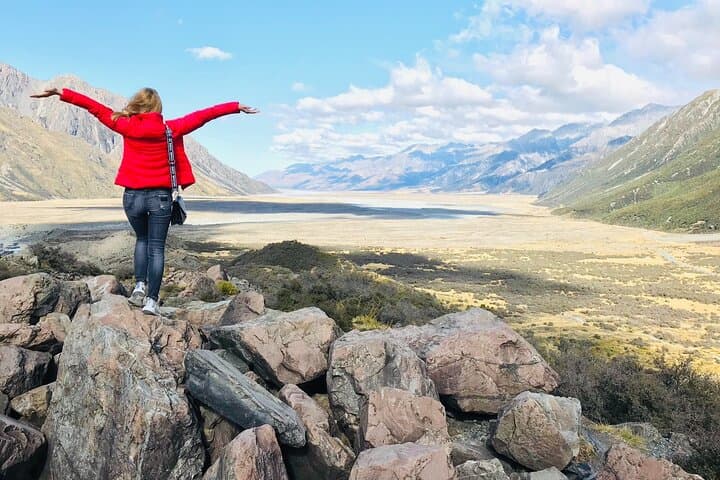
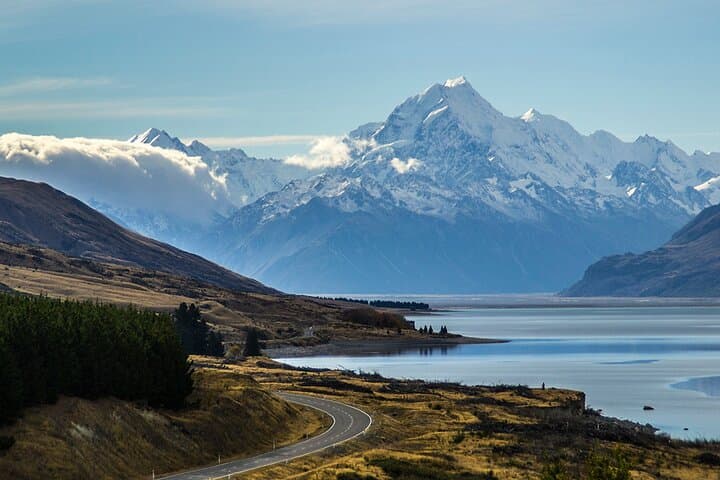
A pre-dawn pickup in Queenstown and the minibus hums south while alpine light eases across the Kawarau Gorge. The road climbs through rock-cut curves and irrigated orchards until Lake Pukaki appears — an impossible blue sheet set beneath a jagged horizon of peaks. By mid-morning you’re in Aoraki/Mount Cook National Park, stepping off the vehicle onto coarse moraine, wind and mountains pressing close.
Verified experiences and guided adventures in the surrounding area.
Operated by Cheeky Kiwi Travel · Mount Cook Village, Canterbury
A pre-dawn pickup in Queenstown and the minibus hums south while alpine light eases across the Kawarau Gorge. The road climbs through rock-cut curves and irrigated orchards until Lake Pukaki appears — an impossible blue sheet set beneath a jagged horizon of peaks. By mid-morning you’re in Aoraki/Mount Cook National Park, stepping off the vehicle onto coarse moraine, wind and mountains pressing close.
This route threads colonial and Māori histories: Aoraki is a sacred place in Ngāi Tahu tradition and became the focus of New Zealand mountaineering in the late 19th century. Geologically the scene is recent — the Southern Alps were uplifted by tectonic collision; glaciers like the Tasman have carved valleys, left moraine walls and created proglacial lakes littered with bergy bits. The Tasman Glacier stretches roughly 22 km but has receded noticeably in recent decades.
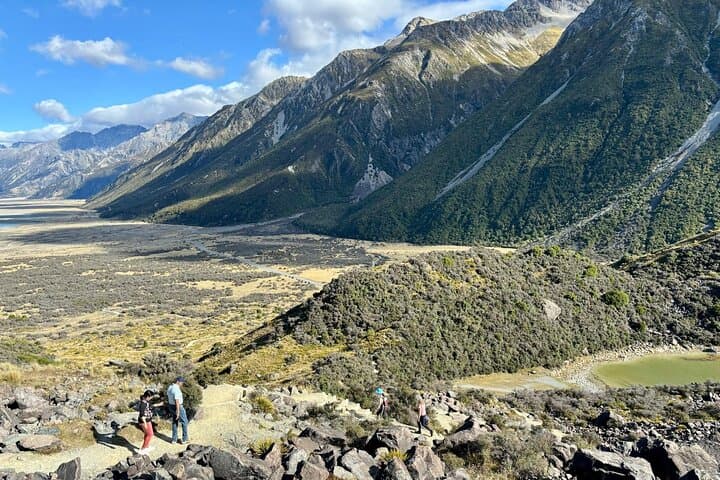
Local stops en route — Lindis Pass lookout, Omarama, and the roadside fruit stands — give texture: sheep country, quick breaks, and the chance to try a hearty high-country pie. The walk to the Tasman Glacier viewpoint is short but on uneven ground; from the moraine you can see the lower ice, the milky lake and floating ice fragments.
Practical guidance: this is a full-day outing (expect up to 12 hours including transfers). Dress in layers, bring a waterproof shell, sturdy hiking shoes and plenty of water; sun and wind can change within minutes. Allow time for photos and short side trips; follow DOC signage and stay on formed tracks to protect fragile alpine vegetation. If you want to swim the Blue Lakes, come in summer and be prepared for very cold water.
moderate.
12 hours.
Moderate — able to manage multiple short walks and some standing; not suitable for those with serious mobility issues.
The viewpoint walk from the car park is typically 30–60 minutes round trip on uneven terrain and moraine surfaces.
The Hooker Valley Track beyond Müller Lookout is closed for bridge replacement; the tour focuses on Tasman Glacier viewpoints and nearby short walks instead.
Yes, the Blue Lakes offer summer swimming opportunities but water is cold year-round—only attempt if prepared and preferably on calm, warm days.
Yes — the itinerary includes restroom and refreshment stops in Omarama and at Aoraki/Mt Cook Village; snacks and water are also provided on the tour.
Aoraki/Mount Cook holds cultural significance for Ngāi Tahu and became the center of New Zealand mountaineering as European climbers mapped the Southern Alps in the 19th century.
Glaciers here are retreating rapidly; stay on marked tracks, pack out waste, and respect DOC signage to protect fragile alpine ecosystems.
Cheeky Kiwi Travel operates guided outdoor trips and adventures with an emphasis on safety, stewardship, and memorable experiences.

A pre-dawn pickup in Queenstown and the minibus hums south while alpine light eases across the Kawarau Gorge. The road climbs through rock-cut curves and irrigated orchards until Lake Pukaki appears — an impossible blue sheet set beneath a jagged horizon of peaks. By mid-morning you’re in Aoraki/Mount Cook National Park, stepping off the vehicle onto coarse moraine, wind and mountains pressing close.
A pre-dawn pickup in Queenstown and the minibus hums south while alpine light eases across the Kawarau Gorge. The road climbs through rock-cut curves and irrigated orchards until Lake Pukaki appears — an impossible blue sheet set beneath a jagged horizon of peaks. By mid-morning you’re in Aoraki/Mount Cook National Park, stepping off the vehicle onto coarse moraine, wind and mountains pressing close.
This route threads colonial and Māori histories: Aoraki is a sacred place in Ngāi Tahu tradition and became the focus of New Zealand mountaineering in the late 19th century. Geologically the scene is recent — the Southern Alps were uplifted by tectonic collision; glaciers like the Tasman have carved valleys, left moraine walls and created proglacial lakes littered with bergy bits. The Tasman Glacier stretches roughly 22 km but has receded noticeably in recent decades.
Local stops en route — Lindis Pass lookout, Omarama, and the roadside fruit stands — give texture: sheep country, quick breaks, and the chance to try a hearty high-country pie. The walk to the Tasman Glacier viewpoint is short but on uneven ground; from the moraine you can see the lower ice, the milky lake and floating ice fragments.
Practical guidance: this is a full-day outing (expect up to 12 hours including transfers). Dress in layers, bring a waterproof shell, sturdy hiking shoes and plenty of water; sun and wind can change within minutes. Allow time for photos and short side trips; follow DOC signage and stay on formed tracks to protect fragile alpine vegetation. If you want to swim the Blue Lakes, come in summer and be prepared for very cold water.