THE ADVENTURE COLLECTIVE® · Independent discovery and booking for outdoor travel

Travel from Lake Tekapo into Aoraki / Mt Cook National Park on a compact, carbon-neutral day tour that pairs Lake Pukaki’s shifting blues with a lakeside viewpoint of New Zealand’s highest peak. Spend a few hours exploring short moraine walks, the Tasman Glacier viewpoint and Mt Cook Village with local commentary.
Travel from Lake Tekapo into Aoraki / Mt Cook National Park on a compact, carbon-neutral day tour that pairs Lake Pukaki’s shifting blues with a lakeside viewpoint of New Zealand’s highest peak. Spend a few hours exploring short moraine walks, the Tasman Glacier viewpoint and Mt Cook Village with local commentary.
A cool wind pushes across the Mackenzie Basin as the Mercedes Sprinter eases east from Lake Tekapo, lupins flashing on the roadside in summer and the Southern Alps rising like a wall ahead. In six hours you move from high country plains to the gravelly shoreline of Lake Pukaki and then into Aoraki / Mt Cook National Park, where the mountain’s scale becomes a constant companion.
Verified experiences and guided adventures in the surrounding area.
Operated by Cheeky Kea Tours · Mount Cook Village, Canterbury
A cool wind pushes across the Mackenzie Basin as the Mercedes Sprinter eases east from Lake Tekapo, lupins flashing on the roadside in summer and the Southern Alps rising like a wall ahead. In six hours you move from high country plains to the gravelly shoreline of Lake Pukaki and then into Aoraki / Mt Cook National Park, where the mountain’s scale becomes a constant companion.
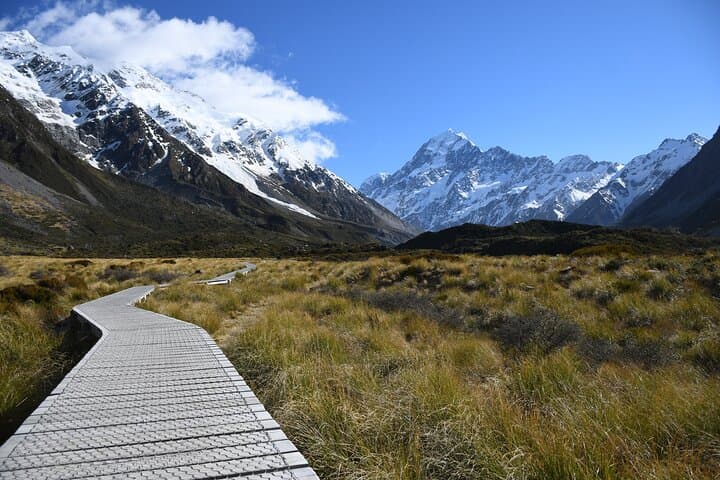
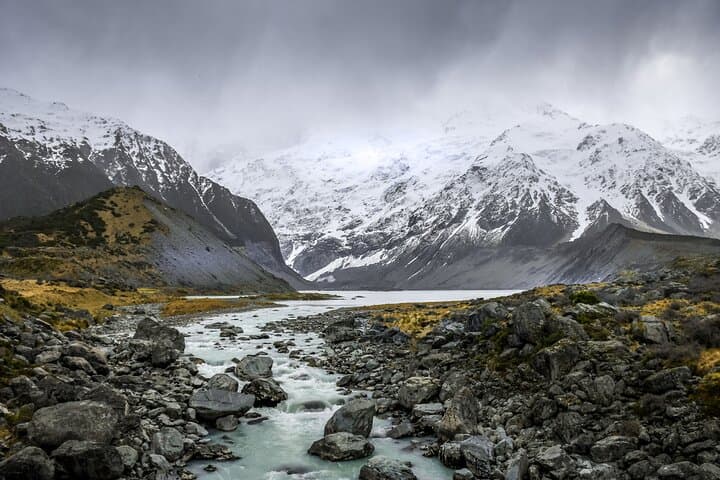
Aoraki (3724 m) is central to Ngāi Tahu whakapapa—its naming and story explain the formation of Kā Tiritiri o te Moana. Europeans first climbed the summit in 1894; today the park preserves glacial landforms, terminal moraines and the retreating Tasman Glacier that carved the valley. The Tasman Glacier Viewpoint Track threads across old moraine hummocks and alpine tussock, offering direct views of ice, the braided Tasman River and the pale turquoise Tasman Lake.
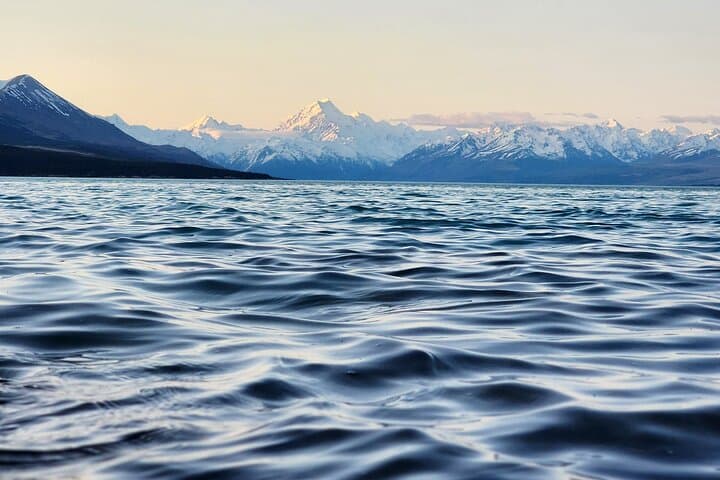
Expect short, uneven walks—the park stop is typically around three hours, with a quick photo pause at Lake Pukaki on the way. Guides provide local context, safety briefings and options: a brief village visit, the Visitor Centre and Sir Edmund Hillary Alpine Centre, or upgrading to a scenic flight. Winds can change fast; the lake can shift from milky glacier-blue to deep cobalt in minutes, daring you to keep shooting.
Practical: be ready for 10:00 pickup outside the Dark Sky Project in Tekapo; total tour time is roughly six hours. Bring layered clothing, sturdy shoes for gravel and moraine, sun protection, and enough water for short walks. If you want longer hikes like Hooker Valley, plan an overnight stay or a separate day—time in the park can be constrained by road and group timing.
easy.
6 hours.
Suitable for most fitness levels; participants should be comfortable with short, uneven walks of up to 2 km and standing for viewpoints.
The itinerary typically allows about three hours in the park for short walks and time in Mt Cook Village; delays can reduce this, so guides will advise priorities on the day.
No—scenic flights over the Tasman Glacier and Aoraki are available separately and can be arranged, weather permitting, at additional cost.
No—walks offered on this tour are short and suitable for most people, but terrain includes moraine, gravel and some undulating sections; good footwear is recommended.
Pickup is from outside the Dark Sky Project in Lake Tekapo, usually at 10:00; confirm exact pickup details with the operator before departure.
Aoraki is both a peak of mountaineering fame and a sacred ancestor in Ngāi Tahu tradition; the first recorded European ascent was in 1894.
The park is managed to protect alpine ecosystems and glacial features—stay on tracks, pack out waste, and be aware of glacial retreat driven by climate change.
Cheeky Kea Tours operates guided outdoor trips and adventures with an emphasis on safety, stewardship, and memorable experiences.
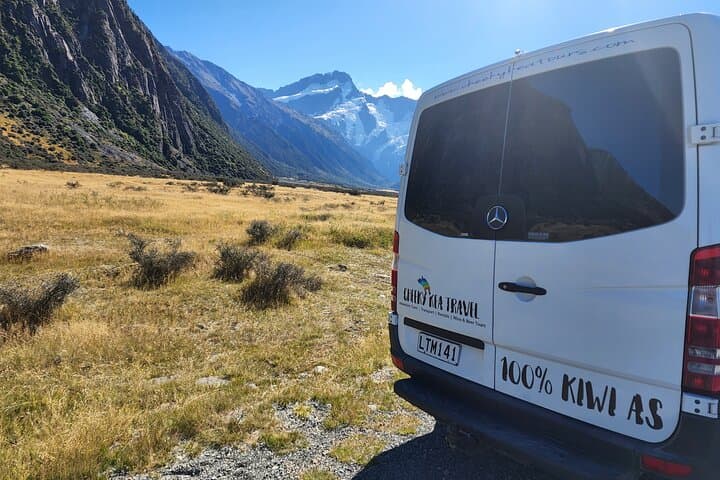
A cool wind pushes across the Mackenzie Basin as the Mercedes Sprinter eases east from Lake Tekapo, lupins flashing on the roadside in summer and the Southern Alps rising like a wall ahead. In six hours you move from high country plains to the gravelly shoreline of Lake Pukaki and then into Aoraki / Mt Cook National Park, where the mountain’s scale becomes a constant companion.
A cool wind pushes across the Mackenzie Basin as the Mercedes Sprinter eases east from Lake Tekapo, lupins flashing on the roadside in summer and the Southern Alps rising like a wall ahead. In six hours you move from high country plains to the gravelly shoreline of Lake Pukaki and then into Aoraki / Mt Cook National Park, where the mountain’s scale becomes a constant companion.
Aoraki (3724 m) is central to Ngāi Tahu whakapapa—its naming and story explain the formation of Kā Tiritiri o te Moana. Europeans first climbed the summit in 1894; today the park preserves glacial landforms, terminal moraines and the retreating Tasman Glacier that carved the valley. The Tasman Glacier Viewpoint Track threads across old moraine hummocks and alpine tussock, offering direct views of ice, the braided Tasman River and the pale turquoise Tasman Lake.
Expect short, uneven walks—the park stop is typically around three hours, with a quick photo pause at Lake Pukaki on the way. Guides provide local context, safety briefings and options: a brief village visit, the Visitor Centre and Sir Edmund Hillary Alpine Centre, or upgrading to a scenic flight. Winds can change fast; the lake can shift from milky glacier-blue to deep cobalt in minutes, daring you to keep shooting.
Practical: be ready for 10:00 pickup outside the Dark Sky Project in Tekapo; total tour time is roughly six hours. Bring layered clothing, sturdy shoes for gravel and moraine, sun protection, and enough water for short walks. If you want longer hikes like Hooker Valley, plan an overnight stay or a separate day—time in the park can be constrained by road and group timing.