THE ADVENTURE COLLECTIVE® · Independent discovery and booking for outdoor travel

Two nights, two volcanoes: catch sunrise over Mount Bromo’s caldera and hike at midnight to see Ijen’s rare blue fire. This 2-day trip combines short but steep climbs, jeep transfers across sand, and close encounters with active volcanic landscapes.
Two nights, two volcanoes: catch sunrise over Mount Bromo’s caldera and hike at midnight to see Ijen’s rare blue fire. This 2-day trip combines short but steep climbs, jeep transfers across sand, and close encounters with active volcanic landscapes.
The jeep rattles through black sand under a sky still pregnant with night; at Penanjakan, the horizon tears open and light pours over a smoking caldera. You stand on a rocky ridge as steam and early sun fight across the bowl of Bromo — Batok’s rounded cone and Semeru’s distant peak outline the scene — then, later tonight, you’ll be hiking by headlamp toward Ijen where sulfur flames glow electric blue.
Verified experiences and guided adventures in the surrounding area.
Operated by Cheap Bromo · Probolinggo, East Java
The jeep rattles through black sand under a sky still pregnant with night; at Penanjakan, the horizon tears open and light pours over a smoking caldera. You stand on a rocky ridge as steam and early sun fight across the bowl of Bromo — Batok’s rounded cone and Semeru’s distant peak outline the scene — then, later tonight, you’ll be hiking by headlamp toward Ijen where sulfur flames glow electric blue.
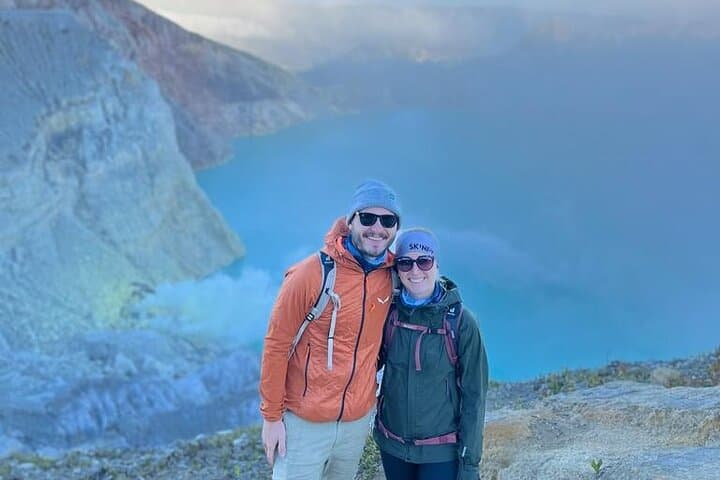
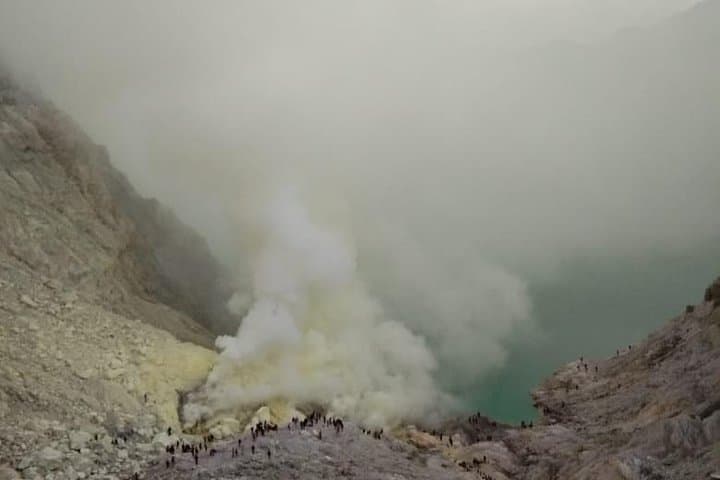
These two East Java volcanoes tell different geological stories: Bromo sits inside a vast Tengger caldera shaped by explosive eruptions and wind-scoured ash plains, while Ijen’s acid crater hosts a sulfur lake and active miners who extract solidified deposits by hand. Culturally, the area preserves Hindu rites around Luhur Poten temple and the stubborn traditions of sulfur communities at Paltuding.
Expect short, sharp hikes: Bromo’s sea of sand and crater rim involve an exposed 30–60 minute walk with stone steps and loose volcanic sand; Ijen is a steeper 1.5–2 hour climb (roughly 2–3 km) on switchbacks with rocky, sometimes muddy tread and a 300–400 m elevation change.
Practical notes: start late-night from Surabaya or Malang, layer for cold dawn winds, carry water and a spare headlamp, and respect miner routes at Ijen. The blue flame is visible only before sunrise, so timing is strict. Guides provide masks and lamps, but bring a small daypack, sturdy boots, and patience — these are working landscapes as much as dramatic vistas.
moderate.
2 days (approx. 48 hours).
Moderate fitness: able to handle 1.5–2 hour uphill hikes, uneven terrain, and early starts
Bromo’s crater rim walk from the sand plain is typically 30–60 minutes round-trip depending on pace; Ijen’s ascent takes about 1.5–2 hours each way.
Guides provide gas masks and will advise safe distances; avoid inhaling fumes and follow their directions around miners and fumaroles.
Entrance fees for Mount Bromo and Mount Ijen are usually included in tour packages; individual travelers must pay park fees at entry points if independent.
Most tours pick up from Surabaya or Malang and drop off at the stated port or city (Ketapang Port/Malang/Surabaya) — confirm your exact pickup address at booking.
The Tengger people maintain Hindu rituals around Bromo, a cultural holdover from the Majapahit era; sulfur mining at Ijen has been a livelihood for generations.
Both parks face pressures from tourism and mining; stick to marked trails, avoid littering, and follow guide instructions to reduce impacts.
Cheap Bromo operates guided outdoor trips and adventures with an emphasis on safety, stewardship, and memorable experiences.
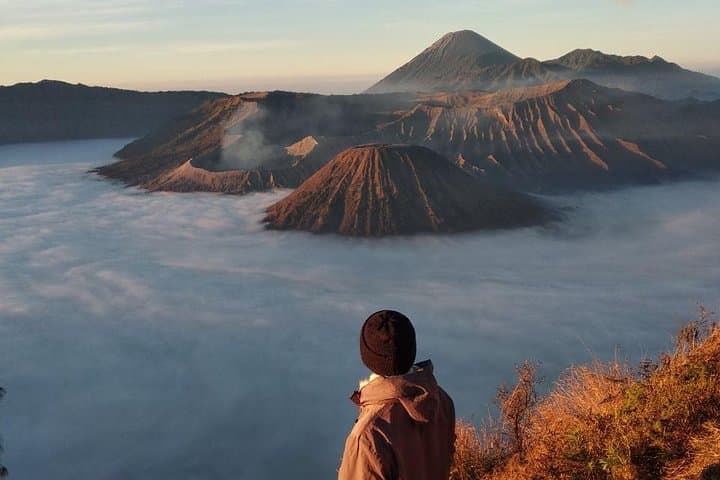
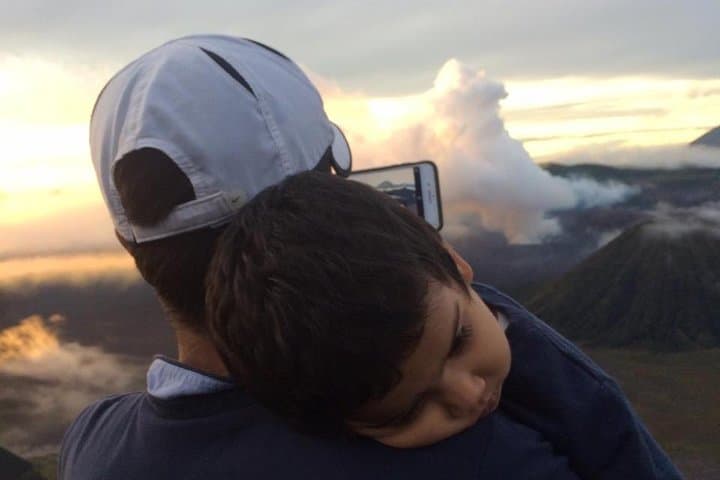
The jeep rattles through black sand under a sky still pregnant with night; at Penanjakan, the horizon tears open and light pours over a smoking caldera. You stand on a rocky ridge as steam and early sun fight across the bowl of Bromo — Batok’s rounded cone and Semeru’s distant peak outline the scene — then, later tonight, you’ll be hiking by headlamp toward Ijen where sulfur flames glow electric blue.
The jeep rattles through black sand under a sky still pregnant with night; at Penanjakan, the horizon tears open and light pours over a smoking caldera. You stand on a rocky ridge as steam and early sun fight across the bowl of Bromo — Batok’s rounded cone and Semeru’s distant peak outline the scene — then, later tonight, you’ll be hiking by headlamp toward Ijen where sulfur flames glow electric blue.
These two East Java volcanoes tell different geological stories: Bromo sits inside a vast Tengger caldera shaped by explosive eruptions and wind-scoured ash plains, while Ijen’s acid crater hosts a sulfur lake and active miners who extract solidified deposits by hand. Culturally, the area preserves Hindu rites around Luhur Poten temple and the stubborn traditions of sulfur communities at Paltuding.
Expect short, sharp hikes: Bromo’s sea of sand and crater rim involve an exposed 30–60 minute walk with stone steps and loose volcanic sand; Ijen is a steeper 1.5–2 hour climb (roughly 2–3 km) on switchbacks with rocky, sometimes muddy tread and a 300–400 m elevation change.
Practical notes: start late-night from Surabaya or Malang, layer for cold dawn winds, carry water and a spare headlamp, and respect miner routes at Ijen. The blue flame is visible only before sunrise, so timing is strict. Guides provide masks and lamps, but bring a small daypack, sturdy boots, and patience — these are working landscapes as much as dramatic vistas.