THE ADVENTURE COLLECTIVE® · Independent discovery and booking for outdoor travel

Cycle the north shore of Lake Titicaca from Puno, passing totora reed islands, farmed valleys, and panoramic viewpoints. This 4‑hour excursion mixes cultural sights with high‑altitude riding—ideal for riders comfortable with basic off‑road terrain.
Cycle the north shore of Lake Titicaca from Puno, passing totora reed islands, farmed valleys, and panoramic viewpoints. This 4‑hour excursion mixes cultural sights with high‑altitude riding—ideal for riders comfortable with basic off‑road terrain.
The morning light on Lake Titicaca cuts across the water like a silver blade as riders clip in and set off from Puno. Pedaling along the north shore, the path alternates between packed dirt and gravel, hugging bays where reed islands bob and fishermen mend nets. Wind off the high plateau tests your balance; the guide’s voice offers steady cadence and local directions.
Verified experiences and guided adventures in the surrounding area.
Operated by Tangol · Puno, Puno
The morning light on Lake Titicaca cuts across the water like a silver blade as riders clip in and set off from Puno. Pedaling along the north shore, the path alternates between packed dirt and gravel, hugging bays where reed islands bob and fishermen mend nets. Wind off the high plateau tests your balance; the guide’s voice offers steady cadence and local directions.
This ride threads cultural history and high-altitude geology: the Uros people built floating islands from totora reeds centuries ago, and the lake itself sits in a basin formed by Andean uplift and glacial action. Expect farmland terraces, pockets of Polylepis forest, and panoramic overlooks such as Viscachuni that frame the city against the water.
Local life is visible — reed craft, llamas grazing on stubble, and shorebirds that treat boats like highway signs. The route is suitable for riders with basic experience but altitude is the real variable; Lake Titicaca averages 3,800 m (12,500 ft) so breathing feels different and effort scales up.
Practically: helmets and front‑suspension mountain bikes are provided, plus a support vehicle and a snack stop at Viscachuni. Wear layered clothing, sun protection, and carry 1–2 liters of water in a daypack or hydration bladder. Plan for 3–4 hours including transfers and snacks; start mid‑morning when winds are often lighter. Be ready to dismount for narrow stretches and respect reed island communities by staying at designated viewpoints.
This is a ride where altitude shapes pace, culture shapes the route, and the lake’s wind keeps every turn honest.
moderate.
3–4 hours.
Suitable for riders with basic cycling fitness; must handle steady climbs and high‑altitude exertion.
No advanced experience is required; guides coach basic handling, but riders should be comfortable on loose dirt and short climbs.
Yes—mountain bikes with front suspension and helmets are provided, plus gloves and a first‑aid kit.
At ~3,800 m you'll tire faster and breathe harder—allow extra rest, hydrate, and avoid heavy meals immediately before riding.
The route offers viewpoints of the Uros; direct visits require separate boat arrangements and may not be part of the standard bike loop.
The Uros people have built and maintained totora reed floating islands for centuries; the region blends Aymara cultural practices with colonial-era influences in Puno.
Lake Titicaca’s high‑altitude wetlands are ecologically sensitive—stay on trails, minimize plastic waste, and avoid disturbing reed harvesting sites.
Tangol operates guided outdoor trips and adventures with an emphasis on safety, stewardship, and memorable experiences.
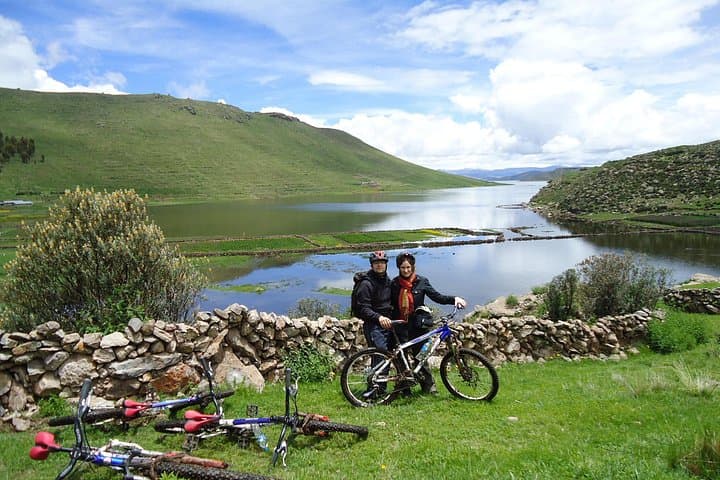
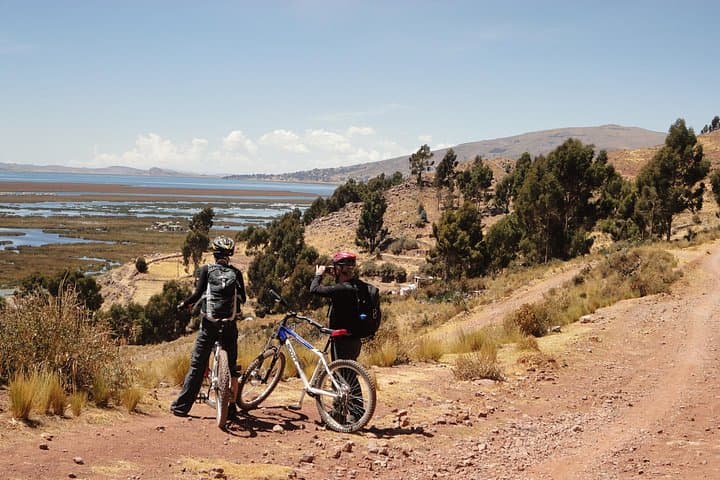
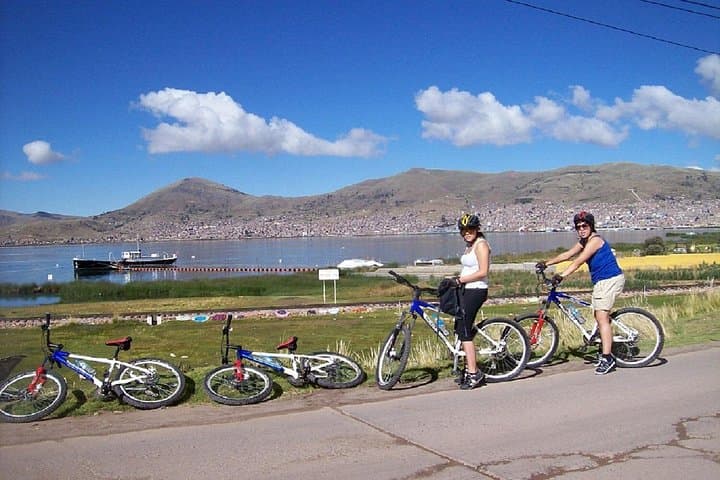
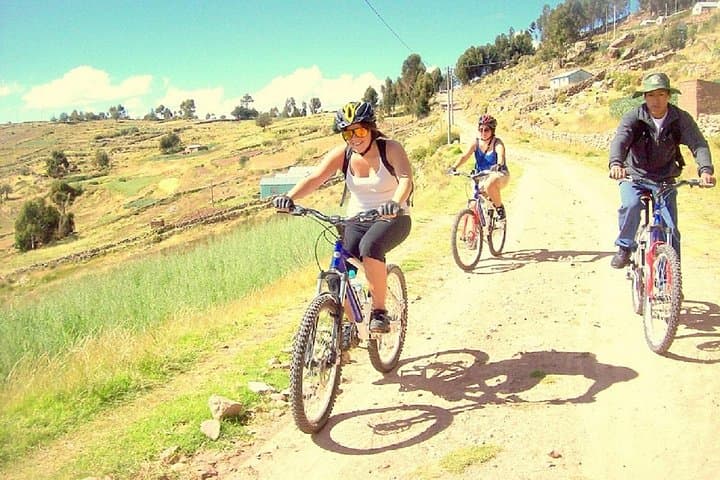
The morning light on Lake Titicaca cuts across the water like a silver blade as riders clip in and set off from Puno. Pedaling along the north shore, the path alternates between packed dirt and gravel, hugging bays where reed islands bob and fishermen mend nets. Wind off the high plateau tests your balance; the guide’s voice offers steady cadence and local directions.
The morning light on Lake Titicaca cuts across the water like a silver blade as riders clip in and set off from Puno. Pedaling along the north shore, the path alternates between packed dirt and gravel, hugging bays where reed islands bob and fishermen mend nets. Wind off the high plateau tests your balance; the guide’s voice offers steady cadence and local directions.
This ride threads cultural history and high-altitude geology: the Uros people built floating islands from totora reeds centuries ago, and the lake itself sits in a basin formed by Andean uplift and glacial action. Expect farmland terraces, pockets of Polylepis forest, and panoramic overlooks such as Viscachuni that frame the city against the water.
Local life is visible — reed craft, llamas grazing on stubble, and shorebirds that treat boats like highway signs. The route is suitable for riders with basic experience but altitude is the real variable; Lake Titicaca averages 3,800 m (12,500 ft) so breathing feels different and effort scales up.
Practically: helmets and front‑suspension mountain bikes are provided, plus a support vehicle and a snack stop at Viscachuni. Wear layered clothing, sun protection, and carry 1–2 liters of water in a daypack or hydration bladder. Plan for 3–4 hours including transfers and snacks; start mid‑morning when winds are often lighter. Be ready to dismount for narrow stretches and respect reed island communities by staying at designated viewpoints.
This is a ride where altitude shapes pace, culture shapes the route, and the lake’s wind keeps every turn honest.