THE ADVENTURE COLLECTIVE® · Independent discovery and booking for outdoor travel

A private half-day transfer and hike to Mount Vesuvius delivers crater-edge views over the Bay of Naples and the Sorrentine Peninsula. This practical guide explains what to expect on the walk, the route’s geology and history, and how to prepare for changing conditions.
A private half-day transfer and hike to Mount Vesuvius delivers crater-edge views over the Bay of Naples and the Sorrentine Peninsula. This practical guide explains what to expect on the walk, the route’s geology and history, and how to prepare for changing conditions.
You step out of the minivan into a wind that seems to push stories toward the crater—salty air from the Bay of Naples, the city stretched like a map below. The trailhead starts at the park parking area; underfoot, volcanic scree and compacted ash test your footing as the cone rises above the low scrub.
Verified experiences and guided adventures in the surrounding area.
Operated by Smooth travel napoli · Naples, Campania
You step out of the minivan into a wind that seems to push stories toward the crater—salty air from the Bay of Naples, the city stretched like a map below. The trailhead starts at the park parking area; underfoot, volcanic scree and compacted ash test your footing as the cone rises above the low scrub.
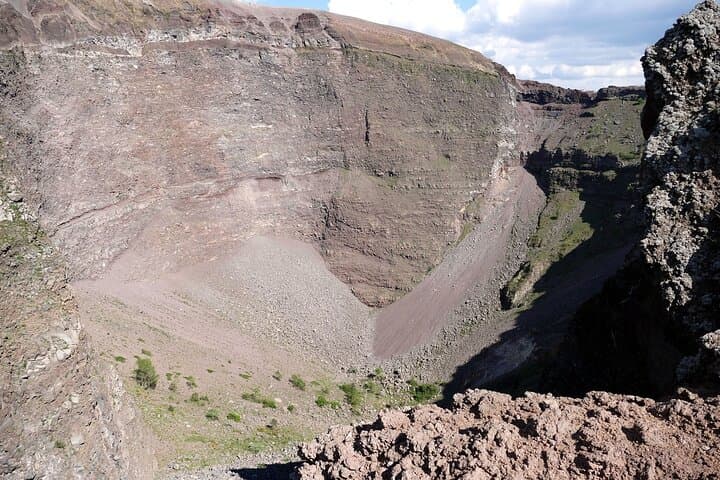
Vesuvius is a living chapter of Roman and Mediterranean history: the 79 AD eruption buried Pompeii and Herculaneum and shaped the coastline you now scan from the rim. Geologically it’s a classic stratovolcano—layers of lava and ash folded into steep terraces—and the crater’s lip still exhales faint sulfurous breath on calm mornings.
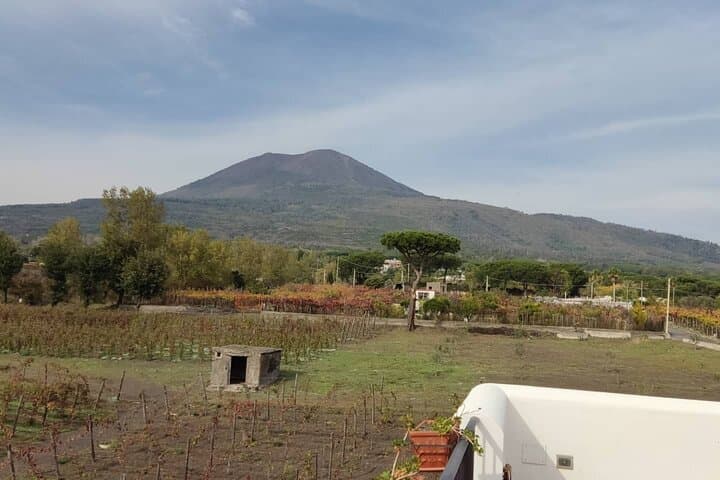
Local culture around Vesuvius mixes agricultural life and disaster memory: vineyards cling to the lower slopes, producing wines that take advantage of volcanic soils, while museums in Naples hold frescoes and artifacts recovered from the ash.
Practical guide: expect roughly 1–2 hours of walking round trip, about 1.5 km each way with an estimated 200–300 m of elevation gain from the upper parking to the crater rim. Terrain is rocky, loose in places—sturdy footwear and a steady pace matter. The tour often includes pickup and return to Naples; park admission or guide fees can be separate. Bring water, sun protection, and a light wind layer—weather shifts quickly at altitude. Aim for morning or late afternoon light for photos and cooler temperatures. Respect marked paths: the crater edge can be unstable and park rules protect both visitors and fragile geological features.
moderate.
3–4 hours (includes transfer and walking).
Suitable for people in light to moderate shape who can manage 1–2 hours of uphill walking on uneven terrain.
The route from the upper parking to the crater rim is short but uneven; many families and older visitors complete it, but mobility limitations should be discussed with the operator due to loose ground.
This tour’s description notes pickup and walking time; park admission is often separate—confirm with the operator before booking.
Visitors can reach the crater rim on marked trails but must follow park restrictions; access inside the crater is not permitted for safety reasons.
Early morning or late afternoon reduces heat, improves visibility over the bay, and avoids busier midday periods.
Vesuvius’ 79 AD eruption buried Roman towns like Pompeii and Herculaneum; its ash preserved daily life and reshaped the region’s coastline and agriculture.
The Parco Nazionale del Vesuvio manages foot traffic and limits off-trail access to protect fragile volcanic soils and endemic plant communities; follow park rules and pack out waste.
Smooth travel napoli operates guided outdoor trips and adventures with an emphasis on safety, stewardship, and memorable experiences.
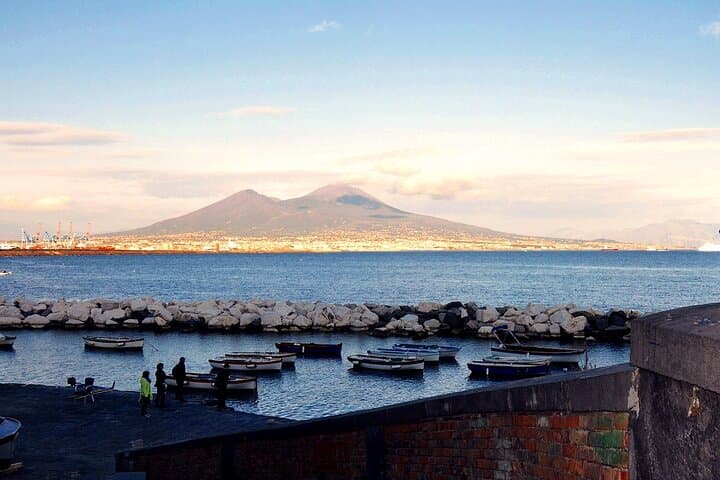
You step out of the minivan into a wind that seems to push stories toward the crater—salty air from the Bay of Naples, the city stretched like a map below. The trailhead starts at the park parking area; underfoot, volcanic scree and compacted ash test your footing as the cone rises above the low scrub.
You step out of the minivan into a wind that seems to push stories toward the crater—salty air from the Bay of Naples, the city stretched like a map below. The trailhead starts at the park parking area; underfoot, volcanic scree and compacted ash test your footing as the cone rises above the low scrub.
Vesuvius is a living chapter of Roman and Mediterranean history: the 79 AD eruption buried Pompeii and Herculaneum and shaped the coastline you now scan from the rim. Geologically it’s a classic stratovolcano—layers of lava and ash folded into steep terraces—and the crater’s lip still exhales faint sulfurous breath on calm mornings.
Local culture around Vesuvius mixes agricultural life and disaster memory: vineyards cling to the lower slopes, producing wines that take advantage of volcanic soils, while museums in Naples hold frescoes and artifacts recovered from the ash.
Practical guide: expect roughly 1–2 hours of walking round trip, about 1.5 km each way with an estimated 200–300 m of elevation gain from the upper parking to the crater rim. Terrain is rocky, loose in places—sturdy footwear and a steady pace matter. The tour often includes pickup and return to Naples; park admission or guide fees can be separate. Bring water, sun protection, and a light wind layer—weather shifts quickly at altitude. Aim for morning or late afternoon light for photos and cooler temperatures. Respect marked paths: the crater edge can be unstable and park rules protect both visitors and fragile geological features.