THE ADVENTURE COLLECTIVE® · Independent discovery and booking for outdoor travel

A fast, guided push to Jebel Toubkal — North Africa’s highest summit — over two days. Expect steep, rocky trails, an overnight at the Toubkal refuge, and a long summit day with expansive High Atlas views.
A fast, guided push to Jebel Toubkal — North Africa’s highest summit — over two days. Expect steep, rocky trails, an overnight at the Toubkal refuge, and a long summit day with expansive High Atlas views.
The morning air in the High Atlas bites clear and thin as you leave Imlil behind — terraces and stone Berber houses fold into a valley that narrows toward rocky gullies. By late afternoon the path climbs into switchbacks, limestone and volcanic scree underfoot, the refuge at 3,207 m a squat line against a slate sky. On day two the mountain feels purposeful: streams dare you across shallow fords and a stony plateau pushes you toward the summit, where the plain of Marrakech and the far Anti-Atlas spread like a weathered map.
Verified experiences and guided adventures in the surrounding area.
Operated by Marrakesh Travel Guide · Imlil, Marrakech-Safi
The morning air in the High Atlas bites clear and thin as you leave Imlil behind — terraces and stone Berber houses fold into a valley that narrows toward rocky gullies. By late afternoon the path climbs into switchbacks, limestone and volcanic scree underfoot, the refuge at 3,207 m a squat line against a slate sky. On day two the mountain feels purposeful: streams dare you across shallow fords and a stony plateau pushes you toward the summit, where the plain of Marrakech and the far Anti-Atlas spread like a weathered map.
Toubkal (Jebel Toubkal), at 4,167 m, is the highest point in the Atlas and North Africa. The massif formed from tectonic uplift and erosion, its peaks shaped by glacial action in the Pleistocene. Local Amazigh (Berber) culture remains visible in village life and the mule tracks that predate modern trails; the refuge itself is part of a long tradition of mountain hospitality.
Practically, this is non-technical high-altitude trekking: no ropes required in summer, but the altitude and sustained ascent demand respect. Expect steep rocky trails, loose scree, and potentially snow or ice outside summer; summit day is often 9–11 hours of walking with ~950 m elevation gain from refuge to peak. Hydrate early, layer for sharp temperature swings, and pace your breathing on the final col. Guides provide logistics, dinner and breakfast at the refuge, and transport to and from Marrakech. With the right conditioning and kit, the two-day Toubkal ascent is an efficient, dramatic introduction to Atlas mountain travel.
challenging.
2 days (summit day 9–11 hours).
Good cardiovascular fitness and experience with sustained uphill hiking; ability to carry a daypack for long hours.
No technical mountaineering skills are required during summer; however, you should be comfortable with long uphill days and high-altitude hiking.
The refuge offers basic dormitory accommodation with full board (dinner, breakfast, lunch) and communal facilities — bring personal toiletries and a warm sleeping liner if desired.
Expect 9–11 hours round-trip from the refuge with ~950 m ascent; the terrain includes rocky sections and loose scree that require steady pace and good footing.
Yes—acute mountain sickness can occur; ascend slowly, hydrate, avoid alcohol, and inform your guide of symptoms; descent is the primary remedy.
Toubkal has long been part of Amazigh (Berber) territory and its trails served muleteers and local traders; the mountain has been a destination for climbers since early 20th-century European exploration.
The High Atlas is ecologically fragile — stay on trails, pack out waste, use local guides and minimize single-use plastics to reduce impact.
Marrakesh Travel Guide operates guided outdoor trips and adventures with an emphasis on safety, stewardship, and memorable experiences.


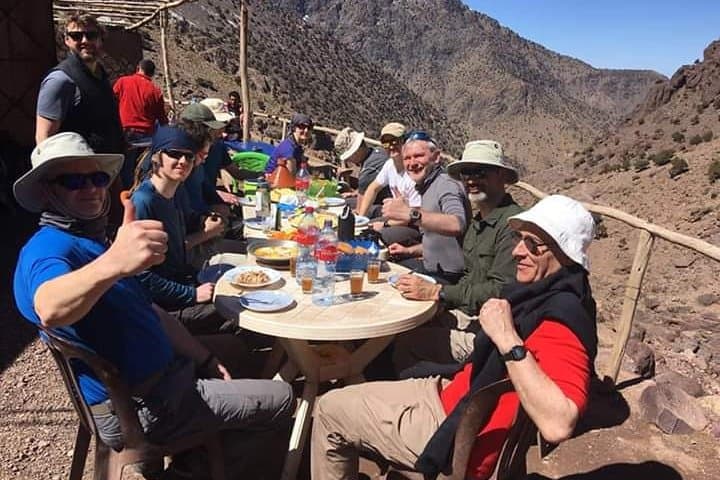

The morning air in the High Atlas bites clear and thin as you leave Imlil behind — terraces and stone Berber houses fold into a valley that narrows toward rocky gullies. By late afternoon the path climbs into switchbacks, limestone and volcanic scree underfoot, the refuge at 3,207 m a squat line against a slate sky. On day two the mountain feels purposeful: streams dare you across shallow fords and a stony plateau pushes you toward the summit, where the plain of Marrakech and the far Anti-Atlas spread like a weathered map.
The morning air in the High Atlas bites clear and thin as you leave Imlil behind — terraces and stone Berber houses fold into a valley that narrows toward rocky gullies. By late afternoon the path climbs into switchbacks, limestone and volcanic scree underfoot, the refuge at 3,207 m a squat line against a slate sky. On day two the mountain feels purposeful: streams dare you across shallow fords and a stony plateau pushes you toward the summit, where the plain of Marrakech and the far Anti-Atlas spread like a weathered map.
Toubkal (Jebel Toubkal), at 4,167 m, is the highest point in the Atlas and North Africa. The massif formed from tectonic uplift and erosion, its peaks shaped by glacial action in the Pleistocene. Local Amazigh (Berber) culture remains visible in village life and the mule tracks that predate modern trails; the refuge itself is part of a long tradition of mountain hospitality.
Practically, this is non-technical high-altitude trekking: no ropes required in summer, but the altitude and sustained ascent demand respect. Expect steep rocky trails, loose scree, and potentially snow or ice outside summer; summit day is often 9–11 hours of walking with ~950 m elevation gain from refuge to peak. Hydrate early, layer for sharp temperature swings, and pace your breathing on the final col. Guides provide logistics, dinner and breakfast at the refuge, and transport to and from Marrakech. With the right conditioning and kit, the two-day Toubkal ascent is an efficient, dramatic introduction to Atlas mountain travel.