THE ADVENTURE COLLECTIVE® · Independent discovery and booking for outdoor travel

Ride the world’s first revolving cable car to Titlis, walk a glacier cave, and glide over icy crevasses on the Ice Flyer — all in a single day from Zurich. This full-day tour balances easy logistics with true high-alpine scenery.
Ride the world’s first revolving cable car to Titlis, walk a glacier cave, and glide over icy crevasses on the Ice Flyer — all in a single day from Zurich. This full-day tour balances easy logistics with true high-alpine scenery.
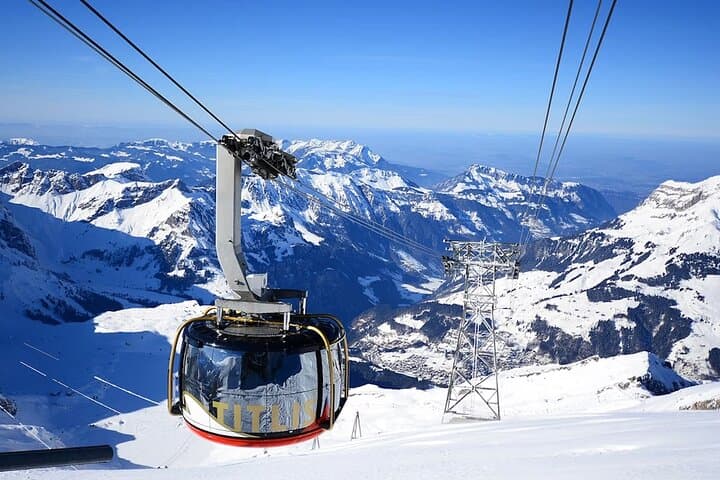
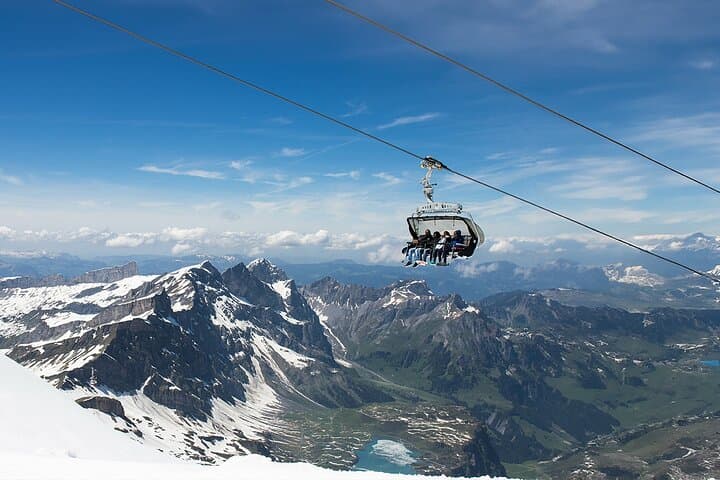
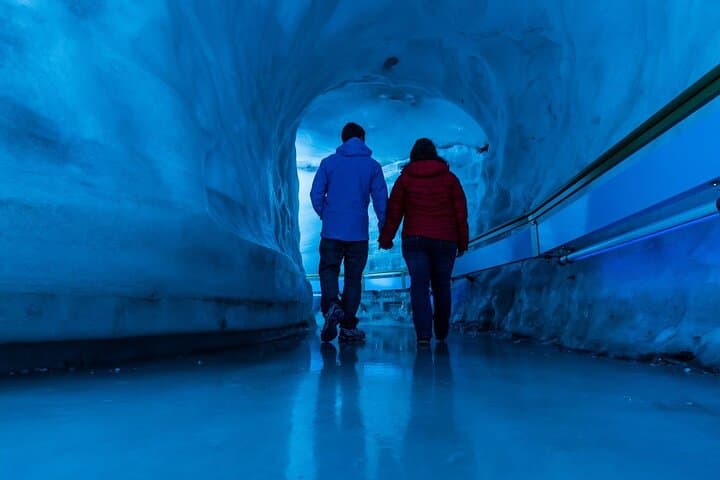
A cold wind meets you at the summit station as the Rotair slows and the Alps unfurl in every direction — jagged ridgelines, white cornices, and a distant Lake Lucerne shining like a coin. The rotating cable car gives you a slow, panoramic approach that turns the mountains into a moving map. Below, the Ice Flyer chairlift dares you to look down at crevasses that glint like dark mouths; the Glacier Cave lies blue and quiet beneath the ice, its corridors carved by centuries of flow.
Verified experiences and guided adventures in the surrounding area.
Operated by TREVOPEDIA · Engelberg, Obwalden
A cold wind meets you at the summit station as the Rotair slows and the Alps unfurl in every direction — jagged ridgelines, white cornices, and a distant Lake Lucerne shining like a coin. The rotating cable car gives you a slow, panoramic approach that turns the mountains into a moving map. Below, the Ice Flyer chairlift dares you to look down at crevasses that glint like dark mouths; the Glacier Cave lies blue and quiet beneath the ice, its corridors carved by centuries of flow.
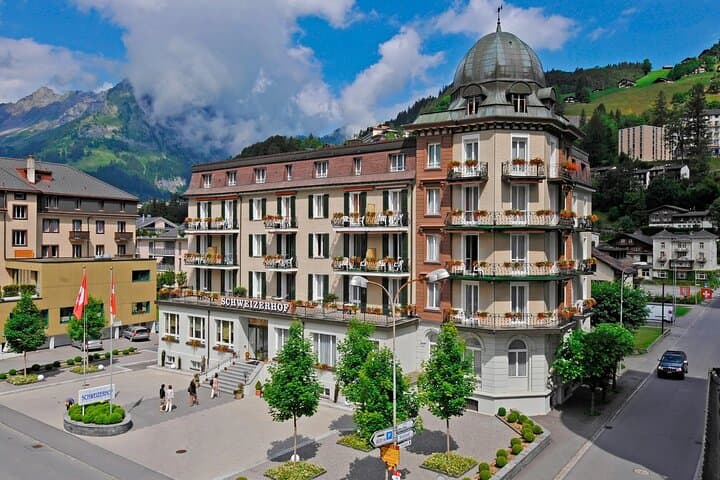
Geologically these peaks are the result of alpine uplift and persistent glaciation: Titlis is an active glacier environment at 3,238 m, a place where rock and ice still argue over shape. Culturally, Engelberg—whose Benedictine monastery dates to the 12th century—has long been a mountain gateway for pilgrims and climbers; nearby Lucerne provides the urban contrast with its medieval streets and lakefront.
Practical guidance: this is a full-day trip (roughly 9–10 hours including coach time from Zurich) that requires little fitness—most ascent is by gondola—but pay attention to altitude and icy surfaces. Dress in layers, carry sunglasses and sunscreen (snow amplifies UV), and wear sturdy, waterproof shoes for slick platforms and short walks. Photographers should time visits for morning light to avoid crowds on the Rotair; those sensitive to cold should bring insulated gloves. Operations run year-round, but conditions change with the seasons: expect deep snow and tubing in winter, and exposed crevasses and wet sections in summer. The trip pairs high alpine spectacle with straightforward logistics: coach transfer, timed cable cars, and guided access to the glacier attractions.
easy.
9–10 hours.
Minimal aerobic fitness required; must be able to stand and walk short distances on uneven, icy ground.
Expect approximately 9–10 hours total door-to-door; most of that time is road transfer plus on-mountain visits.
Yes—most of the experience uses cable cars and lifts; however, guardians should supervise children near cliffs and icy areas.
The Glacier Cave is accessible year-round, though technicians manage conditions; the Ice Flyer and snow activities operate when safety conditions allow, which varies by season.
Ascend slowly, hydrate, avoid alcohol before the trip, and consult a doctor if you have a history of altitude illness; most visitors experience only mild effects due to the rapid ascent by cable car.
Engelberg’s Benedictine monastery, founded in 1120, made the valley a spiritual and economic center that later supported mountain tourism and alpine agriculture.
Titlis’ glacier is sensitive to warming; visitors are asked to stay on marked paths, avoid littering, and follow local guidelines to reduce impact on fragile alpine ecosystems.
TREVOPEDIA operates guided outdoor trips and adventures with an emphasis on safety, stewardship, and memorable experiences.
A cold wind meets you at the summit station as the Rotair slows and the Alps unfurl in every direction — jagged ridgelines, white cornices, and a distant Lake Lucerne shining like a coin. The rotating cable car gives you a slow, panoramic approach that turns the mountains into a moving map. Below, the Ice Flyer chairlift dares you to look down at crevasses that glint like dark mouths; the Glacier Cave lies blue and quiet beneath the ice, its corridors carved by centuries of flow.
A cold wind meets you at the summit station as the Rotair slows and the Alps unfurl in every direction — jagged ridgelines, white cornices, and a distant Lake Lucerne shining like a coin. The rotating cable car gives you a slow, panoramic approach that turns the mountains into a moving map. Below, the Ice Flyer chairlift dares you to look down at crevasses that glint like dark mouths; the Glacier Cave lies blue and quiet beneath the ice, its corridors carved by centuries of flow.
Geologically these peaks are the result of alpine uplift and persistent glaciation: Titlis is an active glacier environment at 3,238 m, a place where rock and ice still argue over shape. Culturally, Engelberg—whose Benedictine monastery dates to the 12th century—has long been a mountain gateway for pilgrims and climbers; nearby Lucerne provides the urban contrast with its medieval streets and lakefront.
Practical guidance: this is a full-day trip (roughly 9–10 hours including coach time from Zurich) that requires little fitness—most ascent is by gondola—but pay attention to altitude and icy surfaces. Dress in layers, carry sunglasses and sunscreen (snow amplifies UV), and wear sturdy, waterproof shoes for slick platforms and short walks. Photographers should time visits for morning light to avoid crowds on the Rotair; those sensitive to cold should bring insulated gloves. Operations run year-round, but conditions change with the seasons: expect deep snow and tubing in winter, and exposed crevasses and wet sections in summer. The trip pairs high alpine spectacle with straightforward logistics: coach transfer, timed cable cars, and guided access to the glacier attractions.