THE ADVENTURE COLLECTIVE® · Independent discovery and booking for outdoor travel

Float over Mount Tarawera and land in Orakei Korako’s Hidden Valley to walk among geysers, silica terraces and steaming pools. This short floatplane trip pairs dramatic aerial geology with a close-up geothermal walk suitable for most fitness levels.
Float over Mount Tarawera and land in Orakei Korako’s Hidden Valley to walk among geysers, silica terraces and steaming pools. This short floatplane trip pairs dramatic aerial geology with a close-up geothermal walk suitable for most fitness levels.
You lift off from Rotorua and the lake-sharp air tightens around the floatplane as Mount Tarawera slides into view—raw ridges, long fissures, and the scar where 1886 rewrote the map. From above the volcanic rifts look like cuts in a living skin; the plane banks south and the Sisters of Fire—the chain of geothermal reserves that includes Waimangu and Wai-O-Tapu—unfurl in brilliant swaths below.
Verified experiences and guided adventures in the surrounding area.
Operated by Volcanic Air · Rotorua, Bay of Plenty
You lift off from Rotorua and the lake-sharp air tightens around the floatplane as Mount Tarawera slides into view—raw ridges, long fissures, and the scar where 1886 rewrote the map. From above the volcanic rifts look like cuts in a living skin; the plane banks south and the Sisters of Fire—the chain of geothermal reserves that includes Waimangu and Wai-O-Tapu—unfurl in brilliant swaths below.
The landing at Orakei Korako, known locally as the Hidden Valley, sets you on wooden boardwalks above steaming silica terraces and periodically hissing geysers. Maori history threads through the landscape: the area is culturally significant and shaped anew by the 1886 Tarawera eruption, which altered lakes and terraces across the region. Geologically, you’re observing an active rhyolitic system—acidic pools, sinter deposits and geyser basins that continue to deposit minerals day by day.
Expect clear interpretive signage, a guided walk of about an hour, and opportunities to photograph cobalt pools and orange silica shelves that seem to glow. The terrain is flat but uneven boardwalks and stairs are part of the route; the park is fragile, so routes keep you at a respectful distance from boiling features.
Practical notes: book morning flights for calmer air and crisper light, bring layered weatherproof clothing and sun protection, and be ready for brief moments of sulfur-scented steam. The experience balances aerial perspective with tactile close-up hiking—fast to get to but slow to take in properly.
easy.
2–3 hours.
Low to moderate—suitable for most people who can walk unassisted for an hour over boardwalks and steps.
The full experience, including flight time and a guided walk, is about 2 to 2.5 hours (135 minutes advertised).
Yes—operators will cancel in unsuitable flying weather; the tour often requires manual confirmation and has a standard cancellation policy.
Yes—the park walk is family-friendly; infants may need to sit on laps in the aircraft and infant seats are available on request.
Motion sensitivity can be an issue for some on floatplane flights; choose a morning slot and sit near the wings to reduce motion, and consider medication if prone to airsickness.
The 1886 Tarawera eruption reshaped local lakes and geothermal features; nearby terraces and valleys retain cultural importance for local Māori.
Geothermal features are fragile—stay on boardwalks, don’t remove mineral samples, and follow park signage to prevent irreversible damage.
Volcanic Air operates guided outdoor trips and adventures with an emphasis on safety, stewardship, and memorable experiences.
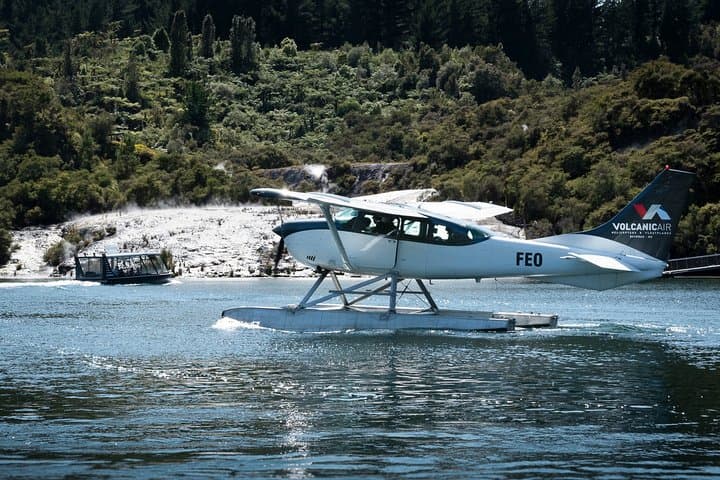
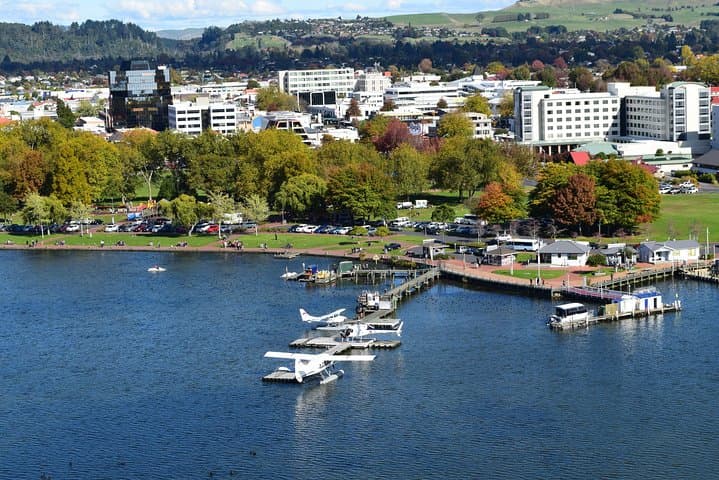
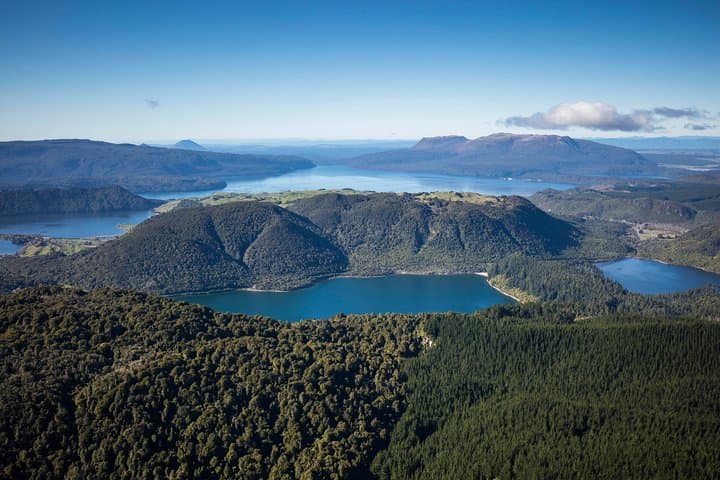
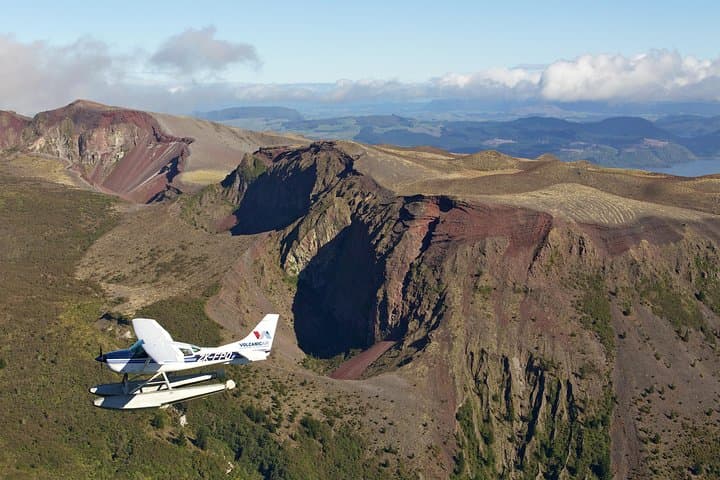
You lift off from Rotorua and the lake-sharp air tightens around the floatplane as Mount Tarawera slides into view—raw ridges, long fissures, and the scar where 1886 rewrote the map. From above the volcanic rifts look like cuts in a living skin; the plane banks south and the Sisters of Fire—the chain of geothermal reserves that includes Waimangu and Wai-O-Tapu—unfurl in brilliant swaths below.
You lift off from Rotorua and the lake-sharp air tightens around the floatplane as Mount Tarawera slides into view—raw ridges, long fissures, and the scar where 1886 rewrote the map. From above the volcanic rifts look like cuts in a living skin; the plane banks south and the Sisters of Fire—the chain of geothermal reserves that includes Waimangu and Wai-O-Tapu—unfurl in brilliant swaths below.
The landing at Orakei Korako, known locally as the Hidden Valley, sets you on wooden boardwalks above steaming silica terraces and periodically hissing geysers. Maori history threads through the landscape: the area is culturally significant and shaped anew by the 1886 Tarawera eruption, which altered lakes and terraces across the region. Geologically, you’re observing an active rhyolitic system—acidic pools, sinter deposits and geyser basins that continue to deposit minerals day by day.
Expect clear interpretive signage, a guided walk of about an hour, and opportunities to photograph cobalt pools and orange silica shelves that seem to glow. The terrain is flat but uneven boardwalks and stairs are part of the route; the park is fragile, so routes keep you at a respectful distance from boiling features.
Practical notes: book morning flights for calmer air and crisper light, bring layered weatherproof clothing and sun protection, and be ready for brief moments of sulfur-scented steam. The experience balances aerial perspective with tactile close-up hiking—fast to get to but slow to take in properly.