THE ADVENTURE COLLECTIVE® · Independent discovery and booking for outdoor travel

Walk the stone steps of Mount Sinai before dawn, reach the summit for sunrise, then visit the ancient St. Catherine’s Monastery—an immersive overnight from Cairo with Bedouin-guided ascent.
Walk the stone steps of Mount Sinai before dawn, reach the summit for sunrise, then visit the ancient St. Catherine’s Monastery—an immersive overnight from Cairo with Bedouin-guided ascent.
At 1:00 a.m. the desert changes its rules: the road from Cairo thins into a ribbon of headlamps and diesel breath, and a wind that has been sculpting Sinai for millennia dares you upward. You join a small caravan—guide, Bedouin assistant, and fellow travelers—walking the ancient stone steps toward the summit of Mount Sinai (Gabal Musa). By the time the sky lightens, the peaks cut hard silhouettes and the sun spills gold across the limestone bowl below.
Verified experiences and guided adventures in the surrounding area.
Operated by Egypt Tours Club · Saint Catherine, South Sinai Governorate
At 1:00 a.m. the desert changes its rules: the road from Cairo thins into a ribbon of headlamps and diesel breath, and a wind that has been sculpting Sinai for millennia dares you upward. You join a small caravan—guide, Bedouin assistant, and fellow travelers—walking the ancient stone steps toward the summit of Mount Sinai (Gabal Musa). By the time the sky lightens, the peaks cut hard silhouettes and the sun spills gold across the limestone bowl below.
This route follows a long, stepped path that rises to about 2,285 meters before the broad, wind‑scarred summit. The area is geologically a stack of Cambrian and Ordovician sandstones and limestones; over millions of years wind and flash floods carved the ridges and the small valleys that cradle St. Catherine city. Culturally the climb threads modern Bedouin hospitality and a Christian monastic presence: the 6th‑century St. Catherine’s Monastery—home to ancient icons and manuscripts—sits quietly at the mountain’s base.
Expect a physically demanding, short‑duration night ascent (roughly 3–4 hours up, 1.5–2.5 down), followed by a morning visit to the monastery and a return drive to Cairo. Practicalities matter: bring a reliable headlamp, warm layers for summit winds, sturdy boots for uneven stone steps, and 1–2 liters of water. Respect the monastery’s dress code and the fragile desert—stay on the path, carry out waste, and tip local guides who manage logistics and safety. If the climb feels too steep, camels can cover part of the route for a local fee; otherwise, preparation and pacing make sunrise at Sinai one of the region’s most elemental experiences.
challenging.
1–2 days.
Good cardiovascular fitness and leg strength recommended; able to sustain several hours of steady uphill walking and stair climbing.
The guided night ascent typically takes 3–4 hours to reach the summit along the stepped path; descent is usually 1.5–2.5 hours.
Yes—camels can carry guests partway (to the 700 steps) for a local fee (often around 200 EGP), but the final steps must be done on foot.
Yes; most tours include a morning visit to St. Catherine’s Monastery where you can see the library and chapel—observe modest dress and quiet inside.
No; the operator advises this tour is not recommended for travelers with serious heart, spinal, or mobility issues due to steep steps and strenuous ascent.
St. Catherine’s Monastery was founded in the 6th century under Byzantine patronage and houses some of the oldest Christian manuscripts and icons in the world.
The Sinai highlands are ecologically fragile; stay on marked routes, avoid collecting artifacts, and support local Bedouin guides who practice low-impact tourism.
Egypt Tours Club operates guided outdoor trips and adventures with an emphasis on safety, stewardship, and memorable experiences.
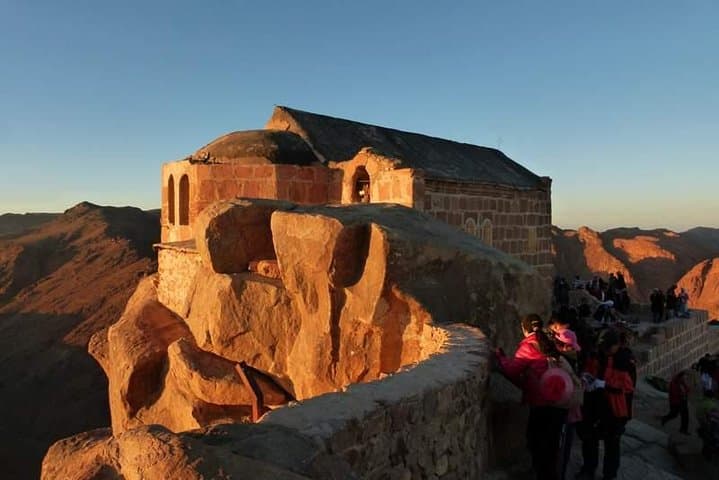
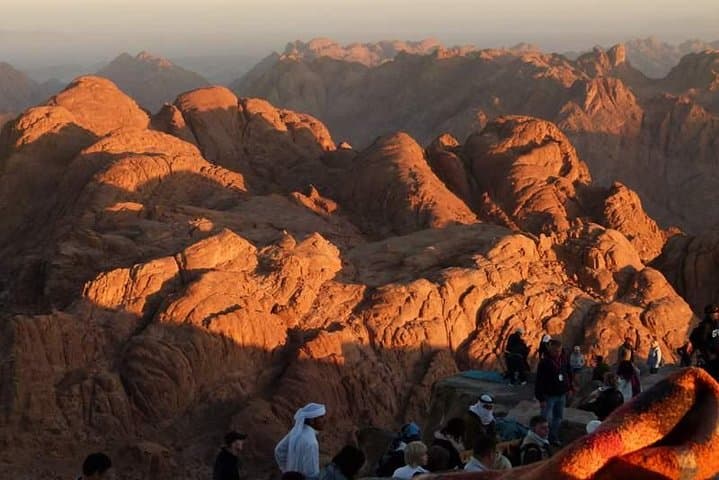
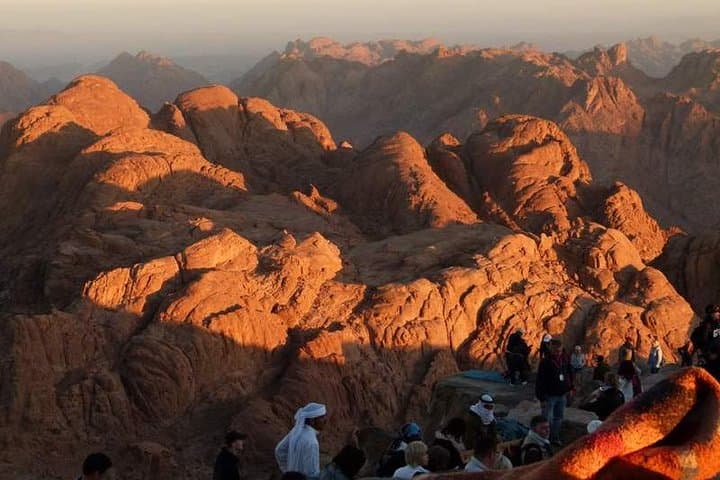
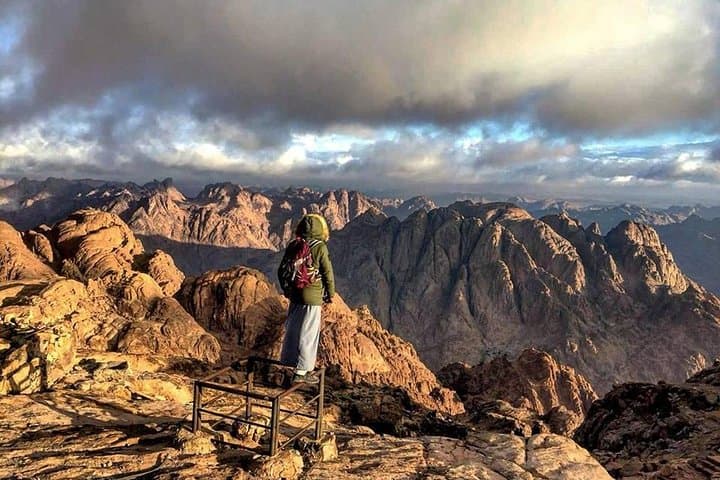
At 1:00 a.m. the desert changes its rules: the road from Cairo thins into a ribbon of headlamps and diesel breath, and a wind that has been sculpting Sinai for millennia dares you upward. You join a small caravan—guide, Bedouin assistant, and fellow travelers—walking the ancient stone steps toward the summit of Mount Sinai (Gabal Musa). By the time the sky lightens, the peaks cut hard silhouettes and the sun spills gold across the limestone bowl below.
At 1:00 a.m. the desert changes its rules: the road from Cairo thins into a ribbon of headlamps and diesel breath, and a wind that has been sculpting Sinai for millennia dares you upward. You join a small caravan—guide, Bedouin assistant, and fellow travelers—walking the ancient stone steps toward the summit of Mount Sinai (Gabal Musa). By the time the sky lightens, the peaks cut hard silhouettes and the sun spills gold across the limestone bowl below.
This route follows a long, stepped path that rises to about 2,285 meters before the broad, wind‑scarred summit. The area is geologically a stack of Cambrian and Ordovician sandstones and limestones; over millions of years wind and flash floods carved the ridges and the small valleys that cradle St. Catherine city. Culturally the climb threads modern Bedouin hospitality and a Christian monastic presence: the 6th‑century St. Catherine’s Monastery—home to ancient icons and manuscripts—sits quietly at the mountain’s base.
Expect a physically demanding, short‑duration night ascent (roughly 3–4 hours up, 1.5–2.5 down), followed by a morning visit to the monastery and a return drive to Cairo. Practicalities matter: bring a reliable headlamp, warm layers for summit winds, sturdy boots for uneven stone steps, and 1–2 liters of water. Respect the monastery’s dress code and the fragile desert—stay on the path, carry out waste, and tip local guides who manage logistics and safety. If the climb feels too steep, camels can cover part of the route for a local fee; otherwise, preparation and pacing make sunrise at Sinai one of the region’s most elemental experiences.