THE ADVENTURE COLLECTIVE® · Independent discovery and booking for outdoor travel

Navigate Mount Rushmore and the surrounding Black Hills on your schedule with a GPS-activated audio guide. Learn engineering, local history, and practical tips while you drive and walk the monument’s best viewpoints.
Navigate Mount Rushmore and the surrounding Black Hills on your schedule with a GPS-activated audio guide. Learn engineering, local history, and practical tips while you drive and walk the monument’s best viewpoints.
You pull off Iron Mountain Road as ponderous granite rises above the pines and, through your headphones, a voice cues you to slow down. The presidents’ carved visages peer over a rim of trees—unexpectedly intimate from this roadside angle—and the audio guide moves between concise history and local color as the road unfurls.
Verified experiences and guided adventures in the surrounding area.
Operated by Shaka Guide Apps · Keystone, South Dakota
You pull off Iron Mountain Road as ponderous granite rises above the pines and, through your headphones, a voice cues you to slow down. The presidents’ carved visages peer over a rim of trees—unexpectedly intimate from this roadside angle—and the audio guide moves between concise history and local color as the road unfurls.
Carved between 1927 and 1941 by Gutzon Borglum and crews, Mount Rushmore sits on Precambrian granite shaped by ancient uplift and erosion. The memorial’s scale and technique reflect early 20th-century engineering; nearby, Needles Highway and the Iron Mountain Road cut through the same granite, with tunnels framed to spot the monument. The Black Hills are also sacred to Lakota peoples—context the best guides do not omit—and the region’s cowboy and mining culture threads through Keystone and Rapid City.
This self-guided audio experience blends driving with short walks: follow the Presidential Trail for a closer look, pause at Norbeck Overlook for a wide view, and use the app to trigger stories and turn-by-turn GPS narration. Practical matters matter: download the tour on Wi‑Fi before you go, carry water and layered clothing for variable winds on the plateau, and time your visit early morning or late afternoon for softer light and fewer crowds. Respect signage and rangers; viewpoints have limited space and wildlife like bison roam nearby, so observe from a distance. The format gives flexibility—start, stop, and linger where the landscape or a narration catches your attention—letting you craft a monument visit that is both informative and quietly adventurous.
easy.
8–13 hours.
Light activity—mostly driving with short paved or gravel walks; suitable for most fitness levels
Use the 10-digit booking reference in the Shaka Guide app: Support > Retrieve Purchases > Redeem Purchase, then download the tour over Wi‑Fi.
Yes—visitor areas and many paths are wheelchair and stroller accessible, though a few viewpoints include steps or uneven surfaces.
No—standard monument entry is managed by the National Park Service; the audio tour is private and works any day you visit, but parking at peak times can fill.
Plan 1–3 hours to drive, use viewpoints, walk the Presidential Trail, and visit the visitor center; the audio tour can stretch the experience across a full day if you add nearby drives and hikes.
Mount Rushmore was carved largely between 1927–1941 under sculptor Gutzon Borglum; the Black Hills landscape has longer sacred and cultural significance for Lakota communities.
Stay on marked roads and trails, pack out trash, and observe wildlife from a distance; high visitation stresses parking and local habitats, so timing and restraint reduce impact.
Shaka Guide Apps operates guided outdoor trips and adventures with an emphasis on safety, stewardship, and memorable experiences.


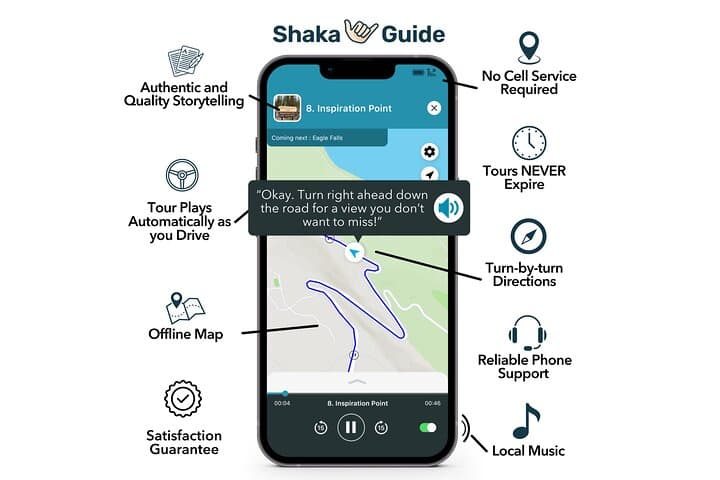
You pull off Iron Mountain Road as ponderous granite rises above the pines and, through your headphones, a voice cues you to slow down. The presidents’ carved visages peer over a rim of trees—unexpectedly intimate from this roadside angle—and the audio guide moves between concise history and local color as the road unfurls.
You pull off Iron Mountain Road as ponderous granite rises above the pines and, through your headphones, a voice cues you to slow down. The presidents’ carved visages peer over a rim of trees—unexpectedly intimate from this roadside angle—and the audio guide moves between concise history and local color as the road unfurls.
Carved between 1927 and 1941 by Gutzon Borglum and crews, Mount Rushmore sits on Precambrian granite shaped by ancient uplift and erosion. The memorial’s scale and technique reflect early 20th-century engineering; nearby, Needles Highway and the Iron Mountain Road cut through the same granite, with tunnels framed to spot the monument. The Black Hills are also sacred to Lakota peoples—context the best guides do not omit—and the region’s cowboy and mining culture threads through Keystone and Rapid City.
This self-guided audio experience blends driving with short walks: follow the Presidential Trail for a closer look, pause at Norbeck Overlook for a wide view, and use the app to trigger stories and turn-by-turn GPS narration. Practical matters matter: download the tour on Wi‑Fi before you go, carry water and layered clothing for variable winds on the plateau, and time your visit early morning or late afternoon for softer light and fewer crowds. Respect signage and rangers; viewpoints have limited space and wildlife like bison roam nearby, so observe from a distance. The format gives flexibility—start, stop, and linger where the landscape or a narration catches your attention—letting you craft a monument visit that is both informative and quietly adventurous.