THE ADVENTURE COLLECTIVE® · Independent discovery and booking for outdoor travel

A multi-day trek to the summit of Mount Roraima traverses savannah, rivers and a dramatic sandstone tepuy. This 9-day expedition combines strenuous hiking with unique plateau landscapes and cultural stops in Santa Elena.
A multi-day trek to the summit of Mount Roraima traverses savannah, rivers and a dramatic sandstone tepuy. This 9-day expedition combines strenuous hiking with unique plateau landscapes and cultural stops in Santa Elena.
Fog lifts off the savannah at first light and the flat crown of Mount Roraima appears, a dark table against an endless sky. The trail begins through low, wind-bent grass and moves into heat and dust as the group crosses rivers that dare you to stop for a chill. Over days the path tightens into rocky switchbacks, loose scree and the final, careful scramble into the Valley of Tears before the plateau opens like another continent.
Verified experiences and guided adventures in the surrounding area.
Operated by Nattrip - Tourism, Ecotourism and Adventure in Rio de Janeiro · Santa Elena de Uairén, Bolívar
Fog lifts off the savannah at first light and the flat crown of Mount Roraima appears, a dark table against an endless sky. The trail begins through low, wind-bent grass and moves into heat and dust as the group crosses rivers that dare you to stop for a chill. Over days the path tightens into rocky switchbacks, loose scree and the final, careful scramble into the Valley of Tears before the plateau opens like another continent.
Geologically, Roraima is a tepuy — an ancient sandstone table that formed over a billion years of erosion. Sitting at 2,810 meters on the Venezuelan flank of the triple border, the summit hosts endemic plants and the tiny, famously adapted Roraima frogs. Indigenous Pemon people revere these formations; villages like San Francisco provide a cultural waypoint where craft and stories meet the trail.
Expect sustained trekking: multiple days of 6–8 hours on uneven terrain, a summit day with technical sections and loose rock, and a long 14 km descent to Tek River. Weather shifts fast — mist, sun, sudden showers — and the plateau’s channels and rock basins create surreal pools and wind-sculpted formations.
Practically: carry a 50L+ pack, 0°C-rated sleeping bag, sturdy boots and waterproof layers. Hydrate relentlessly in the lowland heat, use trekking poles on loose descents, and budget extra time for exploration on the summit. Permits and guided logistics through Santa Elena de Uairén are standard; respect park rules — removal of rocks and plants is prohibited. With preparation, the Lost World rewards endurance with landscapes few places on Earth still offer.
challenging.
9 days.
Good aerobic fitness with experience carrying a loaded pack for multiple days; ability to handle sustained uphill and technical scrambling.
You should have moderate to high endurance—expect consecutive days of 6–8 hour hikes, steep ascents and uneven terrain; prior multi-day backpacking or regular hill training is recommended.
Guided expedition logistics, local carriers and most park arrangements are generally included; confirm permit coverage and border procedures with the operator before travel.
Plateau weather is changeable—sunny mornings can turn to wind, fog or rain; bring layers and a waterproof shell even in the dry season.
No—removal of rocks, plants or wildlife is prohibited and bags may be checked by park guards on descent.
Mount Roraima’s tepuy formations are among the oldest tabletop mountains on Earth and inspired early explorers and Arthur Conan Doyle’s Lost World novel through their isolated ecosystems.
This area is protected within Canaima National Park and Monte Roraima National Park; visitors are encouraged to follow leave-no-trace rules and avoid removing any geological or biological material.
Nattrip - Tourism, Ecotourism and Adventure in Rio de Janeiro operates guided outdoor trips and adventures with an emphasis on safety, stewardship, and memorable experiences.
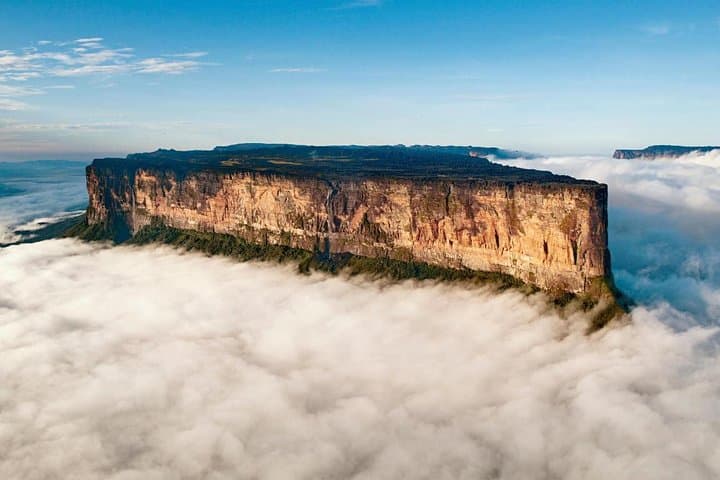


Fog lifts off the savannah at first light and the flat crown of Mount Roraima appears, a dark table against an endless sky. The trail begins through low, wind-bent grass and moves into heat and dust as the group crosses rivers that dare you to stop for a chill. Over days the path tightens into rocky switchbacks, loose scree and the final, careful scramble into the Valley of Tears before the plateau opens like another continent.
Fog lifts off the savannah at first light and the flat crown of Mount Roraima appears, a dark table against an endless sky. The trail begins through low, wind-bent grass and moves into heat and dust as the group crosses rivers that dare you to stop for a chill. Over days the path tightens into rocky switchbacks, loose scree and the final, careful scramble into the Valley of Tears before the plateau opens like another continent.
Geologically, Roraima is a tepuy — an ancient sandstone table that formed over a billion years of erosion. Sitting at 2,810 meters on the Venezuelan flank of the triple border, the summit hosts endemic plants and the tiny, famously adapted Roraima frogs. Indigenous Pemon people revere these formations; villages like San Francisco provide a cultural waypoint where craft and stories meet the trail.
Expect sustained trekking: multiple days of 6–8 hours on uneven terrain, a summit day with technical sections and loose rock, and a long 14 km descent to Tek River. Weather shifts fast — mist, sun, sudden showers — and the plateau’s channels and rock basins create surreal pools and wind-sculpted formations.
Practically: carry a 50L+ pack, 0°C-rated sleeping bag, sturdy boots and waterproof layers. Hydrate relentlessly in the lowland heat, use trekking poles on loose descents, and budget extra time for exploration on the summit. Permits and guided logistics through Santa Elena de Uairén are standard; respect park rules — removal of rocks and plants is prohibited. With preparation, the Lost World rewards endurance with landscapes few places on Earth still offer.