THE ADVENTURE COLLECTIVE® · Independent discovery and booking for outdoor travel

A compact 3-day trek that takes you from Sembalun’s savanna up to Rinjani’s summit and down into the caldera lake. Expect steep volcanic scree, an early-morning summit push, crater hot springs and overnight camping at high elevation.
A compact 3-day trek that takes you from Sembalun’s savanna up to Rinjani’s summit and down into the caldera lake. Expect steep volcanic scree, an early-morning summit push, crater hot springs and overnight camping at high elevation.
You stand on Sembalun’s high grassland as the air thins and the horizon sharpens — a broad savanna gives way to a steep, volcanic spine that will take you to Rinjani’s rim. Over three days the route climbs from village terraces into open meadows, up rocky scree and switchbacks to Plawangan Sembalun (2,639 m), then a pre-dawn push to the 3,726 m summit for sunrise.
Verified experiences and guided adventures in the surrounding area.
Operated by Lombok Volcano Trekking · Senaru, West Nusa Tenggara
You stand on Sembalun’s high grassland as the air thins and the horizon sharpens — a broad savanna gives way to a steep, volcanic spine that will take you to Rinjani’s rim. Over three days the route climbs from village terraces into open meadows, up rocky scree and switchbacks to Plawangan Sembalun (2,639 m), then a pre-dawn push to the 3,726 m summit for sunrise.
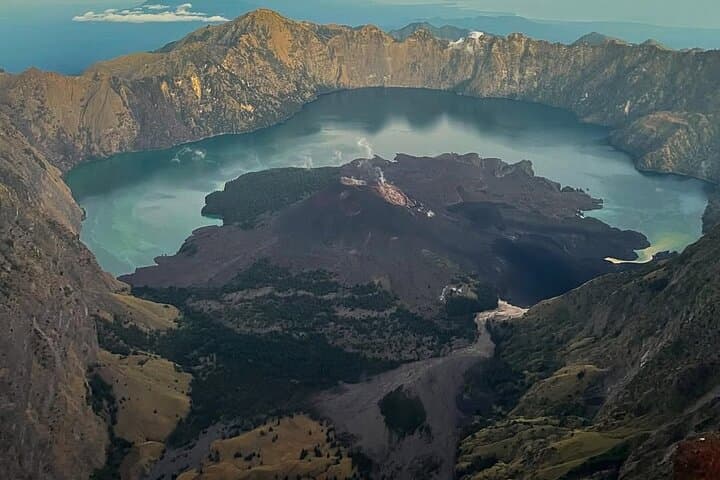
Rinjani is an active stratovolcano whose caldera holds Segara Anak, a turquoise lake formed after past eruptions. The mountain’s geology reads like a layered history: basalt and ash slopes, a broad caldera floor and hot springs where geothermal heat still warms the water. Culturally, the slopes are watched over by Sasak communities in Sembalun and Senaru — villages where guides and porters support treks and local offerings speak to the mountain’s spiritual role.
Expect varied terrain: grassy plains, steep stone steps, loose volcanic scree and a humid tropical rainforest on the descent to Senaru. The summit push (commonly started around 02:00) is a sustained 2–4 hour ascent from the rim over steep, exposed ground.
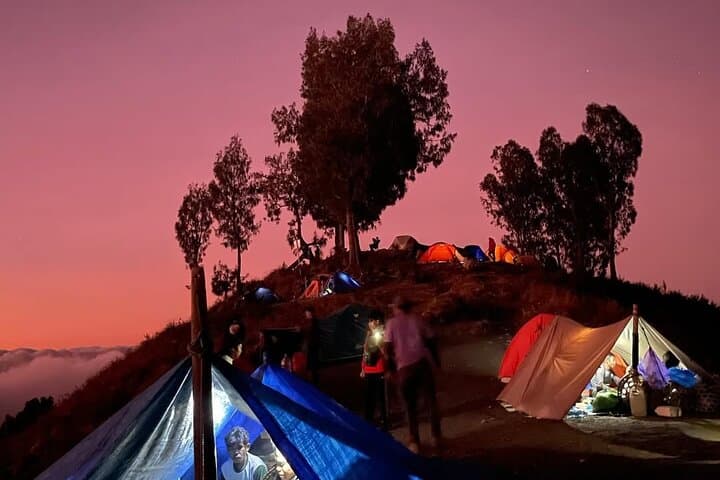
Practically: travel with a licensed guide and porters (usually included), carry layered clothing for wide temperature swings, and pace for altitude gain of roughly 1,100 m from rim to summit. Water is typically provided on commercial treks; bring a personal filter or sterile bottles if you prefer. Camps are basic — tents, sleeping bags and toilet tents are common. Plan for the dry season (May–September) for firmer trails and clearer summit views.
challenging.
3 days.
Requires high aerobic fitness and experience with sustained uphill hiking at altitude; daily hiking of 4–8 hours.
The summit push is a sustained, steep ascent of roughly 1,100 m from the rim and typically takes 2–4 hours; it requires steady pacing and good fitness.
Yes — Rinjani reaches 3,726 m. Proper pacing, hydration, rest and communicating symptoms to your guide reduce risk; those with heart or respiratory issues should consult a doctor.
Commercial operators include guides, porters and camping gear; local permits and entrance fees are managed by operators and national park authorities.
You can access hot springs by the crater lake for a warm soak, but water temperatures vary and respect local rules and safety guidance.
Mount Rinjani’s caldera formed in major eruptions; Segara Anak sits inside the crater and remains culturally significant to Sasak communities.
The highland ecosystem is fragile; use local guides, avoid off-trail camping, limit single-use plastics and follow park rules to reduce impact.
Lombok Volcano Trekking operates guided outdoor trips and adventures with an emphasis on safety, stewardship, and memorable experiences.
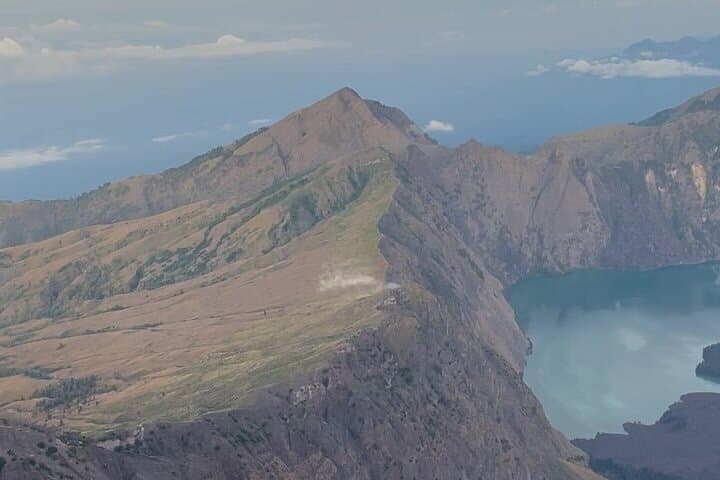
You stand on Sembalun’s high grassland as the air thins and the horizon sharpens — a broad savanna gives way to a steep, volcanic spine that will take you to Rinjani’s rim. Over three days the route climbs from village terraces into open meadows, up rocky scree and switchbacks to Plawangan Sembalun (2,639 m), then a pre-dawn push to the 3,726 m summit for sunrise.
You stand on Sembalun’s high grassland as the air thins and the horizon sharpens — a broad savanna gives way to a steep, volcanic spine that will take you to Rinjani’s rim. Over three days the route climbs from village terraces into open meadows, up rocky scree and switchbacks to Plawangan Sembalun (2,639 m), then a pre-dawn push to the 3,726 m summit for sunrise.
Rinjani is an active stratovolcano whose caldera holds Segara Anak, a turquoise lake formed after past eruptions. The mountain’s geology reads like a layered history: basalt and ash slopes, a broad caldera floor and hot springs where geothermal heat still warms the water. Culturally, the slopes are watched over by Sasak communities in Sembalun and Senaru — villages where guides and porters support treks and local offerings speak to the mountain’s spiritual role.
Expect varied terrain: grassy plains, steep stone steps, loose volcanic scree and a humid tropical rainforest on the descent to Senaru. The summit push (commonly started around 02:00) is a sustained 2–4 hour ascent from the rim over steep, exposed ground.
Practically: travel with a licensed guide and porters (usually included), carry layered clothing for wide temperature swings, and pace for altitude gain of roughly 1,100 m from rim to summit. Water is typically provided on commercial treks; bring a personal filter or sterile bottles if you prefer. Camps are basic — tents, sleeping bags and toilet tents are common. Plan for the dry season (May–September) for firmer trails and clearer summit views.