THE ADVENTURE COLLECTIVE® · Independent discovery and booking for outdoor travel

Ride historic railways, summit Mount Rigi for sweeping views of 13 lakes, and return to Lucerne by vintage paddle steamer. This six-hour loop blends transport history with accessible alpine scenery—perfect for travelers who want big views without a technical climb.
Ride historic railways, summit Mount Rigi for sweeping views of 13 lakes, and return to Lucerne by vintage paddle steamer. This six-hour loop blends transport history with accessible alpine scenery—perfect for travelers who want big views without a technical climb.
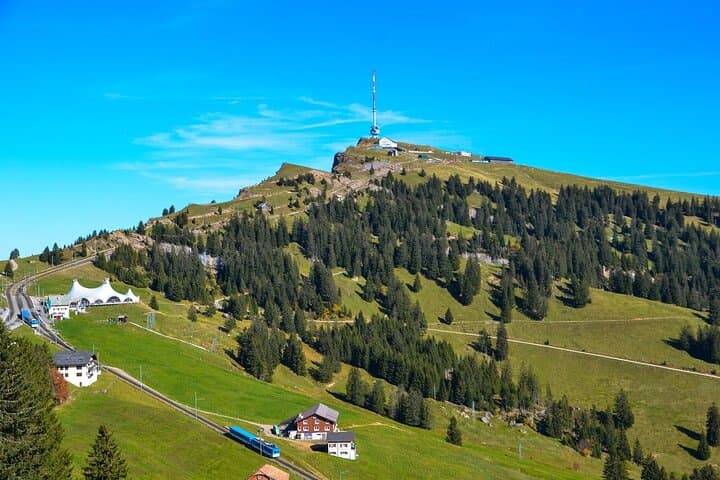
You emerge from Lucerne's stone station into a corridor of steel and sunlight, boarding a regional train that slides past green fields toward Arth-Goldau. The air cools as you transfer to the historic Rigi Bahn, Europe’s earliest mountain railway, and the rack-and-pinion gears begin their steady climb up the flank of Mount Rigi.
Verified experiences and guided adventures in the surrounding area.
Operated by Swiss City Tours · Lucerne, Canton of Lucerne
You emerge from Lucerne's stone station into a corridor of steel and sunlight, boarding a regional train that slides past green fields toward Arth-Goldau. The air cools as you transfer to the historic Rigi Bahn, Europe’s earliest mountain railway, and the rack-and-pinion gears begin their steady climb up the flank of Mount Rigi.
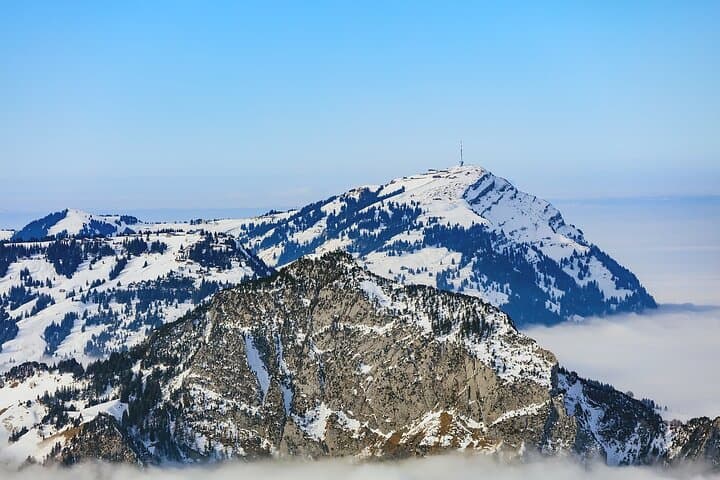
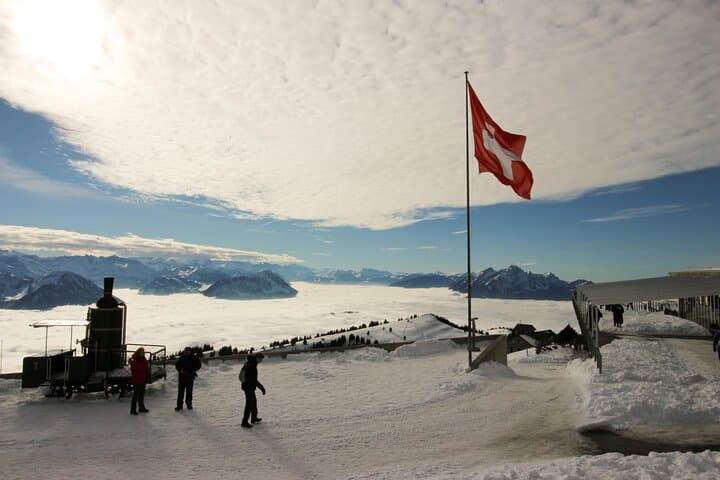
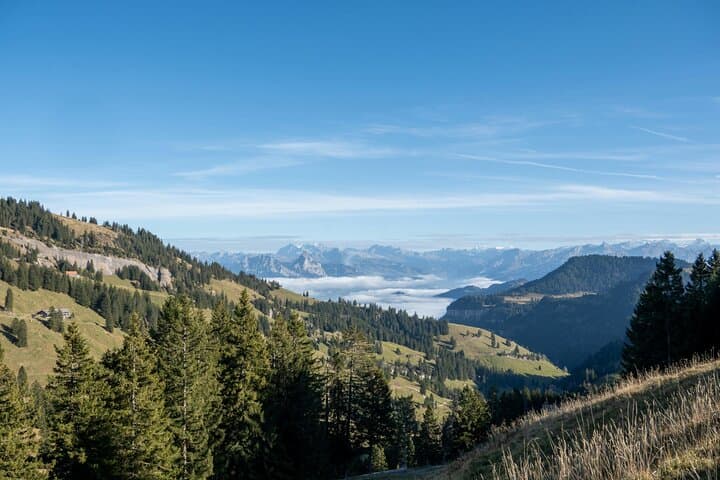
At 1,798 m the summit opens like a natural observation deck: 13 lakes glint below and a ring of Alps defines the horizon. The ridge's limestone and molasse bedrock creates sweeping terraces rather than jagged peaks—gentle slopes dotted with alpine pastures and conifer pockets that historically supported seasonal grazing and smallholdings.
Culture here follows a practical rhythm—village life in Vitznau and Arth-Goldau, steamers crossing Lake Lucerne, and mountain inns serving simple rösti and soups. The route itself is a slice of transport history: the electric cog from Vitznau and the paddle steamer crossing recall 19th-century Swiss tourism and engineering.
Practical guide: the full small-group loop takes about six hours (train ~40 min, funicular segments ~40 min each, boat ~1 hr), with roughly 1,200–1,400 m of vertical transit from lake level to summit. Trails on Rigi are mostly well-graded and suitable for casual hikers; expect rocky viewpoints, paved sections near stations, and muddy stretches after rain. Bring layered clothing for rapid temperature shifts, sturdy shoes for mixed terrain, water and a light lunch if you skip the summit restaurant. Peak daylight and clearer views come mid-morning; lake-fog can linger, so plan buffer time for connections back to Lucerne.
easy.
6 hours.
Suitable for most fitness levels—walking on short trails and station platforms; no steep technical hiking required
The itinerary runs about six hours total, including train, funicular, summit time, and the paddle-steamer crossing back to Lucerne.
Stations and many transport segments are wheelchair accessible, but some outdoor trails and viewpoints may have uneven surfaces.
No—there’s time at the summit to buy food at the restaurant, but bringing a packed lunch is a practical option.
Yes—this tour is suitable for most fitness levels; check specific accessibility needs with the operator when booking.
Rigi was among the first mountain destinations developed for tourism; the Rigi Bahn (1871) and early electric cog lines pioneered mountain transport in Europe.
The area balances grazing, tourism, and habitat protection—stay on marked paths, pack out waste, and follow local guidelines to protect alpine meadows.
Swiss City Tours operates guided outdoor trips and adventures with an emphasis on safety, stewardship, and memorable experiences.
You emerge from Lucerne's stone station into a corridor of steel and sunlight, boarding a regional train that slides past green fields toward Arth-Goldau. The air cools as you transfer to the historic Rigi Bahn, Europe’s earliest mountain railway, and the rack-and-pinion gears begin their steady climb up the flank of Mount Rigi.
You emerge from Lucerne's stone station into a corridor of steel and sunlight, boarding a regional train that slides past green fields toward Arth-Goldau. The air cools as you transfer to the historic Rigi Bahn, Europe’s earliest mountain railway, and the rack-and-pinion gears begin their steady climb up the flank of Mount Rigi.
At 1,798 m the summit opens like a natural observation deck: 13 lakes glint below and a ring of Alps defines the horizon. The ridge's limestone and molasse bedrock creates sweeping terraces rather than jagged peaks—gentle slopes dotted with alpine pastures and conifer pockets that historically supported seasonal grazing and smallholdings.
Culture here follows a practical rhythm—village life in Vitznau and Arth-Goldau, steamers crossing Lake Lucerne, and mountain inns serving simple rösti and soups. The route itself is a slice of transport history: the electric cog from Vitznau and the paddle steamer crossing recall 19th-century Swiss tourism and engineering.
Practical guide: the full small-group loop takes about six hours (train ~40 min, funicular segments ~40 min each, boat ~1 hr), with roughly 1,200–1,400 m of vertical transit from lake level to summit. Trails on Rigi are mostly well-graded and suitable for casual hikers; expect rocky viewpoints, paved sections near stations, and muddy stretches after rain. Bring layered clothing for rapid temperature shifts, sturdy shoes for mixed terrain, water and a light lunch if you skip the summit restaurant. Peak daylight and clearer views come mid-morning; lake-fog can linger, so plan buffer time for connections back to Lucerne.