THE ADVENTURE COLLECTIVE® · Independent discovery and booking for outdoor travel

See Lucerne’s two most famous peaks in a single, transport-rich day. Ride the world’s steepest cogwheel train to Pilatus, glide by boat, then ascend Rigi for sweeping Alpine views.
See Lucerne’s two most famous peaks in a single, transport-rich day. Ride the world’s steepest cogwheel train to Pilatus, glide by boat, then ascend Rigi for sweeping Alpine views.
You step under the broad stone arch in front of Lucerne train station and the day opens with the smell of lake water and metal—trains click into life, boats cleave glassy surface, and two summits wait above the city.
Verified experiences and guided adventures in the surrounding area.
Operated by Riccardi Travel · Lucerne, Canton of Lucerne
You step under the broad stone arch in front of Lucerne train station and the day opens with the smell of lake water and metal—trains click into life, boats cleave glassy surface, and two summits wait above the city.
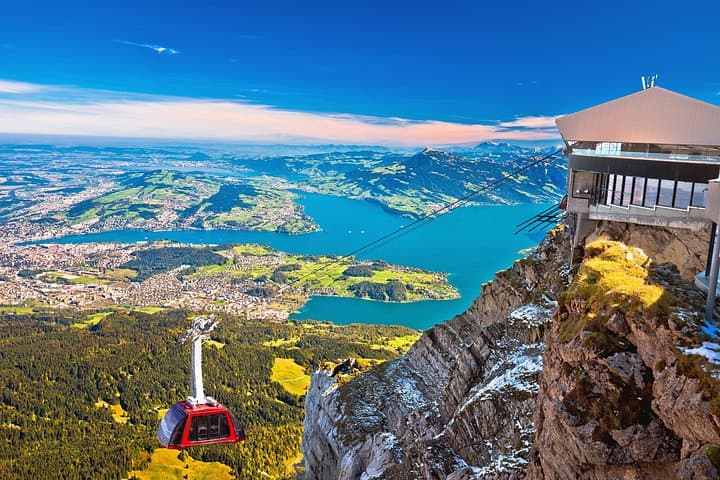
Pilatus rises first: a steep, craggy massif that drops to Lucerne below. You climb by cogwheel train—the steepest in the world—until thin air and panoramic ridgelines replace the forested lower slopes. After a high-mountain vantage point over the city and the Alps, the pace softens on a boat across Lake Lucerne. The lake relaxes the senses before Vitznau’s pier and the second ascent.
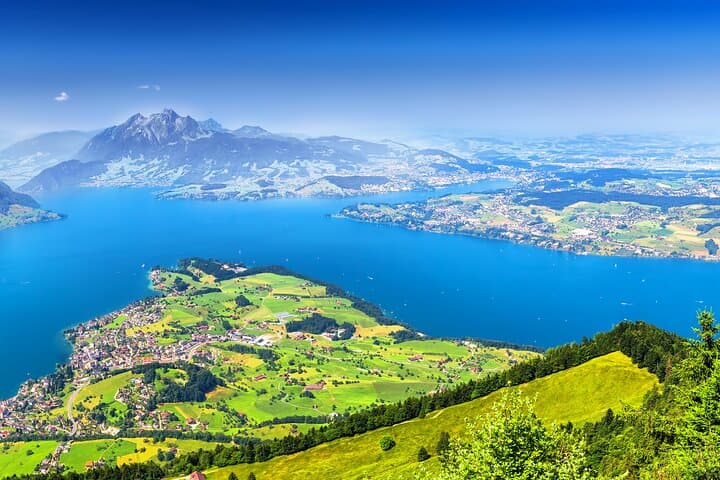
Rigi, the “Queen of the Mountains,” offers a gentler skyline: broad pastures, trail networks and sweeping views into Switzerland’s central Alps and lakes. Historically both mountains shaped local transport and tourism—Pilatus with engineering feats like the cogwheel train, Rigi with early wellness tourism and mountain railways that drew 19th-century visitors.
Geology shifts between the two summits: Pilatus’s rugged cliffs give way to Rigi’s rounded terraces and pastureland, each hosting traditional alpine huts and small communities whose culture still orbits seasonal farming and lake commerce.
Practical guidance: this is a full 10-hour day of transfers—trains, cogwheel rail, boat and cable car—so start early. Bring layered clothing, sun protection, and a light daypack; footwear should handle short rocky sections and pier steps. Expect minimal technical hiking; pacing is relaxed but expect standing room on scenic decks. Aim for weekday mornings to avoid peak crowds and leave time for photos at both summits.
easy.
10 hours.
Suitable for most people who can handle a day of standing and short walks; minimal sustained exertion.
The full experience is roughly 10 hours and includes train transfers, the Pilatus cogwheel train, a lake boat, the Rigi cogwheel, a cable car, and return boat to Lucerne.
No technical hiking is required; short walks on rocky paths at summits are optional and accessible for most fitness levels.
Yes—this tour includes the necessary tickets for cogwheel trains, cable car, and boats as described in the itinerary.
The operator notes it is not recommended for travelers with spinal injuries due to multiple transfers and potential jostling on public transport.
Pilatus’s cogwheel railway and Rigi’s mountain railways were early milestones in Alpine tourism, drawing visitors since the 19th century.
High visitor numbers require sticking to marked trails, packing out waste, and respecting grazing areas to protect fragile alpine flora.
Riccardi Travel operates guided outdoor trips and adventures with an emphasis on safety, stewardship, and memorable experiences.
You step under the broad stone arch in front of Lucerne train station and the day opens with the smell of lake water and metal—trains click into life, boats cleave glassy surface, and two summits wait above the city.
You step under the broad stone arch in front of Lucerne train station and the day opens with the smell of lake water and metal—trains click into life, boats cleave glassy surface, and two summits wait above the city.
Pilatus rises first: a steep, craggy massif that drops to Lucerne below. You climb by cogwheel train—the steepest in the world—until thin air and panoramic ridgelines replace the forested lower slopes. After a high-mountain vantage point over the city and the Alps, the pace softens on a boat across Lake Lucerne. The lake relaxes the senses before Vitznau’s pier and the second ascent.
Rigi, the “Queen of the Mountains,” offers a gentler skyline: broad pastures, trail networks and sweeping views into Switzerland’s central Alps and lakes. Historically both mountains shaped local transport and tourism—Pilatus with engineering feats like the cogwheel train, Rigi with early wellness tourism and mountain railways that drew 19th-century visitors.
Geology shifts between the two summits: Pilatus’s rugged cliffs give way to Rigi’s rounded terraces and pastureland, each hosting traditional alpine huts and small communities whose culture still orbits seasonal farming and lake commerce.
Practical guidance: this is a full 10-hour day of transfers—trains, cogwheel rail, boat and cable car—so start early. Bring layered clothing, sun protection, and a light daypack; footwear should handle short rocky sections and pier steps. Expect minimal technical hiking; pacing is relaxed but expect standing room on scenic decks. Aim for weekday mornings to avoid peak crowds and leave time for photos at both summits.