THE ADVENTURE COLLECTIVE® · Independent discovery and booking for outdoor travel

Fly from Istanbul to Adıyaman and step straight into Commagene history: Roman bridges, royal tumuli and the colossal statues on Mount Nemrut. Time your visit for sunset and sunrise at the summit for the clearest light and quietest crowds.
Fly from Istanbul to Adıyaman and step straight into Commagene history: Roman bridges, royal tumuli and the colossal statues on Mount Nemrut. Time your visit for sunset and sunrise at the summit for the clearest light and quietest crowds.
Dawn creeps across the high Anatolian ridge and the stone faces on Nemrut’s summit stare out at a sky that shifts from bruised purple to thin gold.
Verified experiences and guided adventures in the surrounding area.
Operated by TAS TURKEY TRAVEL · Kahta, Adıyaman
Dawn creeps across the high Anatolian ridge and the stone faces on Nemrut’s summit stare out at a sky that shifts from bruised purple to thin gold.
This two-day run from Istanbul drops you into southeastern Turkey’s Commagene heartland: flight to Adıyaman, a compact loop of Roman bridges, funerary tumuli and the Arsameia reliefs, then an evening climb to Nemrut’s terraces for one of the country’s most famous sunsets. The summit sits at about 2,134 m where King Antiochus I in the 1st century BCE arranged colossal statues around his grave-sanctuary — heads toppled, names still legible on pedestals — blending Hellenistic, Persian and local iconography.
Geology here is folded limestone and volcanic ash of the eastern Taurus foothills; the mountain’s exposed, wind-carved ridgeline creates the dramatic vantage where wind and light contest the statues’ silhouettes. Local villages in Kahta and Adıyaman keep strong hospitality traditions — simple taverns, flatbread ovens and a culture shaped by steppe winters and dry summers.
Practically: expect short but steep walks on loose scree and stone steps between viewing terraces. Sunrise visits start before 04:00 for clear light; nighttime temperatures on the summit can drop sharply, even in summer. Guides handle logistics, including airport transfers and one-night hotel in Kahta; allow time for photo stops at Karakuş Tumulus, the Severan Bridge and Arsemia.
Bring layers, sturdy boots and a headlamp; hydrate for altitude and keep camera batteries warm. The trip is as much archaeology as landscape — you come for the faces carved into history and leave with the taste of high Anatolia’s wind and stone.
moderate.
2 days (1 night).
Moderate fitness for short uphill walks at altitude; able to manage uneven steps and brief steep sections.
The walks between parking and the east/west terraces are short (15–40 minutes) but steep on uneven steps and loose rock; moderate fitness and steady footing are recommended.
This tour includes guides and logistics; independent visits are possible but require arranging transfers and timing for sunrise/sunset yourself.
Late spring to early fall offers milder weather and clearer roads; shoulder seasons reduce crowds but expect cold mornings at the summit.
The site has uneven paths and stone steps; it’s not fully accessible for people with mobility limitations, and summit access often involves a short uphill walk from parking.
Mount Nemrut was transformed into a royal tomb-sanctuary by King Antiochus I of Commagene in the 1st century BCE, mixing Greek and Iranian deities into a dynastic program of kingship.
The site is protected as a UNESCO World Heritage Site; visitors are asked to stay on marked paths to limit erosion and prevent damage to fragile statue fragments.
TAS TURKEY TRAVEL operates guided outdoor trips and adventures with an emphasis on safety, stewardship, and memorable experiences.
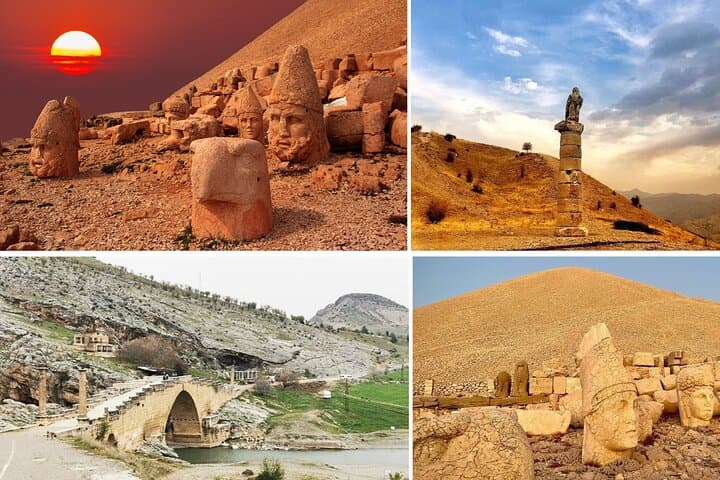


Dawn creeps across the high Anatolian ridge and the stone faces on Nemrut’s summit stare out at a sky that shifts from bruised purple to thin gold.
Dawn creeps across the high Anatolian ridge and the stone faces on Nemrut’s summit stare out at a sky that shifts from bruised purple to thin gold.
This two-day run from Istanbul drops you into southeastern Turkey’s Commagene heartland: flight to Adıyaman, a compact loop of Roman bridges, funerary tumuli and the Arsameia reliefs, then an evening climb to Nemrut’s terraces for one of the country’s most famous sunsets. The summit sits at about 2,134 m where King Antiochus I in the 1st century BCE arranged colossal statues around his grave-sanctuary — heads toppled, names still legible on pedestals — blending Hellenistic, Persian and local iconography.
Geology here is folded limestone and volcanic ash of the eastern Taurus foothills; the mountain’s exposed, wind-carved ridgeline creates the dramatic vantage where wind and light contest the statues’ silhouettes. Local villages in Kahta and Adıyaman keep strong hospitality traditions — simple taverns, flatbread ovens and a culture shaped by steppe winters and dry summers.
Practically: expect short but steep walks on loose scree and stone steps between viewing terraces. Sunrise visits start before 04:00 for clear light; nighttime temperatures on the summit can drop sharply, even in summer. Guides handle logistics, including airport transfers and one-night hotel in Kahta; allow time for photo stops at Karakuş Tumulus, the Severan Bridge and Arsemia.
Bring layers, sturdy boots and a headlamp; hydrate for altitude and keep camera batteries warm. The trip is as much archaeology as landscape — you come for the faces carved into history and leave with the taste of high Anatolia’s wind and stone.