THE ADVENTURE COLLECTIVE® · Independent discovery and booking for outdoor travel

A single-day push up Mount Meru folds forest, crater rim and sweeping views of Kilimanjaro into one compact adventure. Expect layered terrain, local guides, and a steady climb rewarded by panoramic vistas over Arusha National Park.
A single-day push up Mount Meru folds forest, crater rim and sweeping views of Kilimanjaro into one compact adventure. Expect layered terrain, local guides, and a steady climb rewarded by panoramic vistas over Arusha National Park.
Before dawn in Arusha the minivan hums and the guide checks headlamps. You move out of the town’s low, coffee-scented heat and up toward the pine-lined gate of Arusha National Park. The trail begins under a cathedral of montane forest—ferns catching droplets, a chorus of bulbuls and the occasional colobus monkey slicing through the canopy. As you climb, the forest opens in stages: mossy trunks give way to heathland scrub and then to a raw volcanic corridor that dares you onward.
Verified experiences and guided adventures in the surrounding area.
Operated by Travel Africa Safari Agency · Arusha, Arusha Region
Before dawn in Arusha the minivan hums and the guide checks headlamps. You move out of the town’s low, coffee-scented heat and up toward the pine-lined gate of Arusha National Park. The trail begins under a cathedral of montane forest—ferns catching droplets, a chorus of bulbuls and the occasional colobus monkey slicing through the canopy. As you climb, the forest opens in stages: mossy trunks give way to heathland scrub and then to a raw volcanic corridor that dares you onward.
Mount Meru is a volcanic cone whose shoulders form the U-shaped rim of the inner crater. Geologically younger than Kilimanjaro, Meru’s slopes carry basaltic scree and vestiges of lava flows; its soils feed the streams that irrigate the Momella wetlands below. The mountain sits inside Arusha National Park, an intimate landscape where mountain, savannah and small lakes meet, and where Maasai grazing lands frame the horizon. On a clear day, Kilimanjaro rises in the distance—an austere silhouette across the plains.
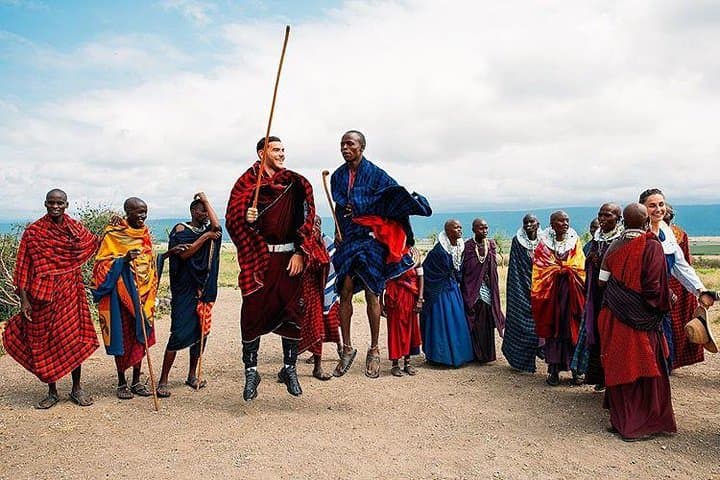
Culture threads through the hike. Guides are often local—steeped in Meru’s stories and in practical trail knowledge—and the approach routes cross land traditionally used by Maasai herders and farmers. Wildlife is part of the day: you'll likely hear blue and black-and-white colobus, and from higher vantage points watch giraffes or buffalo grazing on the lower slopes.
Practical guide: this one-day itinerary is a sustained hill climb—expect roughly 6–7 hours on trail, about 8–10 km round trip, and an elevation gain commonly in the 800–1,000 m range depending on start point. Terrain alternates between packed dirt, rooty forest sections and loose volcanic scree on the upper stretches; trekking poles are useful. Start early to avoid afternoon cloud build-up and to get the best views of Kilimanjaro.
Bring layered clothing, a warm windproof for the summit corridor, and at least 2–3 liters of water—hydration is the best defense against altitude fatigue. The route is managed; permits and a licensed guide are required and are normally included in organized day trips. Weather can shift fast: sun can be fierce below the treeline and biting cold above it.
For logistics, most operators provide hotel pickup in Arusha and return the same day—confirm pickup time and altitude expectations before booking. The climb is accessible to fit hikers rather than technical climbers, but don’t underestimate the steady uphill. If you want the full summit, plan an overnight itinerary; for a single-day push expect rewarding rim views, a close-up of Meru’s crater, and a long, clear look toward Kilimanjaro—an alpine day that packs geology, wildlife and culture into a single, memorable climb.
moderate.
6–7 hours.
Good cardiovascular fitness and regular hiking experience make the day comfortable; some sustained uphill stamina required.
You should have regular aerobic fitness and experience with steady uphill hikes; the route is non-technical but sustained.
Yes—Arusha National Park requires permits and the operator provides a licensed guide in most organized day trips.
Most one-day itineraries reach the crater rim or a high viewpoint; full summit attempts are safer as an overnight trip.
Expect primates such as black-and-white colobus, birdlife in the forest, and occasional sightings of buffalo or giraffe on lower slopes.
Layered clothing, a windproof jacket, hat and gloves for the upper sections, plus sun protection for lower, exposed parts.
Altitude can affect some hikers; recognize symptoms early, keep a measured pace, hydrate, and descend if feeling unwell.
Mount Meru is a volcanic cone in the East African Rift; its slopes have long been used by local Maasai and Meru communities and now form part of Arusha National Park.
Stay on marked trails and follow your guide’s instructions—Arusha National Park uses permit fees for conservation, and visitor impact is managed to protect fragile montane habitats.
Travel Africa Safari Agency operates guided outdoor trips and adventures with an emphasis on safety, stewardship, and memorable experiences.


Before dawn in Arusha the minivan hums and the guide checks headlamps. You move out of the town’s low, coffee-scented heat and up toward the pine-lined gate of Arusha National Park. The trail begins under a cathedral of montane forest—ferns catching droplets, a chorus of bulbuls and the occasional colobus monkey slicing through the canopy. As you climb, the forest opens in stages: mossy trunks give way to heathland scrub and then to a raw volcanic corridor that dares you onward.
Before dawn in Arusha the minivan hums and the guide checks headlamps. You move out of the town’s low, coffee-scented heat and up toward the pine-lined gate of Arusha National Park. The trail begins under a cathedral of montane forest—ferns catching droplets, a chorus of bulbuls and the occasional colobus monkey slicing through the canopy. As you climb, the forest opens in stages: mossy trunks give way to heathland scrub and then to a raw volcanic corridor that dares you onward.
Mount Meru is a volcanic cone whose shoulders form the U-shaped rim of the inner crater. Geologically younger than Kilimanjaro, Meru’s slopes carry basaltic scree and vestiges of lava flows; its soils feed the streams that irrigate the Momella wetlands below. The mountain sits inside Arusha National Park, an intimate landscape where mountain, savannah and small lakes meet, and where Maasai grazing lands frame the horizon. On a clear day, Kilimanjaro rises in the distance—an austere silhouette across the plains.
Culture threads through the hike. Guides are often local—steeped in Meru’s stories and in practical trail knowledge—and the approach routes cross land traditionally used by Maasai herders and farmers. Wildlife is part of the day: you'll likely hear blue and black-and-white colobus, and from higher vantage points watch giraffes or buffalo grazing on the lower slopes.
Practical guide: this one-day itinerary is a sustained hill climb—expect roughly 6–7 hours on trail, about 8–10 km round trip, and an elevation gain commonly in the 800–1,000 m range depending on start point. Terrain alternates between packed dirt, rooty forest sections and loose volcanic scree on the upper stretches; trekking poles are useful. Start early to avoid afternoon cloud build-up and to get the best views of Kilimanjaro.
Bring layered clothing, a warm windproof for the summit corridor, and at least 2–3 liters of water—hydration is the best defense against altitude fatigue. The route is managed; permits and a licensed guide are required and are normally included in organized day trips. Weather can shift fast: sun can be fierce below the treeline and biting cold above it.
For logistics, most operators provide hotel pickup in Arusha and return the same day—confirm pickup time and altitude expectations before booking. The climb is accessible to fit hikers rather than technical climbers, but don’t underestimate the steady uphill. If you want the full summit, plan an overnight itinerary; for a single-day push expect rewarding rim views, a close-up of Meru’s crater, and a long, clear look toward Kilimanjaro—an alpine day that packs geology, wildlife and culture into a single, memorable climb.