THE ADVENTURE COLLECTIVE® · Independent discovery and booking for outdoor travel

A four-day, guided ascent of Mount Meru combines a moving safari through Arusha National Park with a midnight summit push to 4,566 m. Expect steep ridges, crater views, and a taste of high-altitude trekking close to Kilimanjaro.
A four-day, guided ascent of Mount Meru combines a moving safari through Arusha National Park with a midnight summit push to 4,566 m. Expect steep ridges, crater views, and a taste of high-altitude trekking close to Kilimanjaro.
The walk begins before sunrise at Momela Gate, when the air feels thin and the park still judges the day by animal calls. You leave Arusha’s red dust behind and enter a forest that wants to keep you awake: birds call, trees drip condensation, and the trail climbs into a dome of moss and ferns. By the time you reach Miriakamba Hut the light has changed—the crater’s inner walls loom, raw and steep, and the mountain insists you keep moving.
Verified experiences and guided adventures in the surrounding area.
Operated by Intrepid Explorer Tanzania · Arusha, Arusha Region
The walk begins before sunrise at Momela Gate, when the air feels thin and the park still judges the day by animal calls. You leave Arusha’s red dust behind and enter a forest that wants to keep you awake: birds call, trees drip condensation, and the trail climbs into a dome of moss and ferns. By the time you reach Miriakamba Hut the light has changed—the crater’s inner walls loom, raw and steep, and the mountain insists you keep moving.
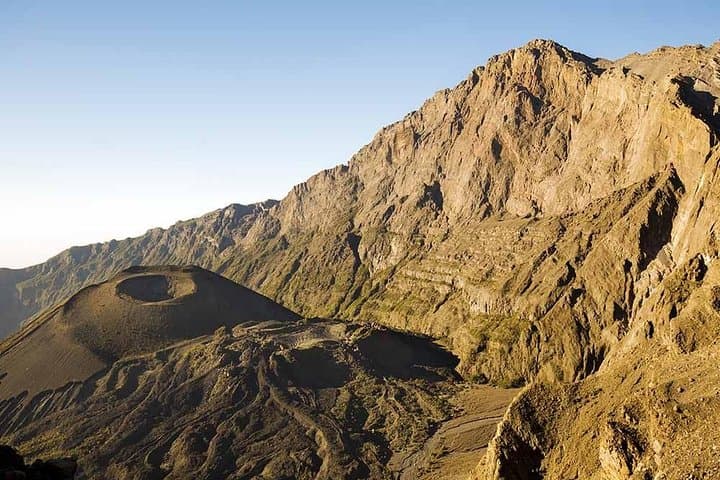
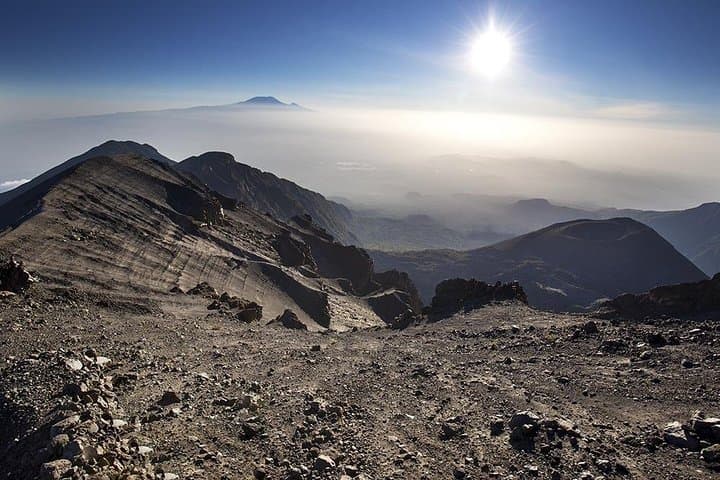
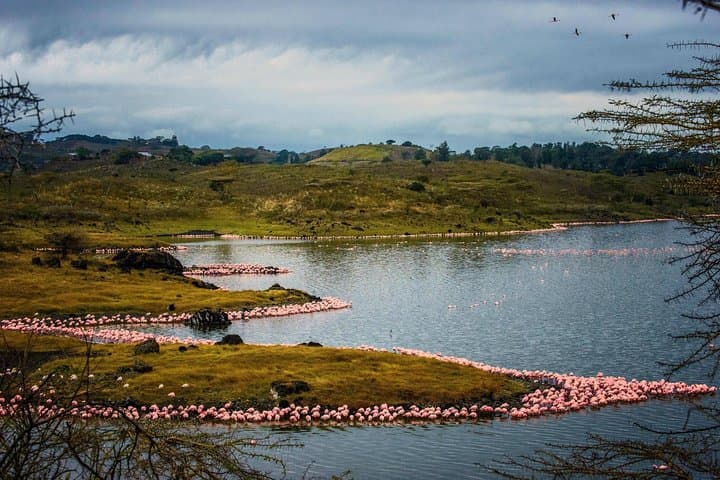
Mount Meru is not a gentle giant. Its horseshoe crater and inner cliffs are the remnant of a catastrophic eruption half a million years ago; what remains is a volcano whose summit peers across at Kilimanjaro, sharing the skyline and the same rains. The route threads through Arusha National Park’s mosaic—woodland that still supports giraffe, zebra and buffalo—so hikes often feel like a moving safari, ranger at your side and porters carrying the day’s comforts.
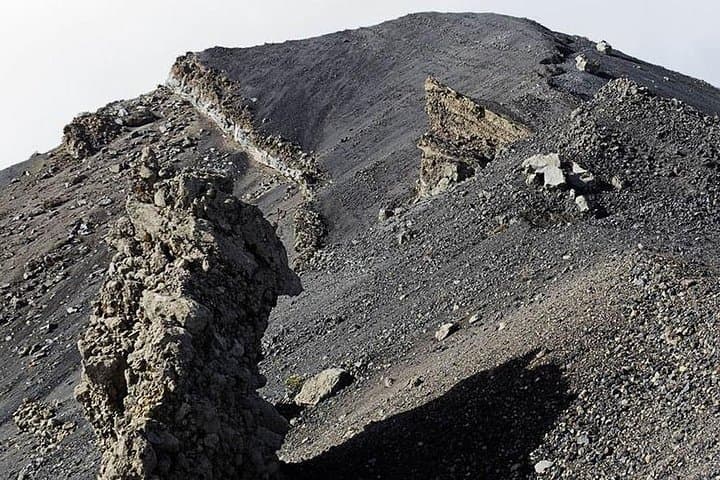
Geology here is visible and present: ash cones, carved cliffs and a crater floor with an upbuilt ash tray that continues to change. Culturally, the climb moves through Maasai country and small agricultural pockets around Arusha, where the rhythm of daily life continues while climbers chase a sunrise view from 4,566 meters.
Practically, the trek is paced to acclimatize: two nights at Miriakamba and Saddle huts, a midnight departure for the summit, then a return to forested meadows. Expect steep ridge sections, a final rocky scramble to the rim, and altitude that will sharpen every breath. An armed ranger accompanies the group for wildlife safety and park rules—this is non-negotiable.
Plan on four days of mixed terrain: packed soil, eroded rock, steep switchbacks and exposed scree near the top. The operator includes transport, park fees, meals, porters and hut accommodation; you carry a daypack and the summit's physical cost. Hydration, layers and steady pacing are the currency of success here—move slowly on the ascent and use trekking poles to save knees on the descent.
Timing matters: start the summit push around 01:30 for a sunrise arrival, and be prepared for cold, wind and snow dust at the highest elevations some months. Photography rewards patience—early light on the crater and a possible view of Kilimanjaro are the payoff. Whether you’re crossing the crater ridge at dawn or descending into tree-lined meadows, Mount Meru gives a compact, high-altitude climb with wildlife and volcanic drama all within reach of Arusha.
challenging.
4 days.
Good aerobic base with experience on sustained uphill hikes; comfortable with long days and basic scrambling at altitude
You should have regular aerobic fitness and experience with multi-hour uphill hikes; while technically non-technical, the altitude and long summit day make it a challenging trek.
Yes — TANAPA requires an armed ranger for safety in Arusha National Park and the tour provides a professional mountain guide and porters.
Mild headaches, shortness of breath and reduced appetite are common; the itinerary includes acclimatization and descent is the remedy for severe symptoms.
Two nights in basic mountain huts (Miriakamba and Saddle) and lodge nights in Arusha before/after the trek are provided by the operator.
Dry months (June–October and January–February) offer more stable weather and clearer summit views; occasional snow can appear in the coolest months.
Active beginners can succeed with good preparation and a conservative pace, but be honest about fitness and acclimatization needs.
Mount Meru’s horseshoe crater formed in a massive eruption hundreds of thousands of years ago; the remaining cliffs and an active ash cone speak to its volcanic past.
TANAPA manages Arusha National Park; hiring local guides and porters supports community livelihoods while rules protect wildlife and require rangers on hikes.
Intrepid Explorer Tanzania operates guided outdoor trips and adventures with an emphasis on safety, stewardship, and memorable experiences.
The walk begins before sunrise at Momela Gate, when the air feels thin and the park still judges the day by animal calls. You leave Arusha’s red dust behind and enter a forest that wants to keep you awake: birds call, trees drip condensation, and the trail climbs into a dome of moss and ferns. By the time you reach Miriakamba Hut the light has changed—the crater’s inner walls loom, raw and steep, and the mountain insists you keep moving.
The walk begins before sunrise at Momela Gate, when the air feels thin and the park still judges the day by animal calls. You leave Arusha’s red dust behind and enter a forest that wants to keep you awake: birds call, trees drip condensation, and the trail climbs into a dome of moss and ferns. By the time you reach Miriakamba Hut the light has changed—the crater’s inner walls loom, raw and steep, and the mountain insists you keep moving.
Mount Meru is not a gentle giant. Its horseshoe crater and inner cliffs are the remnant of a catastrophic eruption half a million years ago; what remains is a volcano whose summit peers across at Kilimanjaro, sharing the skyline and the same rains. The route threads through Arusha National Park’s mosaic—woodland that still supports giraffe, zebra and buffalo—so hikes often feel like a moving safari, ranger at your side and porters carrying the day’s comforts.
Geology here is visible and present: ash cones, carved cliffs and a crater floor with an upbuilt ash tray that continues to change. Culturally, the climb moves through Maasai country and small agricultural pockets around Arusha, where the rhythm of daily life continues while climbers chase a sunrise view from 4,566 meters.
Practically, the trek is paced to acclimatize: two nights at Miriakamba and Saddle huts, a midnight departure for the summit, then a return to forested meadows. Expect steep ridge sections, a final rocky scramble to the rim, and altitude that will sharpen every breath. An armed ranger accompanies the group for wildlife safety and park rules—this is non-negotiable.
Plan on four days of mixed terrain: packed soil, eroded rock, steep switchbacks and exposed scree near the top. The operator includes transport, park fees, meals, porters and hut accommodation; you carry a daypack and the summit's physical cost. Hydration, layers and steady pacing are the currency of success here—move slowly on the ascent and use trekking poles to save knees on the descent.
Timing matters: start the summit push around 01:30 for a sunrise arrival, and be prepared for cold, wind and snow dust at the highest elevations some months. Photography rewards patience—early light on the crater and a possible view of Kilimanjaro are the payoff. Whether you’re crossing the crater ridge at dawn or descending into tree-lined meadows, Mount Meru gives a compact, high-altitude climb with wildlife and volcanic drama all within reach of Arusha.