THE ADVENTURE COLLECTIVE® · Independent discovery and booking for outdoor travel

Climb through tropical succession from seaside scrub to mossy cloud forest on Mount Liamuiga, St Kitts’ dramatic stratovolcano. This full-day caldera trek pairs steep, physical hiking with sweeping Caribbean views and rich island history.
Climb through tropical succession from seaside scrub to mossy cloud forest on Mount Liamuiga, St Kitts’ dramatic stratovolcano. This full-day caldera trek pairs steep, physical hiking with sweeping Caribbean views and rich island history.
Fog lifts off the crater as the group moves into a cooler, moss-slick world — leaves clinging to breath and boots. The trail begins low, where salt-sweet air hangs over cane fields, and climbs through defined ecological bands until the landscape tightens into cloud forest and volcanic rock.
Verified experiences and guided adventures in the surrounding area.
Operated by Rogers Eco Tours · Basseterre, Saint Kitts
Fog lifts off the crater as the group moves into a cooler, moss-slick world — leaves clinging to breath and boots. The trail begins low, where salt-sweet air hangs over cane fields, and climbs through defined ecological bands until the landscape tightens into cloud forest and volcanic rock.
Geology here is literal: Mount Liamuiga is a stratovolcano whose layers of ash and lava built the cone that rises roughly 2,800 ft above sea level. Indigenous Kalinago named the island Liamuiga — "fertile land" — and later colonial sugar plantations and the struggle of enslaved Africans shaped the human history visible from the slopes. You pass streams that once powered estates and stand above a crater whose rim sweeps away nearly a mile across.
Expect a changing temperature, shifting vegetation from coastal scrub to mossy elfin forest, and a steady, often steep, ascent. The trail alternates packed dirt, roots, and loose volcanic scree; at times you’ll use hands to scramble and steady yourself. Guides point out endemic plants and the odd green vervet monkey or hummingbird that darts between branches.
Practical guide: start early to avoid mid-day sun and clouds; bring 2–3 liters of water, sturdy boots with ankle support, and a breathable rain layer — showers can arrive fast. Fitness matters: this is a full-day effort of sustained climbing and descending on uneven ground. Follow the guide, stay on the trail to protect fragile cloud forest, and take a long breath at the caldera rim — the view is the reason you came.
challenging.
6–8 hours.
Requires a high level of cardiovascular fitness and leg strength; frequent steep sections and some scrambling.
Expect sustained uphill grade for several miles with sections of loose scree and rooty steps; the overall elevation gain is roughly 2,000–2,100 ft from trailhead to summit rim.
Not recommended for unfit beginners — participants should have recent experience with full-day hikes and be comfortable on uneven, steep terrain.
Common sightings include green vervet monkeys, tropical hummingbirds, and various island birds; snakes are rare but remain possible in dense vegetation.
Wear breathable layers, sturdy boots, sun protection, and bring 2–3 liters of water, snacks, and a small first-aid kit; guides typically provide light refreshments.
Mount Liamuiga’s slopes have been occupied since the Kalinago period; later colonial sugar estates and the era of emancipation shaped visible cultural landmarks around the island.
The cloud forest and crater rim are fragile; stay on trails, carry out all waste and avoid disturbing endemic plants to reduce erosion and habitat loss.
Rogers Eco Tours operates guided outdoor trips and adventures with an emphasis on safety, stewardship, and memorable experiences.
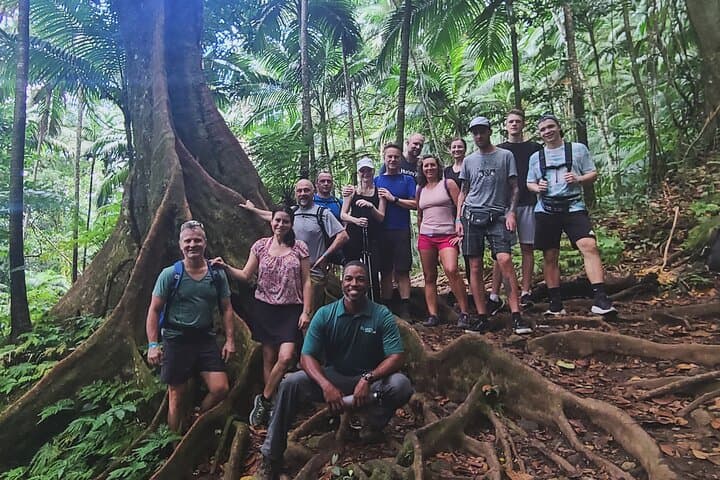
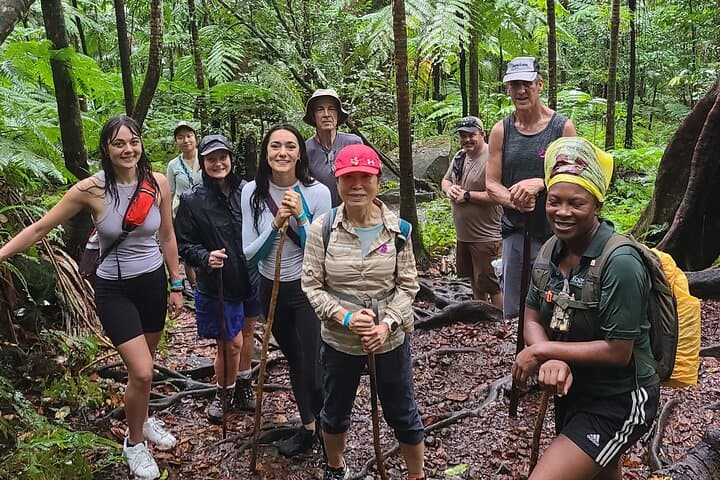
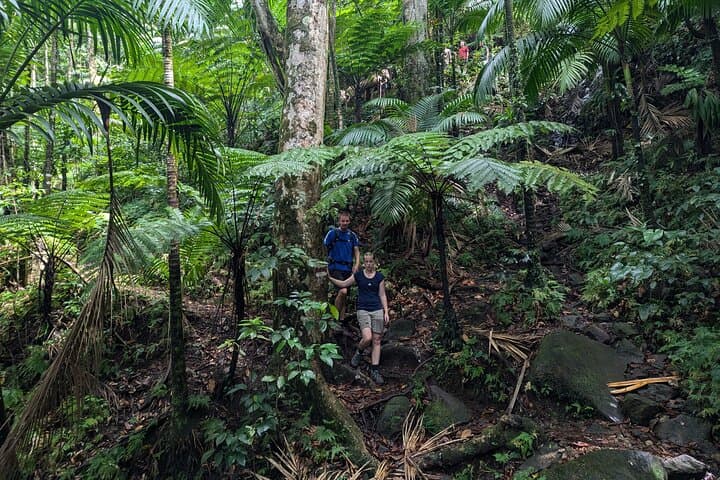
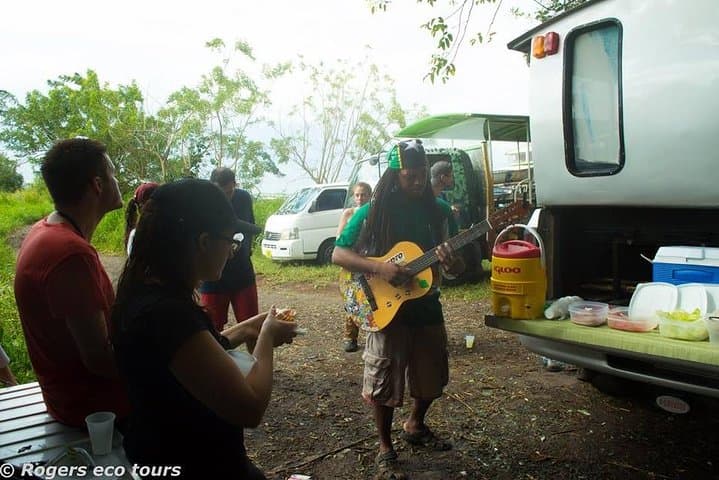
Fog lifts off the crater as the group moves into a cooler, moss-slick world — leaves clinging to breath and boots. The trail begins low, where salt-sweet air hangs over cane fields, and climbs through defined ecological bands until the landscape tightens into cloud forest and volcanic rock.
Fog lifts off the crater as the group moves into a cooler, moss-slick world — leaves clinging to breath and boots. The trail begins low, where salt-sweet air hangs over cane fields, and climbs through defined ecological bands until the landscape tightens into cloud forest and volcanic rock.
Geology here is literal: Mount Liamuiga is a stratovolcano whose layers of ash and lava built the cone that rises roughly 2,800 ft above sea level. Indigenous Kalinago named the island Liamuiga — "fertile land" — and later colonial sugar plantations and the struggle of enslaved Africans shaped the human history visible from the slopes. You pass streams that once powered estates and stand above a crater whose rim sweeps away nearly a mile across.
Expect a changing temperature, shifting vegetation from coastal scrub to mossy elfin forest, and a steady, often steep, ascent. The trail alternates packed dirt, roots, and loose volcanic scree; at times you’ll use hands to scramble and steady yourself. Guides point out endemic plants and the odd green vervet monkey or hummingbird that darts between branches.
Practical guide: start early to avoid mid-day sun and clouds; bring 2–3 liters of water, sturdy boots with ankle support, and a breathable rain layer — showers can arrive fast. Fitness matters: this is a full-day effort of sustained climbing and descending on uneven ground. Follow the guide, stay on the trail to protect fragile cloud forest, and take a long breath at the caldera rim — the view is the reason you came.