THE ADVENTURE COLLECTIVE® · Independent discovery and booking for outdoor travel

Trek through tropical forest, high moorland and alpine scree on a multi-day ascent to Uhuru Peak. This practical guide covers what to expect, how to prepare, and key route realities for a successful Kilimanjaro summit attempt.
Trek through tropical forest, high moorland and alpine scree on a multi-day ascent to Uhuru Peak. This practical guide covers what to expect, how to prepare, and key route realities for a successful Kilimanjaro summit attempt.
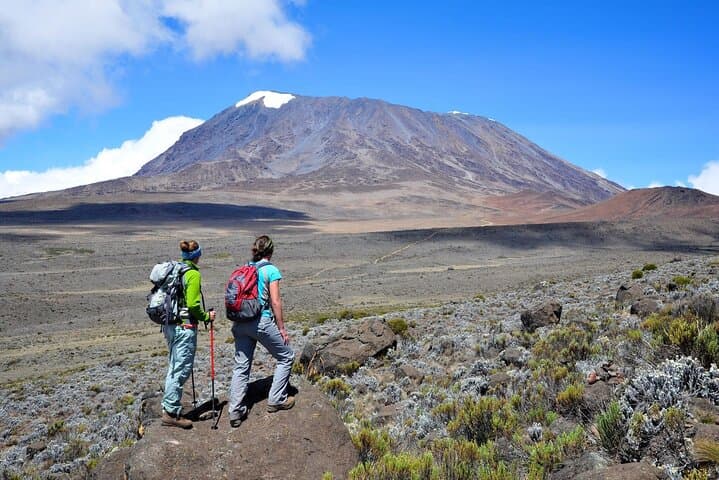
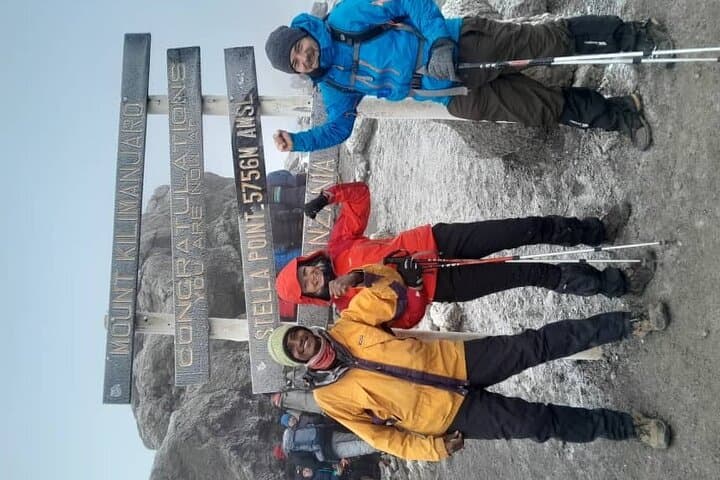
The trail opens under a humid forest canopy, birdcalls slicing the dawn as porters tighten packs and guides call out the pace: pole pole — slowly, slowly. As the path climbs, the trees thin to heathland and the land changes again to lunar scree; by summit night the air is thin and cold, and hikers push through a sea of headlamps toward Uhuru Peak at first light.
Verified experiences and guided adventures in the surrounding area.
Operated by KWESA TOURS · Moshi, Kilimanjaro Region
The trail opens under a humid forest canopy, birdcalls slicing the dawn as porters tighten packs and guides call out the pace: pole pole — slowly, slowly. As the path climbs, the trees thin to heathland and the land changes again to lunar scree; by summit night the air is thin and cold, and hikers push through a sea of headlamps toward Uhuru Peak at first light.
Kilimanjaro is three volcanic cones — Kibo, Mawenzi and Shira — and the trek tracks a vertical cross-section of East African ecology: montane forest, moorland, alpine desert and glaciated summit. The mountain sits in Chagga homeland and climbing it has both cultural and historical layers: local coffee farms and village rhythms meet 19th-century European exploration and modern conservation concerns.
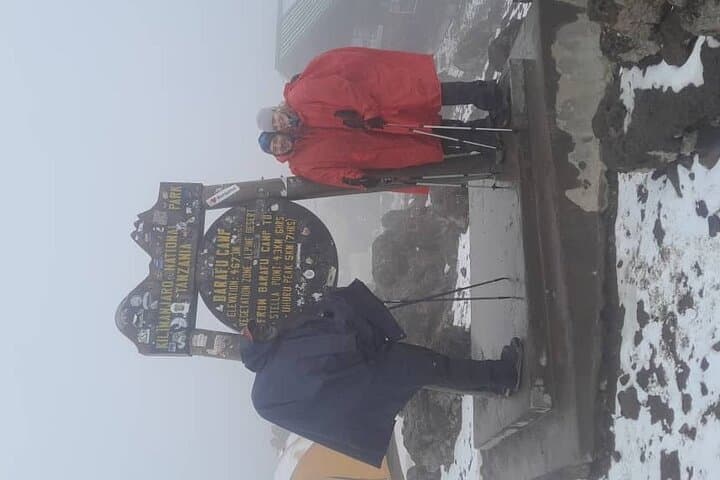
Practical realities shape the route. Typical summit treks last 5–8 days, covering roughly 40–65 km with about 3,500–4,200 m of elevation gain depending on your chosen trail. The climb is non-technical but physically demanding; altitude, not rockfall, is the main objective hazard. Climbers acclimatize with “climb high, sleep low” days, eat calorie-dense meals cooked at camps, and rely on a crew of guides and porters for safety and logistics.
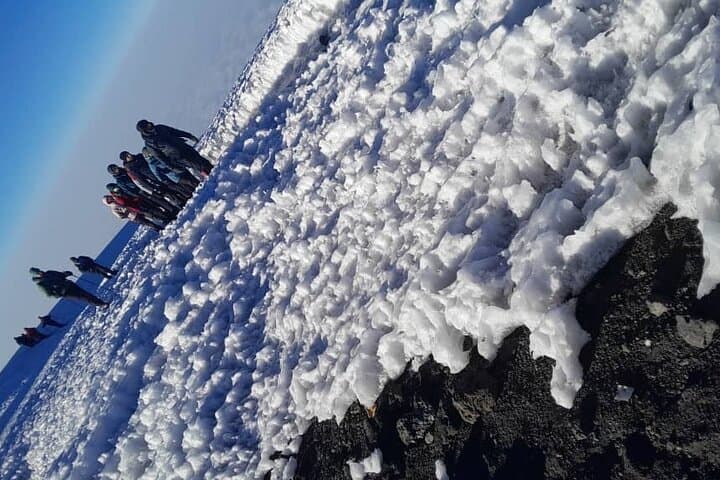
Plan for layered clothing, rigorous hydration, and early summit starts (midnight departures are common). Choose an itinerary that allows extra acclimatization days if possible and confirm porter welfare and park permit details with your operator. For many, Kilimanjaro is a test of endurance rewarded by sunrise over the African plain and the rare sight of equatorial glaciers clinging to a volcanic summit.
challenging.
5–8 days.
Good aerobic fitness and stamina for sustained uphill hiking at altitude; ability to carry a daypack and handle long summit day (8–12 hours).
No technical rock-climbing skills are required; the route is a high-altitude trek, not a technical climb, though fitness and acclimatization are critical.
June–October offers the most stable weather and clear summit conditions, though shoulder seasons can be quieter and still workable with proper preparation.
Summit day usually begins around midnight and can take 6–10 hours to reach Uhuru Peak, followed by a 3–6 hour descent to lower camps or gate.
Yes—Tanzania National Parks requires licensed guides; professional operators provide guides and porters who manage camp logistics and safety.
Kilimanjaro has long been central to Chagga communities; European recorded ascents began in the late 19th century, with Hans Meyer and Ludwig Purtscheller reaching Uhuru Peak in 1889.
Glacial retreat on Kibo highlights climate change impacts; park fees and responsible operators support conservation and porter welfare programs to reduce environmental and social impacts.
KWESA TOURS operates guided outdoor trips and adventures with an emphasis on safety, stewardship, and memorable experiences.
The trail opens under a humid forest canopy, birdcalls slicing the dawn as porters tighten packs and guides call out the pace: pole pole — slowly, slowly. As the path climbs, the trees thin to heathland and the land changes again to lunar scree; by summit night the air is thin and cold, and hikers push through a sea of headlamps toward Uhuru Peak at first light.
The trail opens under a humid forest canopy, birdcalls slicing the dawn as porters tighten packs and guides call out the pace: pole pole — slowly, slowly. As the path climbs, the trees thin to heathland and the land changes again to lunar scree; by summit night the air is thin and cold, and hikers push through a sea of headlamps toward Uhuru Peak at first light.
Kilimanjaro is three volcanic cones — Kibo, Mawenzi and Shira — and the trek tracks a vertical cross-section of East African ecology: montane forest, moorland, alpine desert and glaciated summit. The mountain sits in Chagga homeland and climbing it has both cultural and historical layers: local coffee farms and village rhythms meet 19th-century European exploration and modern conservation concerns.
Practical realities shape the route. Typical summit treks last 5–8 days, covering roughly 40–65 km with about 3,500–4,200 m of elevation gain depending on your chosen trail. The climb is non-technical but physically demanding; altitude, not rockfall, is the main objective hazard. Climbers acclimatize with “climb high, sleep low” days, eat calorie-dense meals cooked at camps, and rely on a crew of guides and porters for safety and logistics.
Plan for layered clothing, rigorous hydration, and early summit starts (midnight departures are common). Choose an itinerary that allows extra acclimatization days if possible and confirm porter welfare and park permit details with your operator. For many, Kilimanjaro is a test of endurance rewarded by sunrise over the African plain and the rare sight of equatorial glaciers clinging to a volcanic summit.