THE ADVENTURE COLLECTIVE® · Independent discovery and booking for outdoor travel

An accessible—but demanding—8-day ascent of Africa’s highest peak via the Marangu Route. This guide covers terrain, daily huts, acclimatization and practical tips to reach Uhuru Peak at 5,895 m.
An accessible—but demanding—8-day ascent of Africa’s highest peak via the Marangu Route. This guide covers terrain, daily huts, acclimatization and practical tips to reach Uhuru Peak at 5,895 m.
Night air on the lower slopes smells of eucalyptus and roasting coffee as crews pack panniers at Moshi’s bus station; by dawn you’re driving to Marangu Gate (1,860 m) and stepping into rainforest that quickly presses in around the trail.
Verified experiences and guided adventures in the surrounding area.
Operated by Bamba Travel · Moshi, Kilimanjaro Region
Night air on the lower slopes smells of eucalyptus and roasting coffee as crews pack panniers at Moshi’s bus station; by dawn you’re driving to Marangu Gate (1,860 m) and stepping into rainforest that quickly presses in around the trail.
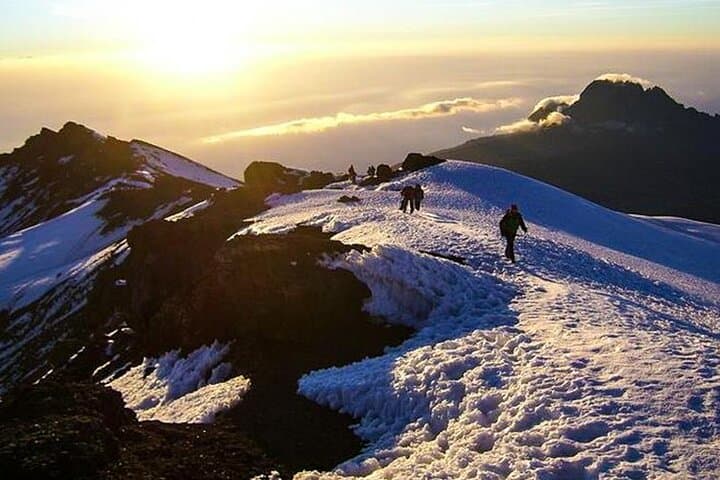
The Marangu Route climbs steadily through montane forest, heath and moorland, then a stark alpine desert before the final push to Uhuru Peak at 5,895 m. Geologically Kilimanjaro is a three-coned stratovolcano—Kibo, Mawenzi and Shira—whose glacier-scoured crater and summit ridge reveal volcanic history and a rapidly changing climate. Culturally the mountain sits in Chagga territory; trails and huts reflect a long tradition of porterage and local guiding that makes summit attempts possible for non-technical climbers.
Expect varied terrain: muddy forest tracks, tussock-filled moorland, rock-strewn saddle and frozen volcanic ash on summit night. Typical daily distances range from 5–22 km with overnight huts at Mandara (2,700 m), Horombo (3,700 m) and Kibo (4,700 m). Acclimatization days—like the walk to Zebra Rocks (4,020 m)—are built into the itinerary to reduce altitude risk.
Practical guidance: move slowly, drink frequently and carry layered clothing for temperature swings from ~20°C in Moshi to well below freezing above 4,500 m. Bring a headlamp for summit night, test sleeping systems for hut-to-hut comfort, and prioritize a guide-approved pack weight; porters handle most camp gear on organized climbs. Weather is unpredictable—plan extra rest days at your home base and ensure comprehensive travel and evacuation insurance before you go.
difficult.
8 days (approx. 115–130 hours).
High aerobic fitness and prior multi-day trekking experience recommended; comfortable carrying a 6–10 kg daypack.
No technical climbing is required on the Marangu Route—it's a high-altitude trek—but good fitness and acclimatization discipline are essential.
The clearest windows are January–March and June–October (drier periods); weather remains unpredictable year-round due to changing climate patterns.
Summit day typically runs 12–15 hours round-trip from Kibo Hut to Uhuru Peak and down to Horombo Hut; expect a pre-dawn start around midnight.
Marangu route uses communal mountain huts with shared dormitories; bring earplugs and a sleeping liner for comfort.
Kilimanjaro’s summit was first reached in 1889; the mountain has long been central to Chagga culture and local porter-guiding economies.
Mount Kilimanjaro is a national park and UNESCO site; climate-driven glacier retreat and trail erosion make leave-no-trace practices and staying on established paths vital.
Bamba Travel operates guided outdoor trips and adventures with an emphasis on safety, stewardship, and memorable experiences.


Night air on the lower slopes smells of eucalyptus and roasting coffee as crews pack panniers at Moshi’s bus station; by dawn you’re driving to Marangu Gate (1,860 m) and stepping into rainforest that quickly presses in around the trail.
Night air on the lower slopes smells of eucalyptus and roasting coffee as crews pack panniers at Moshi’s bus station; by dawn you’re driving to Marangu Gate (1,860 m) and stepping into rainforest that quickly presses in around the trail.
The Marangu Route climbs steadily through montane forest, heath and moorland, then a stark alpine desert before the final push to Uhuru Peak at 5,895 m. Geologically Kilimanjaro is a three-coned stratovolcano—Kibo, Mawenzi and Shira—whose glacier-scoured crater and summit ridge reveal volcanic history and a rapidly changing climate. Culturally the mountain sits in Chagga territory; trails and huts reflect a long tradition of porterage and local guiding that makes summit attempts possible for non-technical climbers.
Expect varied terrain: muddy forest tracks, tussock-filled moorland, rock-strewn saddle and frozen volcanic ash on summit night. Typical daily distances range from 5–22 km with overnight huts at Mandara (2,700 m), Horombo (3,700 m) and Kibo (4,700 m). Acclimatization days—like the walk to Zebra Rocks (4,020 m)—are built into the itinerary to reduce altitude risk.
Practical guidance: move slowly, drink frequently and carry layered clothing for temperature swings from ~20°C in Moshi to well below freezing above 4,500 m. Bring a headlamp for summit night, test sleeping systems for hut-to-hut comfort, and prioritize a guide-approved pack weight; porters handle most camp gear on organized climbs. Weather is unpredictable—plan extra rest days at your home base and ensure comprehensive travel and evacuation insurance before you go.