THE ADVENTURE COLLECTIVE® · Independent discovery and booking for outdoor travel

Take the Machame, or 'Whiskey', route for a seven-day, guided ascent of Kilimanjaro that moves from rainforest to glaciers. This itinerary balances acclimatization with ambitious summit day planning—ideal for experienced hikers ready to contend with altitude and long days.
Take the Machame, or 'Whiskey', route for a seven-day, guided ascent of Kilimanjaro that moves from rainforest to glaciers. This itinerary balances acclimatization with ambitious summit day planning—ideal for experienced hikers ready to contend with altitude and long days.
Night on the lower slopes smells of wet earth and wood smoke as headlamps bob like slow-fire stars along the Machame trail. You leave Moshi before dawn, the town shrinking behind a line of banana plantations, and within an hour the rainforest closes around you—ferns brushing your legs, streamwater daring you to slow. Over seven days the mountain changes its mood: dense, dripping jungle yields to heath and moorland, then to the windswept Shira Plateau and finally the lunar scree and ice of Kibo's upper reaches.
Verified experiences and guided adventures in the surrounding area.
Operated by Intrepid Explorer Tanzania · Moshi, Kilimanjaro Region
Night on the lower slopes smells of wet earth and wood smoke as headlamps bob like slow-fire stars along the Machame trail. You leave Moshi before dawn, the town shrinking behind a line of banana plantations, and within an hour the rainforest closes around you—ferns brushing your legs, streamwater daring you to slow. Over seven days the mountain changes its mood: dense, dripping jungle yields to heath and moorland, then to the windswept Shira Plateau and finally the lunar scree and ice of Kibo's upper reaches.
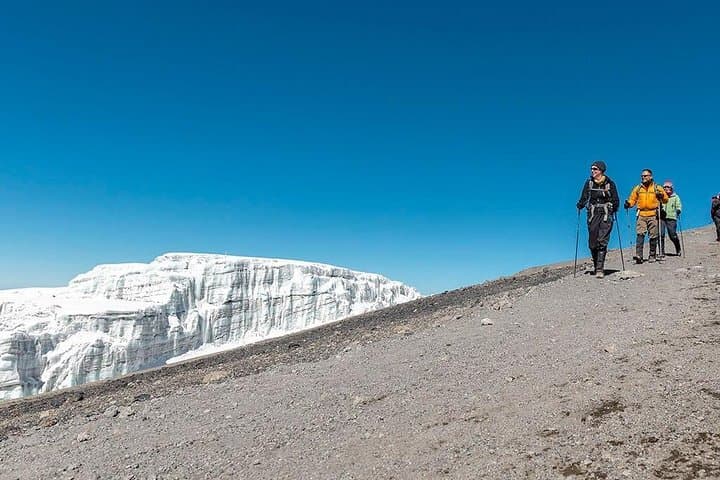
Locally called the Whiskey Route for the meandering line of camps and the strength it asks of climbers, Machame is scenically varied and intentionally paced for acclimatization. The path was forged by guides and the Chagga communities who have lived on Kilimanjaro's flanks for generations; their ports and guides remain the backbone of every successful summit bid. Geologically, Kilimanjaro is a dormant stratovolcano: three cones — Kibo, Mawenzi, and Shira — form its silhouette. On Machame you skirt under the southern ice field, moving from thick rainforest soils to the rust-colored heather and then onto scree and glacial moraine near the crater.
Culture threads through the hike. Camps sit near villages where the Chagga tend small plots and brew banana beer; a guide's joke over tea often includes a Chagga proverb. Respect local customs: a quiet evening helps crews sleep and keeps camp life orderly. Conservation matters too — Kilimanjaro National Park manages waste and limits camping to designated sites, and most reputable operators follow porter welfare guidelines and pack out trash.
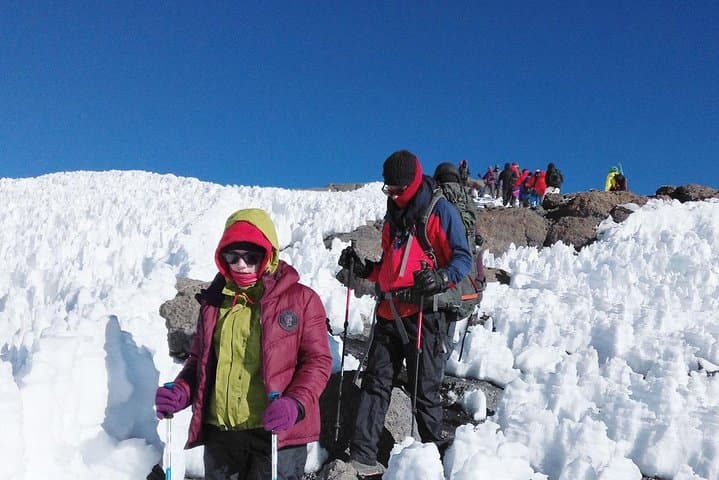
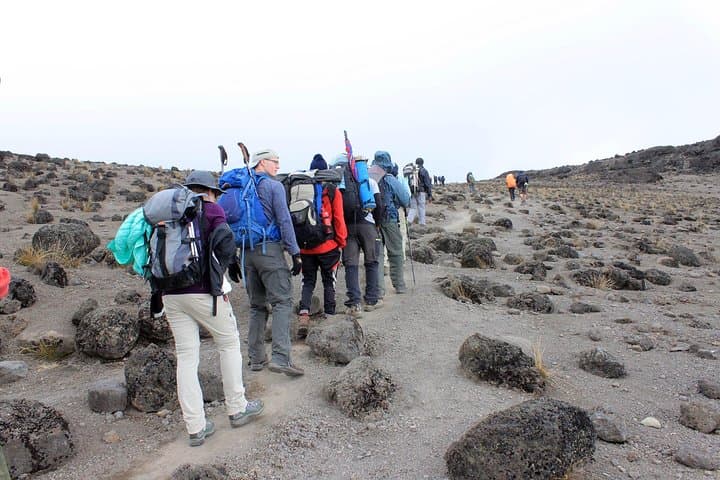
Practically, the itinerary is demanding: expect 6–7 hours on day one with steep, muddy trails, a crucial acclimatization day at Lava Tower, and a midnight start from Barafu for summit push to Uhuru Peak at 5,895 m. Terrain shifts quickly — mud and roots low down, rock and loose scree high up — so gaiters and trekking poles are useful. Crews provide food, tents, and hot water, but climbers should be ready for long, cold nights at 4,000–4,700 m and a summit day that tests both legs and willpower. Altitude is the main hazard: pace conservatively, hydrate, and report symptoms early.
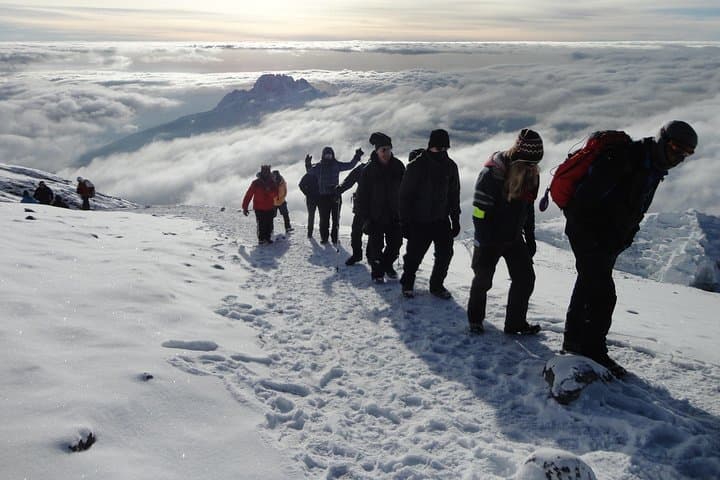
This route remains crowded in high season, but the payoff is clear: sunrise at Stella Point and the moment Uhuru Peak opens the continent below — a view that reduces the mountain to scale and leaves you leveled by elevation and effort. For seasoned hikers who can manage long days and high altitude, Machame offers a direct, dramatic line to Africa's rooftop, where each step up is a small promise of something larger waiting at the top.
difficult.
6–7 days.
Good aerobic fitness with experience on multi-day hikes; ability to carry a daypack for long uphill and downhill sections.
Machame is steeper and more strenuous than Marangu but offers better scenery; it is considered difficult due to elevation gain and long days.
No technical climbing gear is required for the Machame route—walking poles and possibly crampons if conditions include ice near the summit may be advised by your guide.
Altitude sickness is the main risk; proper acclimatization, slow pace, hydration, and attentive guides reduce risk, but descent is the only effective treatment for severe symptoms.
Dry seasons—late June to October and late December to February—offer more stable weather and clearer summit conditions.
Tipping porters and guides is customary but not included; budget accordingly—guides typically receive larger tips than porters.
Yes, climbing requires Kilimanjaro National Park fees and permits which are included when booking with licensed operators in this itinerary.
The mountain has long been a cultural landmark for the Chagga people; European exploration in the late 19th century established the routes now used by climbers.
Kilimanjaro National Park regulates camping and waste; choose operators who follow porter welfare practices and pack-out policies to reduce impact.
Intrepid Explorer Tanzania operates guided outdoor trips and adventures with an emphasis on safety, stewardship, and memorable experiences.
Night on the lower slopes smells of wet earth and wood smoke as headlamps bob like slow-fire stars along the Machame trail. You leave Moshi before dawn, the town shrinking behind a line of banana plantations, and within an hour the rainforest closes around you—ferns brushing your legs, streamwater daring you to slow. Over seven days the mountain changes its mood: dense, dripping jungle yields to heath and moorland, then to the windswept Shira Plateau and finally the lunar scree and ice of Kibo's upper reaches.
Night on the lower slopes smells of wet earth and wood smoke as headlamps bob like slow-fire stars along the Machame trail. You leave Moshi before dawn, the town shrinking behind a line of banana plantations, and within an hour the rainforest closes around you—ferns brushing your legs, streamwater daring you to slow. Over seven days the mountain changes its mood: dense, dripping jungle yields to heath and moorland, then to the windswept Shira Plateau and finally the lunar scree and ice of Kibo's upper reaches.
Locally called the Whiskey Route for the meandering line of camps and the strength it asks of climbers, Machame is scenically varied and intentionally paced for acclimatization. The path was forged by guides and the Chagga communities who have lived on Kilimanjaro's flanks for generations; their ports and guides remain the backbone of every successful summit bid. Geologically, Kilimanjaro is a dormant stratovolcano: three cones — Kibo, Mawenzi, and Shira — form its silhouette. On Machame you skirt under the southern ice field, moving from thick rainforest soils to the rust-colored heather and then onto scree and glacial moraine near the crater.
Culture threads through the hike. Camps sit near villages where the Chagga tend small plots and brew banana beer; a guide's joke over tea often includes a Chagga proverb. Respect local customs: a quiet evening helps crews sleep and keeps camp life orderly. Conservation matters too — Kilimanjaro National Park manages waste and limits camping to designated sites, and most reputable operators follow porter welfare guidelines and pack out trash.
Practically, the itinerary is demanding: expect 6–7 hours on day one with steep, muddy trails, a crucial acclimatization day at Lava Tower, and a midnight start from Barafu for summit push to Uhuru Peak at 5,895 m. Terrain shifts quickly — mud and roots low down, rock and loose scree high up — so gaiters and trekking poles are useful. Crews provide food, tents, and hot water, but climbers should be ready for long, cold nights at 4,000–4,700 m and a summit day that tests both legs and willpower. Altitude is the main hazard: pace conservatively, hydrate, and report symptoms early.
This route remains crowded in high season, but the payoff is clear: sunrise at Stella Point and the moment Uhuru Peak opens the continent below — a view that reduces the mountain to scale and leaves you leveled by elevation and effort. For seasoned hikers who can manage long days and high altitude, Machame offers a direct, dramatic line to Africa's rooftop, where each step up is a small promise of something larger waiting at the top.