THE ADVENTURE COLLECTIVE® · Independent discovery and booking for outdoor travel

Mount Kenya Treks take you from montane forest to afro‑alpine ridges beneath an equatorial snowcap. Plan for multi‑day hiking, permit requirements, and optional safari extensions to complete a classic Kenya adventure.
Mount Kenya Treks take you from montane forest to afro‑alpine ridges beneath an equatorial snowcap. Plan for multi‑day hiking, permit requirements, and optional safari extensions to complete a classic Kenya adventure.
You push above the forest line and the air thins; granite towers and gravel ridges cut the sky while a ragged band of permanent snow hangs improbably close to the equator. Mount Kenya’s routes move through dense montane forest into heather and giant lobelia, ending on windswept moraine and compacted ice if you aim for Point Lenana.
Verified experiences and guided adventures in the surrounding area.
Operated by Adventure Holidays Co. · Nanyuki, Laikipia County
You push above the forest line and the air thins; granite towers and gravel ridges cut the sky while a ragged band of permanent snow hangs improbably close to the equator. Mount Kenya’s routes move through dense montane forest into heather and giant lobelia, ending on windswept moraine and compacted ice if you aim for Point Lenana.
Geologically, Mount Kenya is an eroded volcanic massif whose peaks were sculpted by ancient glaciers; the result is steep corries, knife‑edged ridges and bowl‑shaped valleys. Culturally the mountain is Kirinyaga to the Kikuyu, a place of origin and ritual—many local guides will explain sacred sites on lower slopes. Wildlife pockets remain on the lower forested flanks: colobus monkeys and forest elephants can appear in the morning light.
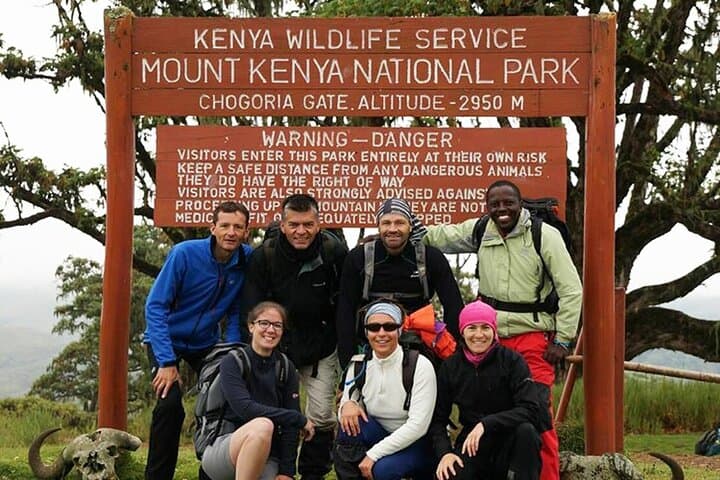
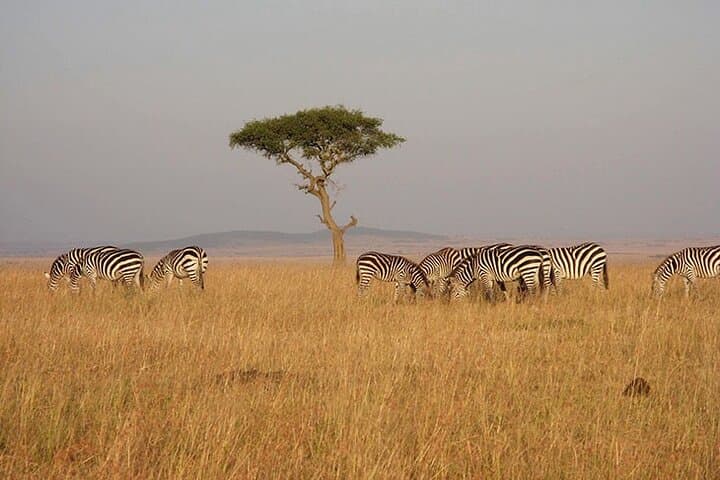
Common routes—Sirimon, Naro Moru and Chogoria—differ in gradient and scenery: Chogoria offers lake views and glacial valleys; Naro Moru is steeper and faster; Sirimon is gentler with broad panoramas. Treks are usually multi‑day with camping and porter support; many visitors extend into a safari in Laikipia, Samburu or the Masai Mara after summiting.
Practical guidance: secure park permits and a licensed guide, plan 3–5 days to allow acclimatization, and stage your approach from Nanyuki or Naro Moru. Expect cold nights above 3,000 m, sharp weather swings, and basic alpine scrambling near Lenana. Hydrate, layer, and respect closed trails and wildlife. With straightforward logistics and experienced operators, Mount Kenya delivers high‑altitude hiking that rewards steady, prepared teams.
challenging.
4–6 days.
Good aerobic fitness and experience with multi‑day hikes; comfortable carrying a daypack and coping with thin air.
Yes—Mount Kenya National Park permits are required for all climbers; reputable operators arrange them as part of the booking.
June–September and December–February are the driest, offering more stable conditions; avoid the long rains (March–May) when trails are muddy and visibility drops.
A reasonable level of fitness for sustained hiking at altitude is necessary; previous multi‑day trekking experience helps, and acclimatization days improve success.
Yes—many itineraries include optional extensions to Laikipia, Samburu or the Masai Mara for game drives after the mountain phase.
Mount Kenya—known locally as Kirinyaga—has cultural significance to Kikuyu communities and was first recorded by European explorers in the late 19th century; early scientific climbs mapped its glacial geomorphology.
Mount Kenya National Park is a UNESCO Biosphere Reserve with strict permit and camping rules; stick to established trails, pack out waste, and use locally registered guides to support conservation and community benefits.
Adventure Holidays Co. operates guided outdoor trips and adventures with an emphasis on safety, stewardship, and memorable experiences.
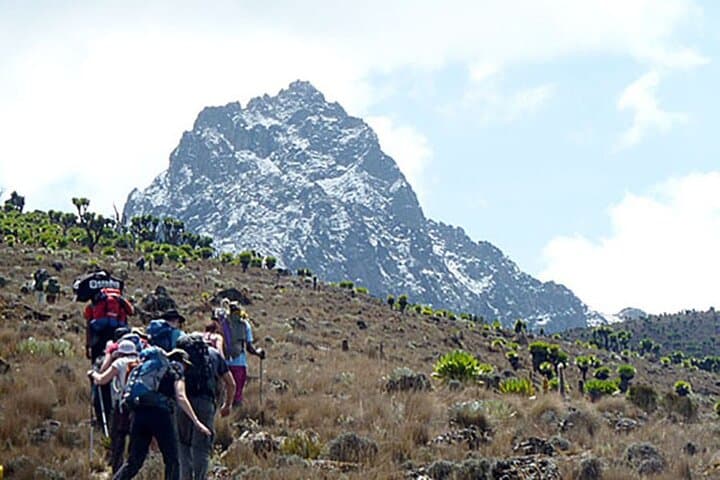
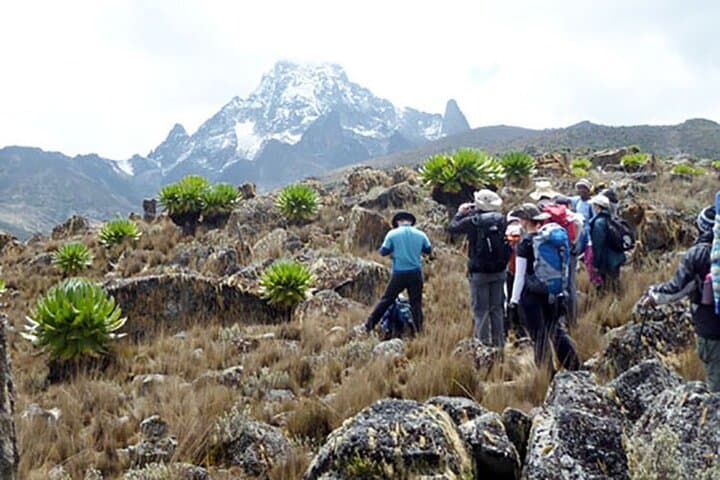
You push above the forest line and the air thins; granite towers and gravel ridges cut the sky while a ragged band of permanent snow hangs improbably close to the equator. Mount Kenya’s routes move through dense montane forest into heather and giant lobelia, ending on windswept moraine and compacted ice if you aim for Point Lenana.
You push above the forest line and the air thins; granite towers and gravel ridges cut the sky while a ragged band of permanent snow hangs improbably close to the equator. Mount Kenya’s routes move through dense montane forest into heather and giant lobelia, ending on windswept moraine and compacted ice if you aim for Point Lenana.
Geologically, Mount Kenya is an eroded volcanic massif whose peaks were sculpted by ancient glaciers; the result is steep corries, knife‑edged ridges and bowl‑shaped valleys. Culturally the mountain is Kirinyaga to the Kikuyu, a place of origin and ritual—many local guides will explain sacred sites on lower slopes. Wildlife pockets remain on the lower forested flanks: colobus monkeys and forest elephants can appear in the morning light.
Common routes—Sirimon, Naro Moru and Chogoria—differ in gradient and scenery: Chogoria offers lake views and glacial valleys; Naro Moru is steeper and faster; Sirimon is gentler with broad panoramas. Treks are usually multi‑day with camping and porter support; many visitors extend into a safari in Laikipia, Samburu or the Masai Mara after summiting.
Practical guidance: secure park permits and a licensed guide, plan 3–5 days to allow acclimatization, and stage your approach from Nanyuki or Naro Moru. Expect cold nights above 3,000 m, sharp weather swings, and basic alpine scrambling near Lenana. Hydrate, layer, and respect closed trails and wildlife. With straightforward logistics and experienced operators, Mount Kenya delivers high‑altitude hiking that rewards steady, prepared teams.